Showing posts with label Jerusalem. Show all posts

Monday, December 30, 2024

Benedict XVI on the Papacy (Petrus Apostolus)

On the second anniversary of Benedict XVI's death, this article serves as a testament to how Pope Benedict XVI viewed the Papacy.


Shortly before the announcement of Pope Benedict XVI's resignation, on 8 February 2013, he gave a deeply Roman, Petrine, lesson in his meeting with the seminarians of Rome in the chapel of the Pontifical Roman Seminary (photo above from that meeting). Three days later, in a morning meeting with his cardinals, he announced his decision to step down from the papacy.


Excerpts from the official translation by the Holy See below:


"We have heard three verses from the First Letter of St Peter (cf. 1:3-5). Before going into this text it seems to me important to be aware of the fact that it is Peter who is speaking. The first two words of the Letter are Petrus apostolus (cf. v.1): he speaks and he speaks to the Churches in Asia and calls the faithful “chosen”, and “exiles of the Dispersion” (ibid.).


Let us reflect a little on this. Peter is speaking and - as we hear at the end of the Letter - he is speaking from Rome, which he called “Babylon” (cf. 5:13). Peter speaks as if it were a first encyclical with which the first Apostle, Vicar of Christ, addresses the Church of all time.


Peter, an apostle: thus, the one who is speaking is the one who found the Messiah in Jesus Christ, who was the first to speak on behalf of the future Church: “You are the Christ, the Son of the living God” (cf. Mt 16:16).


The one who introduced us to this faith is speaking, the one to whom the Lord said: “I will give you the keys of the kingdom of heaven” (cf. Mt 16:19), to whom he entrusted his flock after the Resurrection, saying to him three times: “Feed my lambs...Tend my sheep” (cf. Jn 21:15-17).


And it is also the man who fell who is speaking, the man who denied Jesus three times and was granted the grace to see Jesus’ look, to feel deeply moved in his heart and to find forgiveness and a renewal of his mission.


However, above all it is important that this man, full of passion, full of longing for God, full of a desire for the Kingdom of God, for the Messiah, this man who has found Jesus, the Lord and the Messiah, is also the man who sinned, who fell; and yet he remained in God’s sight and in this way he remained responsible for the Lord’s Church, he remained the one assigned by Christ, he remained the messenger of Christ’s love.

Peter the Apostle is speaking, but the exegetes tell us: it is impossible for this Letter to have been written by Peter because the Greek is so good that it cannot be the Greek of a fisherman from the Sea of Galilee.


And it is not only the language — the syntax is excellent — but also the thought which is already quite mature, there are actual formulas in which the faith and the reflection of the Church are summed up. These exegetes say, therefore: it had already reached a degree of development that cannot be Peter’s.


How does one respond? There are two important positions: first, Peter himself — that is, the Letter — gives us a clue, for at the end of the writing he says I write to you: “By Silvanus... dia Silvanus”.


This “by” [dia] could mean various things. It may mean that he [Silvanus] brings or transmits; it may mean that Silvanus helped him write it; it may mean that in practice it was really Silvanus who wrote it. In any case, we may conclude that the Letter itself points out to us that Peter was not alone in writing this Letter but it expresses the faith of a Church, which is already on a journey of faith, a faith increasingly mature. He does not write alone, as an isolated individual; he writes with the assistance of the Church, of people who help him to deepen the faith, to enter into the depths of his thought, of his rationality, of his profundity.


And this is very important: Peter is not speaking as an individual, he is speaking ex persona Ecclesiae, he is speaking as a man of the Church, as an individual of course, with his personal responsibility, but also as a person who speaks on behalf of the Church; not only private and original ideas, not as a 19th century genius who wished to express only personal and original ideas that no one else could have expressed first.


No.


He does not speak as an individualistic genius, but speaks, precisely, in the communion of the Church. In the Apocalypse, in the initial vision of Christ, it is said that Christ’s voice is like the sound of many waters (cf. Rev 1:15). This means: Christ’s voice gathers together all the waters of the world, bears within it all the living waters that give life to the world; he is a Person, but this is the very greatness of the Lord, that he bears within him all the rivers of the Old Testament, indeed, of the wisdom of peoples. ...

I would like to say something more: St Peter writes from Rome. This is important.


Here we already have the Bishop of Rome, we have the beginning of Succession, we already have the beginning of the actual Primacy located in Rome, not only granted by the Lord but placed here, in this city, in this world capital.


How did Peter come to Rome? This is a serious question. The Acts of the Apostles tell us that after his escape from Herod’s prison, he went to another place (cf. 12:17) - eis eteron topon. Where he went is not known; some say to Antioch, others, to Rome.


In any case, in this capital it should also be said that before fleeing he entrusted the Judaeo-Christian Church, the Church of Jerusalem, to James, and in entrusting her to James he nevertheless remained Primate of the universal Church, of the Church of the Gentiles but also of the Judaeo-Christian Church.


And here in Rome he found a great Judaeo-Christian community.


The liturgists tell us that in the Roman Canon there are traces of a characteristically Judaeo-Christian language.


Thus we see that in Rome both parts of the Church were to be found: the Judaeo-Christian and the pagan-Christian, united, an expression of the universal Church. And for Peter, moving from Jerusalem to Rome meant moving to the universality of the Church, moving to the Church of the Gentiles and of all the epochs, to the Church that also still belongs to the Jews.

And I think that in going to Rome St Peter not only thought of this transfer: Jerusalem/Rome, Judaeo-Christian Church/universal Church.


He certainly also remembered Jesus’ last words to him, recorded by St John: “when you are old, you will stretch out your hands, and another will gird you and carry you where you do not wish to go” (cf. Jn 21:18).


It is a prophecy of the crucifixion. Philologists show us that “stretch out your hands” is a precise, technical expression for the crucifixion. St Peter knew that his end would be martyrdom, would be the cross: that it would therefore be following Christ completely.


Consequently, in going to Rome there is no doubt that he was also going to martyrdom: martyrdom awaited him in Babylon. The primacy, therefore, has this content of universality but it has a martyrological content as well.


Furthermore, Rome had been a place of martyrdom from the outset. In going to Rome, Peter once again accepts this word of the Lord: he heads for the cross and invites us too to accept the martyrological aspect of Christianity, which may have very different forms.


And the cross may have very different forms, but no one can be Christian without following the Crucified One, without accepting the martyrological moment too.
...


Perhaps today we are tempted to say: we do not want to rejoice at having been chosen, for this would be triumphalism. It would be triumphalism to think that God had chosen me because I was so important. This would really be erroneous triumphalism.


However, being glad because God wanted me is not triumphalism. Rather, it is gratitude, and I think we should re-learn this joy: God wanted me to be born in this way, into a Catholic family, he wanted me to know Jesus from the first.


What a gift to be wanted by God so that I could know his face, so that I could know Jesus Christ, the human face of God, the human history of God in this world! Being joyful because he has chosen me to be a Catholic, to be in this Church of his, where subsistit Ecclesia unica; we should rejoice because God has given me this grace, this beauty of knowing the fullness of God’s truth, the joy of his love.
...


Christians are certainly not only foreigners; we are also Christian nations, we are proud of having contributed to the formation of culture; there is a healthy patriotism, a healthy joy of belonging to a nation that has a great history of culture and of faith.


Yet, as Christians, we are always also foreigners - the destiny of Abraham, described in the Letter to the Hebrews. As Christians we are, even today, also always foreigners.


In the work place, Christians are a minority, they find themselves in an extraneous situation; it is surprising that a person today can still believe and live like this. This is also part of our life: it is a form of being with the Crucified Christ; this being foreigners, not living in the way that everyone else lives, but living — or at least seeking to live — in accordance with his Word, very differently from what everyone says.


And it is precisely this that is characteristic of Christians. They all say: “But everyone does this, why don’t I?”


No, I don’t, because I want to live in accordance with God. St Augustine once said: “Christians are those who do not have their roots below, like trees, but have their roots above, and they do not live this gravity in the natural downwards gravitation."


Let us pray the Lord that he help us to accept this mission of living as exiles, as a minority, in a certain sense, of living as foreigners and yet being responsible for others and, in this way, reinforcing the goodness in our world.
...


Inheritance. It is a very important word in the Old Testament, where Abraham is told that his seed will inherit the earth, and this was always the promise for his descendants.


You will have the earth, you will be heirs of the earth. In the New Testament, this word becomes a word for us; we are heirs, not of a specific country, but of the land of God, of the future of God.


Inheritance is something of the future, and thus this word tells us above all that as Christians we have a future, the future is ours, the future is God’s. Thus, being Christians, we know that the future is ours and the tree of the Church is not a tree that is dying but a tree that constantly puts out new shoots.


Therefore we have a reason not to let ourselves be upset, as Pope John said, by the prophets of doom who say: well, the Church is a tree that grew from the mustard seed, grew for 2,000 years, now she has time behind her, it is now time for her to die.


No.


The Church is ever renewed, she is always reborn. The future belongs to us. Of course, there is a false optimism and a false pessimism. A false pessimism tells us that the epoch of Christianity is over. No: it is beginning again!


The false optimism was the post-Council optimism, when convents closed, seminaries closed and they said “but... nothing, everything is fine!”.... No! Everything is not fine. There are also serious, dangerous omissions and we have to recognize with healthy realism that in this way things are not all right, it is not all right when errors are made.


However, we must also be certain at the same time that if, here and there, the Church is dying because of the sins of men and women, because of their non-belief, at the same time she is reborn.


The future really belongs to God: this is the great certainty of our life, the great, true optimism that we know. The Church is the tree of God that lives for ever and bears within her eternity and the true inheritance: eternal life.
...


And, lastly, “guarded through faith.” The New Testament text, from the Letter of St Peter, uses a rare word here, phrouroumenoi, which means: there are the “guards” and faith is like the guards who preserve the integrity of my being, of my faith.


This word interprets in particular “the guards” at the gates of a city, where they stand and keep watch over the city so that it is not invaded by destructive powers.


Thus faith is a “guard” of my being, of my life, of my inheritance.


We must be grateful for this vigilance of faith that protects us, helps us, guides us, gives us the security: God does not let me fall from his hands.


Tuesday, December 10, 2019

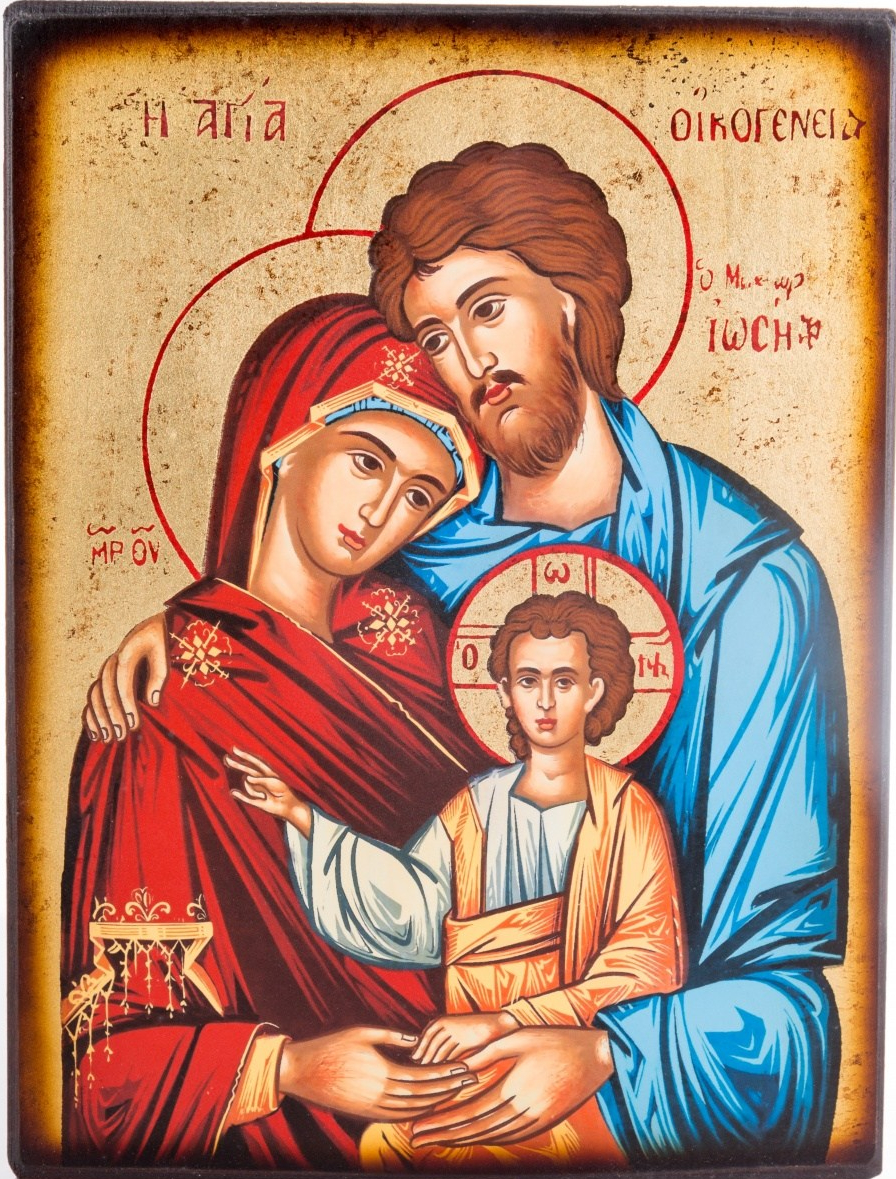
Benedict XVI on the Holy Family of Nazareth

Image result for holy family


"Today’s meeting is taking place in the atmosphere of Christmas, imbued with deep joy at the Birth of the Saviour. We have just celebrated this Mystery whose echo ripples through the Liturgy of all these days. It is a Mystery of Light that all people in every era can relive with faith and prayer. It is through prayer itself that we become capable of drawing close to God with intimacy and depth.
 
Therefore, bearing in mind the theme of prayer that I am developing in the Catecheses in this period, I would therefore like to invite you to reflect today on the way that prayer was part of the life of the Holy Family of Nazareth. Indeed, the house of Nazareth is a school of prayer where one learns to listen, meditate on and penetrate the profound meaning of the manifestation of the Son of God, following the example of Mary, Joseph and Jesus.
 
The Discourse of the Servant of God Paul VI during his Visit to Nazareth is memorable. The Pope said that at the school of the Holy Family we “understand why we must maintain a spiritual discipline, if we wish to follow the teaching of the Gospel and become disciples of Christ”. He added: “In the first place it teaches us silence. Oh! If only esteem for silence, a wonderful and indispensable spiritual atmosphere, could be reborn within us! Whereas we are deafened by the din, the noise and discordant voices in the frenetic, turbulent life of our time. O silence of Nazareth! Teach us to be steadfast in good thoughts, attentive to our inner life, ready to hear God’s hidden inspiration clearly and the exhortations of true teachers” (Discourse in Nazareth, 5 January 1964).
 
We can draw various ideas for prayer and for the relationship with God and with the Holy Family from the Gospel narratives of the infancy of Jesus. We can begin with the episode of the Presentation of Jesus in the Temple. St Luke tells how “when the time came for their purification according to the law of Moses”, Mary and Joseph “brought him up to Jerusalem to present him to the Lord” (2:22). Like every Jewish family that observed the law, Jesus’ parents went to the Temple to consecrate their first-born son to God and to make the sacrificial offering. Motivated by their fidelity to the precepts of the Law, they set out from Bethlehem and went to Jerusalem with Jesus who was only 40 days old. Instead of a year-old lamb they presented the offering of simple families, namely, two turtle doves. The Holy Family’s pilgrimage was one of faith, of the offering of gifts — a symbol of prayer — and of the encounter with the Lord whom Mary and Joseph already perceived in their Son Jesus.
 
Mary was a peerless model of contemplation of Christ. The face of the Son belonged to her in a special way because he had been knit together in her womb and had taken a human likeness from her. No one has contemplated Jesus as diligently as Mary. The gaze of her heart was already focused on him at the moment of the Annunciation, when she conceived him through the action of the Holy Spirit; in the following months she gradually became aware of his presence, until, on the day of his birth, her eyes could look with motherly tenderness upon the face of her son as she wrapped him in swaddling clothes and laid him in the manger.
 
Memories of Jesus, imprinted on her mind and on her heart, marked every instant of Mary’s existence. She lived with her eyes fixed on Christ and cherished his every word. St Luke says: “Mary kept all these things, pondering them in her heart” (2:19) and thus describes Mary’s approach to the Mystery of the Incarnation which was to extend throughout her life: keeping these things, pondering on them in her heart. Luke is the Evangelist who acquaints us with Mary’s heart, with her faith (cf. 1:45), her hope and her obedience (cf. 1:38) and, especially, with her interiority and prayer (cf. 1:46-56), her free adherence to Christ (cf. 1:55).
 
And all this proceeded from the gift of the Holy Spirit who overshadowed her (cf. 1:35), as he was to come down on the Apostles in accordance with Christ’s promise (cf. Acts 1:8). This image of Mary which St Luke gives us presents Our Lady as a model for every believer who cherishes and compares Jesus’ words with his actions, a comparison which is always progress in the knowledge of Jesus. After Bl. Pope John Paul II’s example (cf. Apostolic Letter Rosarium Virginis Mariae) we can say that the prayer of the Rosary is modelled precisely on Mary, because it consists in contemplating the mysteries of Christ in spiritual union with the Mother of the Lord.
 
Mary’s ability to live by God’s gaze, is so to speak, contagious. The first to experience this was St Joseph. His humble and sincere love for his betrothed and his decision to join his life to Mary’s attracted and introduced him, “a just man”, (Mt 1:19), to a special intimacy with God. Indeed, with Mary and later, especially, with Jesus, he began a new way of relating to God, accepting him in his life, entering his project of salvation and doing his will. After trustfully complying with the Angel’s instructions “Do not fear to take Mary your wife” (Mt 1:20) — he took Mary to him and shared his life with her; he truly gave the whole of himself to Mary and to Jesus and this led him to perfect his response to the vocation he had received.
 
As we know, the Gospel has not recorded any of Joseph’s words: his is a silent and faithful, patient and hard-working presence. We may imagine that he too, like his wife and in close harmony with her, lived the years of Jesus’ childhood and adolescence savouring, as it were, his presence in their family.
 
Joseph fulfilled every aspect of his paternal role. He must certainly have taught Jesus to pray, together with Mary. In particular Joseph himself must have taken Jesus to the Synagogue for the rites of the Sabbath, as well as to Jerusalem for the great feasts of the people of Israel. Joseph, in accordance with the Jewish tradition, would have led the prayers at home both every day — in the morning, in the evening, at meals — and on the principal religious feasts. In the rhythm of the days he spent at Nazareth, in the simple home and in Joseph’s workshop, Jesus learned to alternate prayer and work, as well as to offer God his labour in earning the bread the family needed.
 
And lastly, there is another episode that sees the Holy Family of Nazareth gathered together in an event of prayer. When Jesus was 12 years old, as we have heard, he went with his parents to the Temple of Jerusalem. This episode fits into the context of pilgrimage, as St Luke stresses: “His parents went to Jerusalem every year at the feast of the Passover. And when he was twelve years old, they went up according to custom” (2:41-42).
 
Pilgrimage is an expression of religious devotion that is nourished by and at the same time nourishes prayer. Here, it is the Passover pilgrimage, and the Evangelist points out to us that the family of Jesus made this pilgrimage every year in order to take part in the rites in the Holy City. Jewish families, like Christian families, pray in the intimacy of the home but they also pray together with the community, recognizing that they belong to the People of God, journeying on; and the pilgrimage expresses exactly this state of the People of God on the move. Easter is the centre and culmination of all this and involves both the family dimension and that of liturgical and public worship.
 
In the episode of the 12-year-old Jesus, the first words of Jesus are also recorded: “How is it that you sought me? Did you not know that I must be in my Father’s house?” (2:49). After three days spent looking for him his parents found him in the temple, sitting among the teachers, listening to them and asking them questions (cf. 2:46). His answer to the question of why he had done this to his father and mother was that he had only done what the Son should do, that is, to be with his Father.
 
Thus he showed who is the true Father, what is the true home, and that he had done nothing unusual or disobedient. He had stayed where the Son ought to be, that is, with the Father, and he stressed who his Father was.
 
The term “Father” therefore dominates the tone of this answer and the Christological mystery appears in its entirety. Hence, this word unlocks the mystery, it is the key to the Mystery of Christ, who is the Son, and also the key to our mystery as Christians who are sons and daughters in the Son. At the same time Jesus teaches us to be children by being with the Father in prayer. The Christological mystery, the mystery of Christian existence, is closely linked to, founded on, prayer. Jesus was one day to teach his disciples to pray, telling them: when you pray say “Father”. And, naturally, do not just say the word say it with your life, learn to say it meaningfully with your life. “Father”; and in this way you will be true sons in the Son, true Christians.
 
It is important at this point, when Jesus was still fully integrated in the life of the Family of Nazareth, to note the resonance that hearing this word “Father” on Jesus’ lips must have had in the hearts of Mary and Joseph. It is also important to reveal, to emphasize, who the Father is, and, with his awareness, to hear this word on the lips of the Only-Begotten Son who, for this very reason, chose to stay on for three days in the Temple, which is the “Father’s house”.
 
We may imagine that from this time the life of the Holy Family must have been even fuller of prayer since from the heart of Jesus the boy — then an adolescent and a young man — this deep meaning of the relationship with God the Father would not cease to spread and to be echoed in the hearts of Mary and Joseph.
 
This episode shows us the real situation, the atmosphere of being with the Father. So it was that the Family of Nazareth became the first model of the Church in which, around the presence of Jesus and through his mediation, everyone experiences the filial relationship with God the Father which also transforms interpersonal, human relationships.
 
Dear friends, because of these different aspects that I have outlined briefly in the light of the Gospel, the Holy Family is the icon of the domestic Church, called to pray together. The family is the domestic Church and must be the first school of prayer. It is in the family that children, from the tenderest age, can learn to perceive the meaning of God, also thanks to the teaching and example of their parents: to live in an atmosphere marked by God’s presence. An authentically Christian education cannot dispense with the experience of prayer. If one does not learn how to pray in the family it will later be difficult to bridge this gap. And so I would like to address to you the invitation to pray together as a family at the school of the Holy Family of Nazareth and thereby really to become of one heart and soul, a true family. Many thanks."
 
Benedict XVI, General Audience (Paul VI Audience Hall), 28 December 2011


Monday, August 26, 2019

Benedict XVI on Sts. Timothy and Titus


"Having spoken at length on the great Apostle Paul, today let us look at his two closest collaborators: Timothy and Titus. Three Letters traditionally attributed to Paul are addressed to them, two to Timothy and one to Titus.
 
Timothy is a Greek name which means "one who honours God". Whereas Luke mentions him six times in the Acts, Paul in his Letters refers to him at least 17 times (and his name occurs once in the Letter to the Hebrews).
 
One may deduce from this that Paul held him in high esteem, even if Luke did not consider it worth telling us all about him.
 
Indeed, the Apostle entrusted Timothy with important missions and saw him almost as an alter ego, as is evident from his great praise of him in his Letter to the Philippians. "I have no one like him (isópsychon) who will be genuinely anxious for your welfare" (2: 20).
 
Timothy was born at Lystra (about 200 kilometres northwest of Tarsus) of a Jewish mother and a Gentile father (cf. Acts 16: 1).
 
The fact that his mother had contracted a mixed-marriage and did not have her son circumcised suggests that Timothy grew up in a family that was not strictly observant, although it was said that he was acquainted with the Scriptures from childhood (cf. II Tm 3: 15). The name of his mother, Eunice, has been handed down to us, as well as that of his grandmother, Lois (cf. II Tm 1: 5).
 
When Paul was passing through Lystra at the beginning of his second missionary journey, he chose Timothy to be his companion because "he was well spoken of by the brethren at Lystra and Iconium" (Acts 16: 2), but he had him circumcised "because of the Jews that were in those places" (Acts 16: 3).
 
Together with Paul and Silas, Timothy crossed Asia Minor as far as Troy, from where he entered Macedonia. We are informed further that at Philippi, where Paul and Silas were falsely accused of disturbing public order and thrown into prison for having exposed the exploitation of a young girl who was a soothsayer by several unscrupulous individuals (cf. Acts 16: 16-40), Timothy was spared.
 
When Paul was then obliged to proceed to Athens, Timothy joined him in that city and from it was sent out to the young Church of Thessalonica to obtain news about her and to strengthen her in the faith (cf. I Thes 3: 1-2). He then met up with the Apostle in Corinth, bringing him good news about the Thessalonians and working with him to evangelize that city (cf. II Cor 1: 19).
 
We find Timothy at Ephesus during Paul's third missionary journey. It was probably from there that the Apostle wrote to Philemon and to the Philippians; he sent both Letters jointly with Timothy (cf. Phlm 1; Phil 1: 1).
 
From Ephesus, Paul sent Timothy to Macedonia, together with a certain Erastus (cf. Acts 19: 22), and then also to Corinth with the mission of taking a letter to the Corinthians, in which he recommended that they welcome him warmly (cf. I Cor 4: 17; 16: 10-11).
 
We encounter him again as the joint sender of the Second Letter to the Corinthians, and when Paul wrote the Letter to the Romans from Corinth he added Timothy's greetings as well as the greetings of the others (cf. Rom 16: 21).
 
From Corinth, the disciple left for Troy on the Asian coast of the Aegean See and there awaited the Apostle who was bound for Jerusalem at the end of his third missionary journey (cf. Acts 20: 4).
 
From that moment in Timothy's biography, the ancient sources mention nothing further to us, except for a reference in the Letter to the Hebrews which says: "You should understand that our brother Timothy has been released, with whom I shall see you if he comes soon" (13: 23).
 
To conclude, we can say that the figure of Timothy stands out as a very important pastor.
 
According to the later Storia Ecclesiastica by Eusebius, Timothy was the first Bishop of Ephesus (cf. 3, 4). Some of his relics, brought from Constantinople, were found in Italy in 1239 in the Cathedral of Termoli in the Molise.
 
Then, as regards the figure of Titus, whose name is of Latin origin, we know that he was Greek by birth, that is, a pagan (cf. Gal 2: 3). Paul took Titus with him to Jerusalem for the so-called Apostolic Council, where the preaching of the Gospel to the Gentiles that freed them from the constraints of Mosaic Law was solemnly accepted.
 
In the Letter addressed to Titus, the Apostle praised him and described him as his "true child in a common faith" (Ti 1: 4). After Timothy's departure from Corinth, Paul sent Titus there with the task of bringing that unmanageable community to obedience.
 
Titus restored peace between the Church of Corinth and the Apostle, who wrote to this Church in these terms: "But God, who comforts the downcast, comforted us by the coming of Titus, and not only by his coming but also by the comfort with which he was comforted in you, as he told us of your longing, your mourning, your zeal for me.... And besides our own comfort we rejoiced still more at the joy of Titus, because his mind has been set at rest by you all" (II Cor 7: 6-7, 13).
 
From Corinth, Titus was again sent out by Paul - who called him "my partner and fellow worker in your service" (II Cor 8: 23) - to organize the final collections for the Christians of Jerusalem (cf. II Cor 8: 6).
 
Further information from the Pastoral Letters describes him as Bishop of Crete (cf. Ti 1: 5), from which, at Paul's invitation, he joined the Apostle at Nicopolis in Epirus (cf. Ti 3: 12). Later, he also went to Dalmatia (cf. II Tm 4: 10). We lack any further information on the subsequent movements of Titus or on his death.
 
To conclude, if we consider together the two figures of Timothy and Titus, we are aware of certain very significant facts. The most important one is that in carrying out his missions, Paul availed himself of collaborators. He certainly remains the Apostle par excellence, founder and pastor of many Churches.
 
Yet it clearly appears that he did not do everything on his own but relied on trustworthy people who shared in his endeavours and responsibilities.
 
Another observation concerns the willingness of these collaborators. The sources concerning Timothy and Titus highlight their readiness to take on various offices that also often consisted in representing Paul in circumstances far from easy. In a word, they teach us to serve the Gospel with generosity, realizing that this also entails a service to the Church herself.
 
Lastly, let us follow the recommendation that the Apostle Paul makes to Titus in the Letter addressed to him: "I desire you to insist on these things, so that those who have believed in God may be careful to apply themselves to good deeds; these are excellent and profitable to men" (Ti 3: 8).
 
Through our commitment in practice we can and must discover the truth of these words, and precisely in this Season of Advent, we too can be rich in good deeds and thus open the doors of the world to Christ, our Saviour."
 
Benedict XVI, General Audience, Paul VI Audience Hall, 13 December 2006


Wednesday, April 29, 2015

Archives of the Order (5) - Statutes of Fra Roger De Moulins

http://upload.wikimedia.org/wikipedia/commons/thumb/f/fe/Roger_de_MOULINS.JPG/220px-Roger_de_MOULINS.JPG 

STATUTES OF FRA ROGER DE MOULINS 1177-87

The Chapter-General of 1181

THAT THE CHURCHES SHOULD BE REGULATED WITH THE KNOWLEDGE OF THE PRIOR.

In the name of the Father and of the Son and of the Holy Ghost. Amen. In the year of the incarnation of Our Lord 1181 in the month of March, on the Sunday on which they chant Laetare Jerusalem (i.e. 22nd March), I, Roger, servant of Christ's poor, in the presence of the clerical and lay brethren seated around the Chapter-General, to the honour of God and the glory of our Religion, and the support and benefit of the sick poor.
  1. It is commanded that the statutes of the church aforesaid and the benefits for the poor afterwards written should be kept and observed forever, without going contrary to them in any respect. Concerning the churches it is commanded that they should be arranged and regulated at the disposition of the Prior of the clerics of the Hospital with regard to books clerics vestments priests chalices censers perpetual light and other ornaments.
  2. And secondly, it is decreed with the assent of the brethren that for the sick in the Hospital of Jerusalem there should be engaged four wise doctors, who are qualified to examine urine, and to diagnose different diseases, and are able to administer appropriate medicines.
  3. And thirdly, it is added that the beds of the sick should be made as long and as broad as is most convenient for repose, and that each bed should be covered with its own coverlet, and each bed should have its own special sheets.
  4. After these needs is decreed the fourth command, that each of the sick should have a cloak of sheepskin and boots for going to and coming from the latrines, and caps of wool.
  5. It is also decreed that little cradles should be made for the babies of the women pilgrims born in the House, so that they may lie separate, and that the baby in its own bed may be in no danger from restlessness of its mother.
  6. Afterwards it is decreed the sixth clause, that the biers of the dead should be concealed in the same manner as are the biers of the brethren, and should be covered with a red coverlet having a white cross.
  7. The seventh clause commands that wheresoever there are hospitals for the sick, that the Commanders of the houses should serve the sick cheerfully, and should do their duty by them, and serve them without grumbling or complaining, so that by these good deeds they may deserve to have their reward in the glories of heaven. And if any of the brethren should act contrary to the commands of the Master in these matters, that it should be brought to the notice of the Master, who shall punish them according to the sentence of the house commands.
  8. It was also decreed, when the council (i.e. Chapter-General) of the brethren was held, that the Prior of the Hospital of France should send each year to Jerusalem one hundred sheets of dyed cotton to replace the coverlets of the poor sick, and should reckon them in his Responsion together with those things which shall be given in his Priory to the House in charity.
  9. In selfsame manner and reckoning the Prior of the Hospital of St. Gilles should purchase each year the like number of sheets of cotton and send them to Jerusalem, together with those things which shall be given in his Priory for the love of God to the poor of the Hospital.
  10. The prior of Italy each year should send to Jerusalem for our lords the sick two hundred ells of fustian (cotton sheets) of divers colours, which he may reckon each year in his Responsion.
  11. And the Prior of Pisa should send likewise the like numbers of fustians.
  12. And the Prior of Venice likewise, and all should be reckoned in their Responsions.
  13. And likewise the Bailiffs this side of the sea should be particular in this same service.
  14. Of whom the Bailiff of Antioch should send to Jerusalem two hundred ells of cotton cloth for the coverlets of the sick.
  15. The prior of Mont Pelerin (i.e. Tripoli) should send to Jerusalem two quintals of sugar for the syrups, and the medicines and the electuaries of the sick.
  16. For this same service the Bailiff of Tabarie (i.e. Tiberias) should send there the same quantity.
  17. The Prior of Constantinople should send for the sick two hundred felts.
  18. Moreover guarding and watching them day and night, the brethren of the Hospital should serve the sick poor with zeal and devotion as if they were their lords, and it was added in Chapter-General that in every ward (rue) and place in the Hospital, nine sergeants should be kept at their service, who should wash their feet gently, and change their sheets, and make their beds, and administer to the weak necessary and strengthening food, and do their duty devotedly, and obey, in all things for the benefit of the sick.

THE CONFIRMATION BY THE MASTER ROGER OF THE THINGS THAT THE HOUSE SHOULD DO

Let all the brethren of the House of the Hospital, both those present and those to come, know that the good customs of the House of the Hospital of Jerusalem are as follows:
  1. Firstly the Holy House of the Hospital is accustomed to receive sick men and women, and is accustomed to keep doctors who have the care of the sick, and who make the syrups for the sick, and who provide the things that are necessary for the sick. For three days in the week the sick are accustomed to have fresh meat, either pork or mutton, and those who are unable to eat it have chicken.
  2. And two sick persons are accustomed to have one coat of sheepskin (pelice de brebis), which they use when going to the latrines (chambres), and between two sick persons one pair of boots. Every year the House of the Hospital is accustomed to give to the poor one thousand cloaks of thick lamb skins.
  3. And all the children abandoned by their fathers and mothers the Hospital is accustomed to receive and to nourish. To a man and woman who desire to enter into matrimony, and who possess nothing with which to celebrate their marriage, the House of the Hospital is accustomed to give two bowls (escueles) or the rations of two brethren.
  4. And the House of the Hospital is accustomed to keep one brother shoemaker (corvoisier) and three sergeants, who repair the old shoes (soliers) given for the love of God. And the Almoner is accustomed to keep two sergeants who repair the old robes that he may give them to the poor.
  5. And the Almoner is accustomed to give twelve deniers to each prisoner, when he is first released from prison.
  6. Every night five clerics are accustomed to read the Psalter for the benefactors of the House.
  7. And every day thirty poor persons are accustomed to be fed at table once a day for the love of God, and the five clerics aforesaid may be among those thirty poor persons, but the twenty-five eat before the Convent, and each of the five clerics should have two deniers and eat with the Convent.
  8. And on three days of the week they are accustomed to give in alms to all who come there to ask for it, bread and wine and cooked food.
  9. In Lent every Saturday, they are accustomed to celebrate Maundy for thirteen poor persons, and to wash their feet, and to give to each a shirt and new breeches and new shoes, and to three chaplains, or to three clerics out of the thirteen, three deniers and to each of the others, two deniers.
  10. These are the special charities decreed in the Hospital, apart from the Brethren-at-Arms whom the House should maintain honourably, and many other charities there are which cannot be set out in detail each one by itself. And that these things be true good men and loyal here bear witness, that is to say Brother Roger, Master of the Hospital, and Brother Bernard the Prior and all the Chapter-General.

Friday, March 27, 2015

Archives of the Order (4) - Chapter Generals of Fra. Jobert

http://shoebat.com/wp-content/uploads/2014/04/jerusalem.jpg
THE CHAPTER GENERAL OF 1176
THE PRIVILEGE OF THE SICK TO HAVE WHITE BREAD 
In the Name of the Father and of the Son and of the Holy Ghost. Amen.
  • Let all men know of those who are, and those in the future shall be sons of Holy Mother Church, that I Jobert, Master of the Hospital of Jerusalem, with the good will and unanimous consent of all our brethren assembled in our Common Chapter, before the presence and witness of the passion and resurrection of Our Lord, have given and granted in permanent possession to our blessed lords, that is to say to the poor of the hostels (Xenodocheum) of the Hospital of Jerusalem, and to Brother Steven the Hospitaller at the present time, and to their successors who shall come after them perpetually for all time, two casales, that is to say the casales of St. Mary and Caphaer, with all their possessions and appurtenances within and without, for the provision of white bread which should be given to them forever; and if by chance it should happen that the corn should fail in the casales or be insufficient to provide for the needs of the poor, enough should be taken from the Treasury to purchase white bread and to provide sufficient for the poor; and if should happen that the wheat from the casales should be mixed with evil herbs, good wheat should be taken measure for measure from the granary of the Hospital, and so sufficient should be provided for our lords the poor. And in order that this gift may be established and unaltered forever, we have caused this charter to be sealed with our seal; and if anyone from henceforward would go to contrary to this Holy Commandment, or would distort it, may he be damned with Judas the traitor in everlasting damnation, with Cain and Dathan and Abiron, whom the earth swallowed up, may he be cursed with the curse. Amen.
  • Each loaf should be the weight of two marks, and should be given to two poor persons.
  • This decree was made in the year of the Incarnation of Our Lord 1176. 

THE CHAPTER GENERAL OF 1177

THE CUSTOMS OF THE CHURCH OF THE HOSPITAL OF JERUSALEM

In the Name of the Father and of the Son and of the Holy Ghost. Amen.
These are the customs which should be observed in the House of the Hospital of Jerusalem.
  1. The first morning Mass should not be begun before it is day, nor should the Commander of any house order the priest to chant mass. And no priest should chant mass twice in a day, unless by chance the body of the dead person be there, and then in this manner, first should be chanted the mass for the day, if it be a Sunday or a day of Festival, and afterwards should be chanted that for the dead, if a body be present there. And everywhere where a deceased (brother) of the hospital shall be buried, the day of his death should be written in the calendar. And for thirty days masses should be chanted for his soul. And when the Trental shall be completed, the day the anniversary should always be celebrated for his soul, and when the church where the Trental shall be celebrated has three priests, one should celebrate the Trental, and the other two chant the masses for the day. And if two priests only be there where the Trental should be celebrated, the service should be shared between them, and the gratuity. And when there shall be there no more than one priest, they shall obtain another a stranger to celebrate the service of the Trental.
  2. And when it shall be celebrated, one besant and a new shirt and breeches, according to the custom of the House, should be given to him. And if it be impossible to find a stranger priest. and the priest of the house be without the company of another priest, the Trental should be celebrated in this manner, that is to say that every day he should chant for the dead except on Sundays and days of solemn festival; and then afterwards he should make the commemoration and remembrance for the brother that is departed. But when the thirty days shall be passed, and after the number of days on which commemoration should be made only for the soul of the brother shall be fulfilled by the Trental, and there should be given to the priest the charity aforesaid. And if by chance these things should happen in Lent in the houses where there shall be no more than one priest, let it be postponed until after Easter, and then let celebration be made for the soul of the brother without delay.
  3. And let the brethren always take care to have a light in the church, and let the chalice for administration be of silver, and the censor of silver.
  4. And it is commanded that the bodies of pilgrims or of other Christians, who shall die after the Hour of Vespers, should be left until the next day; and in the Hospital, where they shall have died, let them not lie upon their biers without a light. And the next day before Prime they should be carried to the church, and after Mass should be buried; the biers of the dead should be like those that are in Jerusalem.
  5. The bodies of the brethren should be watched in the church, and the clerics should be around them chanting their psalms, and the tapers should be lighted. Of the charity that is given to the priests for the Trental the house should retain nothing; but for the Trentals of strangers the brethren should retain the half.
  6. For the public and private masses the priests should have nothing for themselves, except so much as the brethren should wish to give them of their own free will.
  7. Of the payments from confessions the sixth part should be given to the priests and the clerics, not by contract but of grace; but in casales where there shall be no burgesses, and no one except one priest, the arrangements aforesaid shall be at the discretion of the Commander of the house, and the gratuity of the clerics he shall give as shall seem good to him.
  8. Of the wills and legacies, which shall be made to vicars up to one besant, the half should be given to them; but the legacies and wills, which shall be left to the Hospital , when they shall be paid over, the brethren should receive them without deduction.

Sunday, January 18, 2015

Archives of the Order (3) - The Rule of the Order of St. John

THE RULE OF THE ORDER OF ST. JOHN


This is the CONSTITUTION ORDAINED BY BROTHER RAYMOND.-
In the name of God, I Raymond Servant of Christ's poor and Warden of the Hospital of Jerusalem, with the counsel of all the Chapter, both clerical and lay brethren, have established these commandments in the House of the Hospital of Jerusalem.
  1. HOW THE BRETHREN SHOULD MAKE THEIR PROFESSION: Firstly, I ordain that all the brethren, engaging in the service of the poor, should keep the three thing with the aid of God which they have promised to God, that is to say, chastity and obedience, which means whatever thing is commanded them by their masters, and to live without property of their own: because God will require these three things of them at the Last Judgement.
  2. WHAT THE BRETHREN SHOULD CLAIM AS THEIR DUE: And let them not claim more as their due than bread and water and raiment, which things are promised to them. And their clothing should be humble, because Our Lord's poor, whose servants we confess ourselves to be, go naked. And it is a thing wrong and improper for the servant that he should be proud, and his Lord should be humble.
  3. CONCERNING THE CONDUCT OF THE BRETHREN AND THE SERVICE OF THE CHURCHES AND THE RECEPTION OF THE SICK: Moreover this is decreed that their conduct should be decorous in church, and that their conversation should be appropriate, that is to say, that the clerics, deacons and sub-deacons, should serve the priest at the altar in white raiment, and if the thing shall be necessary another cleric should render the service, and there should be a light every day in the church, both by day and by night, and the priest should go in white raiment to visit the sick, bearing reverently the Body of Our Lord, and the deacon and the sub-deacon, or at least an acolyte should go before, bearing a lantern with a candle burning, and the sponge with the holy water.
  4. HOW THE BRETHREN SHOULD GO ABROAD AND BEHAVE: Moreover, when the brethren shall go to the cities and castles, let them not go alone but two or three together, and they shall not go there with those whom they would, but with those whom their Master shall order, and when they shall become there where they would go, let them remain together as united in their conduct as in their dress. And let nothing be done in their movements which might offend the eyes of anyone, but only that which reveals their holiness. Moreover, when they shall be in a church or in a house or in any other place where there are women, let them keep guard over their modesty, and let no women wash their heads or their feet, or make their beds. May Our Lord, who dwells among his saints, keep guard over them in this matter.
  5. BY WHOM AND HOW ALMS SHOULD BE SOUGHT: Also let religious persons, both clerical and lay brethren, go forth to seek alms for the holy poor; also when they shall seek for a lodging (hostel), let them go to the church or to some suitable person and let them ask of him their food for charity sake, and let them buy nothing else. But if they should not find anyone who will give them the necessaries, let them buy by measure one meal only, on which they shall live.
  6. CONCERNING THE ALMS OBTAINED AND CONCERNING THE PRODUCE OF THE HOUSES: Also let them take neither land nor security from the alms collected, but let them deliver them up to the Master with an account in writing, and let the Master deliver them up with his own account in writing to the poor in the hospital; and let the Master receive from all the Obediences the third part of the bread and wine and of all food, and that which shall be surplus should be added to the alms, and let him hand it over in Jerusalem to the poor with his own account in writing.
  7. WHO AND IN WHAT MANNER THEY SHOULD GO ABROAD TO PREACH: And let not any of the brethren, of whatever Obedience they may be, go to preach or to make collections, except only those whom the Chapter and the Master of the Church shall send. And let those same brethren, who shall go to make collections, be received in whatever Obedience they shall come, and let them receive such food as the brethren have ordained among themselves, and let them demand no other thing. Also let them carry with them a light, and in whatever house they shall be lodged (herbergié), let them cause the light to burn before them.
  8. CONCERNING THE CLOTHING AND FOOD OF THE BRETHREN: Furthermore also we forbid the brethren to wear at any time brightly coloured cloth (dras ysambruns ne galembruns) or furs of animals (pennes sauvages) or fustian. Also let them not eat more than twice in the day, and let them eat no meat on Wednesdays or Saturdays, or from Septuagesima until Easter, except those who are sick or feeble; and let them never lie down naked, but clothed in shirts or linen or wool, or in other similar garments.
  9. CONCERNING BRETHREN GUILTY OF FORNICATION: But if any of the brethren, and may such a thing never happen, through sinful passion shall fall into fornication, if he shall sin in secret, let him do his penance in secret, and let him impose upon himself suitable penance; and if it shall be well known and proved absolutely for certain, then in that town in which he shall have committed the sin, on the Sunday after Mass, when the people shall have left the church, let him be severely beaten and flogged with hard rods (verges) or leather thongs (corroies) in the sight of all by his Master or by other brethren commanded by the Master, and let him be expelled out of all our company: and afterwards if Our Lord shall enlighten the heart of that man, and he shall return to the House of the Poor, and shall confess himself to be guilty and a sinner and the transgressor against the law of God, and shall promise amendment, he should be received and for a whole year should be treated as a stranger, and the brethren should observe during this period of time whether he be satisfactory, and afterwards let them do as shall seem good to them.
  10. CONCERNING BRETHREN QUARRELING AND STRIKING ONE ANOTHER: Also if any brother dispute with another brother, and the Procurator of the House shall have heard the complaint, the penance should be as follows: he shall fast for seven days, the Wednesday and the Friday on bread and water, and he shall eat seated on the ground without table and without napkin (toaille). And if the brother shall strike another brother he shall fast for forty days. And if he shall depart from the House, or the Master under whose authority he shall be, wilfully and without the leave of his Master, and afterwards he shall return, he shall eat for forty days seated on the ground, and shall fast on Wednesdays and Fridays on bread and water; and for as long a time as he has been absent, let him be treated as a stranger, unless by chance the time should have been so long that the Chapter should think proper to modify it.
  11. CONCERNING THE SILENCE OF THE BRETHREN: Also at table, as the Apostle says, let each one eat his bread in silence, and let him not drink after Compline. Also let the brethren keep silence in their beds.
  12. CONCERNING BRETHREN MISBEHAVING: And if any brother shall not conduct himself well, and shall be admonished and corrected by his Master or by other brethren twice or three times, and if, at the instigation of the Devil, he will not amend his ways not obey, he should be sent to us on foot with a written report of his sin; and always a small allowance (procuration) should be given to him sufficient to enable him to come to us, and we will correct him; and also no brother should strike the sergeants subject to him for any fault or sin they may commit, but let the Master of the House and the brethren exact vengeance in the presence of all; but always let the sentence (justice) of the House be maintained completely.
  13. CONCERNING BRETHREN FOUND WITH PRIVATE PROPERTY: And if any of the brethren have made a disposition of private property at his death, he shall have concealed it from his Master, and afterwards it shall be found upon him, let that money be tied round his neck, and let him be led naked through the Hospital of Jerusalem, or through the other houses where he dwells, and let him be beaten severely by another brother and do penance for forty days, and he shall fast on Wednesdays and Fridays on bread and water.
  14. WHAT OFFICE SHOULD BE CELEBRATED FOR THE DECEASED BRETHREN: Moreover we command that this statue should be made, which is most necessary for us all, and we ordain it in commanding that for all the brethren who die in your Obedience thirty Masses should be chanted for the soul of each; and at the first Mass each of the brethren, who shall be present, shall offer one candle with one Denier. Which Deniers, as many as there shall be, should be given to the poor for God's sake; and the priest who shall chant the Masses, if he be not of the House, should have provision in the Obedience on those days; and on completion of the office, the Master should render charity to the said priest, and let all the garments of the deceased brother be given to the poor; also let the brother priests, who shall sing the Masses, pray for his soul to Our Lord Jesus Christ, and let each of the clerics chant the Psalter, and each of the lay brothers 150 paternosters. And also concerning all other sins and matters and complaints let them judge and decide in Chapter with righteous judgement.
  15. HOW THE THINGS HERE DETAILED ARE TO BE FIRMLY MAINTAINED: All these things, just as we have detailed them above, we command and ordain in the Name of Almighty God, and of the Blessed Mary, and of the Blessed St. John, and of the poor, that these same things should be kept with the utmost strictness.
  16. HOW OUR LORDS THE SICK SHOULD BE RECEIVED AND SERVED: And in that Obedience in which the Master and the Chapter of the Hospital shall permit, when the sick man shall come there, let him be received thus, let him partake of the Holy Sacrament, first having confessed his sins to the priest, and afterwards let him be carried to bed, and there as if he were a Lord, each day before the brethren to eat, let him be refreshed with food charitably according to the ability of the House; also on every Sunday let the Epistle and the Gospel be chanted in that House, and let the House be sprinkled with holy water at the procession. Also if any of the brethren, who hold Obedience in different lands, coming to any secular person offering allegiance and giving him the money of the poor, in order that those persons should cause the said brethren to prevail by force against the Master, let such brethren be cast out of all the company
  17. IN WHAT MANNER BRETHREN MAY CORRECT BRETHREN: Also if two or more brethren shall be together, and one of them shall conduct himself outrageously by evil living, the other of the brethren should not denounce him to the people nor to the Prior, but first let him chastise him by himself, and if he would no be chastised, let him join with himself two or three brethren to chastise him. And if he should amend his ways, they should rejoice at it; but if he be not willing to amend his ways, then let him write down the guilt of the brother, and let him send it to the Master privately, and according at the Master and the Chapter shall order let it be done concerning him.
  18. HOW ONE BROTHER SHOULD ACCUSE ANOTHER BROTHER: Let no brother accuse another brother unless he be well able to prove it; and if he shall accuse him and be unable to prove it, he is no true brother.
  19. THAT THE BRETHREN BEAR ON THEIR BREASTS THE SIGN OF THE CROSS: Also let all the brethren of all the Obediences, who now and henceforward shall offer themselves to God and to the Holy Hospital of Jerusalem bear on their breasts the cross, on their cassocks (chapes) and on their mantles, to the honour of God and the Holy Cross that God by that banner (gonfanon), and through faith and works and obedience, may guard and defend us in soul and in body, with all our Christian benefactors from the power of the Devil in this world and the next. Amen.

Saturday, December 20, 2014

Cardinal Ratzinger on the Christian Faith

http://ecx.images-amazon.com/images/I/51k-iJXUF8L._SY344_BO1,204,203,200_.jpgThe Christian faith can never be separated from the soil of sacred events, from the choice made by God, who wanted to speak to us, to become man, to die and rise again, in a particular place and at a particular time. “Always” can only come from “once for all”. The Church does not pray in some kind of mythical omnitemporality. She cannot forsake her roots. She recognizes the true utterance of God precisely in the concreteness of its history, in time and place: to these God ties us, and by these we are all tied together. The diachronic aspect, praying with the Fathers and the apostles, is part of what we mean by rite, but it also includes a local aspect, extending from Jerusalem to Antioch, Rome, Alexandria, and Constantinople. Rites are not, therefore, just the products of inculturation, how­ever much they may have incorporated elements from different cultures. They are forms of the apostolic Tradition and of its unfolding in the great places of the Tradition

Cardinal Ratzinger, The Spirit of the Liturgy, (SF, CA, Ignatius, 2000), p. 164.

Monday, December 8, 2014

Archives of the Order (2) - Papal Bull of Pope Anastasius IV

http://upload.wikimedia.org/wikipedia/commons/4/4f/A02_ANASTASIO_IV.jpg
Pope Anastasius IV (1153 - 1154)
A PROCLAMATION OF THE VICAR OF CHRIST CONFIRMING AND EXTENDING THE SACRED RIGHTS, UNIQUE GRANTS AND SPECIAL IMMUNITIES BESTOWED, IN PERPETUITY, ON THE HOSPITALLER ORDER OF SAINT JOHN OF JERUSALEM BY THE HOLY ROMAN CATHOLIC CHURCH.
 
Anastasius, Bishop, and servant of such as are servants of God, to his beloved son Raymond, Master of the Hospital in the city of Jerusalem, and to his brethren, both present and to come, professed forever in the religious life, health and the apostolic blessing. The religion of the Christian Faith piously believes and truly confesses that while Jesus Christ, Our Lord, was rich in all things, He became a poor man for our sake. Wherefore He promises those who would imitate Him rewards of timely consolation: "Blessed are the poor, for theirs is the Kingdom of Heaven." Likewise the Father of orphans and Refuge of the poor exhorting us to be hospitable and generous says in the Gospel: "What you have done for one of my least brethren, you have done for Me." And to prove further the excellence of such goodness, He assures us that He will give a reward even for a cup of cold water. We, therefore, whose express duty it is to provide with paternal care for those near and far, embrace you in your devotion and bestow Our favors according as they are asked. And following the example of Our predecessors of happy memory, Innocent, Celestine, Lucius, Eugene, all Roman Pontiffs, We take under the protection of Saint Peter the Hospital and the home at the Holy City of Jerusalem, and We protect with the privilege of the Holy See all persons and property pertaining to it. 

We decree that whatever possessions or goods that have been acquired by the hospital to sustain the needs of pilgrims and the poor in the parishes of the Church at Jerusalem or of other churches, whether they have been acquired by purchase through the watchful care of those in charge, or bestowed by certain individuals, either through a future grant from kings or princes because of the largess of God, or acquired by some other just means; whatever has been lawfully granted to the parish priests by the venerable brethren of the See of Jerusalem, whether for themselves or for your successors, and to the brethren who care for the pilgrims, We command these (possessions) be preserved peacefully and in their entirety.

If any real estate is given to the same venerable House through someone's devotion, you may build houses there, and erect churches and make cemeteries according to the need of those who live there, as long as there do not exist neighboring abbeys that might be disturbed by this. Moreover, when lands which have been given to you are conferred with a legal title, you may have the faculty and the license to found oratories there and to make cemeteries in accordance with the needs of pilgrims and of those brethren only, who dine at your table. We decree, therefore, that the receptors of your brotherhoods (x) or collections without detriment to their masters shall stand under the protection of Saint Peter and of Us, and wherever they shall travel through the world, they shall have peace.

We decree likewise that whoever has been received in your brotherhood, if by chance the church to which he belongs has been prohibited from holding divine services, and he should happen to die, he shall not be denied a church burial, unless he has been excommunicated or under interdict by name.

Besides, if any of your brothers who have been sent by you to receive these same brotherhoods and collections shall arrive at any city, town, or village, if by chance that place is under interdict from divine services, out of reverence for Almighty God the church shall be opened once in the year at their joyful coming, and when the excommunicated have been turned out, divine services shall there be celebrated.

And since all of your goods are to be expended for the sustenance of the pilgrims and the poor, and they are not to be given to any other use, We decree that no cleric or layman may in any way presume to exact tithes from you for the gain you reap from your labors. We decree that no bishop will be permitted to pronounce a sentence of interdiction, suspension, or excommunication upon the churches under your care. Nevertheless, if a general interdict has been pronounced upon these places, divine services may be celebrated simply, as long as the excommunicated are turned out along with those under interdict by name, the doors are closed, and no bells are rung.

Moreover, so that nothing will be lacking to you for the fullness of salvation and the care of your souls, and that the sacraments of the church and divine services may be conveniently arranged for you and for Christ's poor, We decree that you may take to yourselves clerics and priests no matter whence their origin as long as you have proof of their integrity and their ordination, to the best of your knowledge through letters and consistent testimony of witnesses; and you may keep them with you either at your principal establishment or in those subject to you; provided that they are not under obligation to some locality or diocese, and that they are not considered harmful to the profession and the Order.

And if the bishops by chance are unwilling to yield these men to you, you nevertheless will have the right to take them in and retain them through the authority of the Holy Roman Church. These same clerics shall be subject to no person outside your chapter with the exception of the Roman Pontiff.

We in no way impart the power to you of taking free laymen into your community for service with the poor without objection from someone.

We refuse permission to return to the world to your brethren who once in, and having been received into your community, have made their profession and taken the religious habit. Nor would it be right for anyone of them after making his profession and assuming the cross of the Lord and taking the habit of your Order, to cast it off.

Nor should anyone move to another place, whether it be a major or a minor monastery, without consulting the brethren or the master of the place, and if the brethren should be unwilling, he should not move there even though a license has been obtained. And no license shall be given to any ecclesiastic or secular authority to take them in or keep them.

Consecrations of altars or basilicas, ordinations of clerics who have been promoted to Holy Orders, and other church sacraments are in the hands of the bishop of the diocese; if indeed he is a Catholic and has favor and communion with the Apostolic See, he shall freely and willingly give you these services with no irregularity towards you; otherwise you are permitted to approach a Catholic bishop of your choice who is indisputably supported by Our authority to grant the requests you make.

And at your death, since you are the provider and prefect of the place, no one will be put in charge through deception, craft, or violence, but only he whom the brethren elect according to the will of God.

Furthermore, the legacies or possessions here or beyond the sea, in Asia or Europe, which the hospital now rightly possesses or will be able to obtain through reasonable means, we confirm for you in behalf of your efforts in the hospital work, and through you for the said hospital. Let no one have the rashness to disturb the aforementioned hospital, or take away its possessions, or retain anything that has been stolen from it, to weaken it, or to harass it with any violence; but let everything be preserved whole and entire, which has been given for direction and sustenance and shall be provided for in the future for any purpose with due respect to the authority of the Apostolic See and the canonical justice of the bishop of the diocese.

And if in the future any ecclesiastic or secular person knowing this Our constitution attempts the rashness of going against it after the third warning unless he has made sufficient amends for the defection, he shall be relieved of the dignity of his power and office, and he shall learn that he is liable to divine justice for perpetrating the offense, and he shall be deprived of the most sacred Body and Blood of Our Lord and Our God and Redeemer Jesus Christ, and at the last judgment he shall be subject to the severest vengeance. But to all who preserve the rights of this place may the peace of Our Lord Jesus Christ come in so far as they here are receiving the fruit of their good actions, and when they meet the strict Judge may the reward of eternal peace be theirs. Amen, amen, amen.

Given at the Lateran through the hand of Roland, cardinal priest of the Holy Roman Church and chancellor, on the 21st day of October, in the third indiction, the year of the Incarnation of Our Lord 1154, during the second year of the pontificate of Pope Anastasius IV.