Showing posts with label Eucharist. Show all posts

Monday, September 8, 2025

St. Pope John Paul II on Fatima


When Pope John Paul II visited Germany in November 1980 he held a meeting with around 300 people. He was confronted with three questions which were:


1. Do you agree with the receiving of the Holy Eucharist in the hand?


2. What happened to the third secret of Fatima?


3. What is the future of the Catholic Church?


His answers were:

1. "No I do not agree. However my predecessors gave the hand receiving of the Holy Eucharist to some countries. I am not going to revoke the privilege."


2. "I and the Popes before me did not reveal the third secret of Fatima because we did not want to make the people give up and say "then what is the use to continue living". Furthermore, we did not want to create a sensationalism in the news media. Regarding the third secret of Fatima every Christian should know the following: Continents will disappear beneath the oceans. Whole Nations will be destroyed from moment to moment." 


3. The future of the Catholic Church is the following:


a) "The Church shall be greatly persecuted. Where the martyrs of the past are nothing compared with those of the future. This is the weapon (the Rosary) that the Christian must use against the terrible future. Not to stop what shall happen but, but, but perhaps to soften what is predicted to happen." 


b) "... the chastisements cannot be averted, it is too late... the die was cast. The chastisements can be mitigated by praying the Rosary."


On 13 May 1981, Pope John Paul II was seriously wounded. He missed two bullets aimed at his skull as he bent down to look at a medal of Our Lady of Fatima worn by a young girl in the crowd. In the recuperating room he read everything he could about Fatima, and he reread the Third Secret.


While recovering from his surgery due to the gun shot, the Pope stated that:


"... in these months, I have come to understand that only solution to all problems of the world, the deliverance from war, the deliverance from atheism, and from the defection from God is the conversion of Russia. The conversion of Russia is the content and meaning of the message of Fatima. Not until then will the triumph of Mary comes."

On 13 May 1982, Pope John Paul II publicly thanked the Blessed Mother for saving his life, during his visit to Fatima.


Sunday, April 18, 2021

Frequency of receiving the Eucharist - earliest reference?


"And on the day which is called the day of the sun there is an assembly of all who live in the towns or in the country; and the memoirs of the Apostles or the writings of the Prophets are read, as long as time permits. Then the reader ceases, and the president [i.e., the bishop or his designate] speaks, admonishing us and exhorting us to imitate these excellent examples. Then we arise all together and offer prayers; and, as we said before, when we have concluded our prayer, bread is brought, and wine and water, and the president in like manner offers up prayers and thanksgivings with all his might; and the people assent with "Amen"; and there is the distribution and partaking by all of the Eucharistic elements; and to them that are not present they are sent by the hand of the deacons."

St. Justin Martyr, First Apology 

Sunday, January 18, 2015

Archives of the Order (3) - The Rule of the Order of St. John

THE RULE OF THE ORDER OF ST. JOHN


This is the CONSTITUTION ORDAINED BY BROTHER RAYMOND.-
In the name of God, I Raymond Servant of Christ's poor and Warden of the Hospital of Jerusalem, with the counsel of all the Chapter, both clerical and lay brethren, have established these commandments in the House of the Hospital of Jerusalem.
  1. HOW THE BRETHREN SHOULD MAKE THEIR PROFESSION: Firstly, I ordain that all the brethren, engaging in the service of the poor, should keep the three thing with the aid of God which they have promised to God, that is to say, chastity and obedience, which means whatever thing is commanded them by their masters, and to live without property of their own: because God will require these three things of them at the Last Judgement.
  2. WHAT THE BRETHREN SHOULD CLAIM AS THEIR DUE: And let them not claim more as their due than bread and water and raiment, which things are promised to them. And their clothing should be humble, because Our Lord's poor, whose servants we confess ourselves to be, go naked. And it is a thing wrong and improper for the servant that he should be proud, and his Lord should be humble.
  3. CONCERNING THE CONDUCT OF THE BRETHREN AND THE SERVICE OF THE CHURCHES AND THE RECEPTION OF THE SICK: Moreover this is decreed that their conduct should be decorous in church, and that their conversation should be appropriate, that is to say, that the clerics, deacons and sub-deacons, should serve the priest at the altar in white raiment, and if the thing shall be necessary another cleric should render the service, and there should be a light every day in the church, both by day and by night, and the priest should go in white raiment to visit the sick, bearing reverently the Body of Our Lord, and the deacon and the sub-deacon, or at least an acolyte should go before, bearing a lantern with a candle burning, and the sponge with the holy water.
  4. HOW THE BRETHREN SHOULD GO ABROAD AND BEHAVE: Moreover, when the brethren shall go to the cities and castles, let them not go alone but two or three together, and they shall not go there with those whom they would, but with those whom their Master shall order, and when they shall become there where they would go, let them remain together as united in their conduct as in their dress. And let nothing be done in their movements which might offend the eyes of anyone, but only that which reveals their holiness. Moreover, when they shall be in a church or in a house or in any other place where there are women, let them keep guard over their modesty, and let no women wash their heads or their feet, or make their beds. May Our Lord, who dwells among his saints, keep guard over them in this matter.
  5. BY WHOM AND HOW ALMS SHOULD BE SOUGHT: Also let religious persons, both clerical and lay brethren, go forth to seek alms for the holy poor; also when they shall seek for a lodging (hostel), let them go to the church or to some suitable person and let them ask of him their food for charity sake, and let them buy nothing else. But if they should not find anyone who will give them the necessaries, let them buy by measure one meal only, on which they shall live.
  6. CONCERNING THE ALMS OBTAINED AND CONCERNING THE PRODUCE OF THE HOUSES: Also let them take neither land nor security from the alms collected, but let them deliver them up to the Master with an account in writing, and let the Master deliver them up with his own account in writing to the poor in the hospital; and let the Master receive from all the Obediences the third part of the bread and wine and of all food, and that which shall be surplus should be added to the alms, and let him hand it over in Jerusalem to the poor with his own account in writing.
  7. WHO AND IN WHAT MANNER THEY SHOULD GO ABROAD TO PREACH: And let not any of the brethren, of whatever Obedience they may be, go to preach or to make collections, except only those whom the Chapter and the Master of the Church shall send. And let those same brethren, who shall go to make collections, be received in whatever Obedience they shall come, and let them receive such food as the brethren have ordained among themselves, and let them demand no other thing. Also let them carry with them a light, and in whatever house they shall be lodged (herbergié), let them cause the light to burn before them.
  8. CONCERNING THE CLOTHING AND FOOD OF THE BRETHREN: Furthermore also we forbid the brethren to wear at any time brightly coloured cloth (dras ysambruns ne galembruns) or furs of animals (pennes sauvages) or fustian. Also let them not eat more than twice in the day, and let them eat no meat on Wednesdays or Saturdays, or from Septuagesima until Easter, except those who are sick or feeble; and let them never lie down naked, but clothed in shirts or linen or wool, or in other similar garments.
  9. CONCERNING BRETHREN GUILTY OF FORNICATION: But if any of the brethren, and may such a thing never happen, through sinful passion shall fall into fornication, if he shall sin in secret, let him do his penance in secret, and let him impose upon himself suitable penance; and if it shall be well known and proved absolutely for certain, then in that town in which he shall have committed the sin, on the Sunday after Mass, when the people shall have left the church, let him be severely beaten and flogged with hard rods (verges) or leather thongs (corroies) in the sight of all by his Master or by other brethren commanded by the Master, and let him be expelled out of all our company: and afterwards if Our Lord shall enlighten the heart of that man, and he shall return to the House of the Poor, and shall confess himself to be guilty and a sinner and the transgressor against the law of God, and shall promise amendment, he should be received and for a whole year should be treated as a stranger, and the brethren should observe during this period of time whether he be satisfactory, and afterwards let them do as shall seem good to them.
  10. CONCERNING BRETHREN QUARRELING AND STRIKING ONE ANOTHER: Also if any brother dispute with another brother, and the Procurator of the House shall have heard the complaint, the penance should be as follows: he shall fast for seven days, the Wednesday and the Friday on bread and water, and he shall eat seated on the ground without table and without napkin (toaille). And if the brother shall strike another brother he shall fast for forty days. And if he shall depart from the House, or the Master under whose authority he shall be, wilfully and without the leave of his Master, and afterwards he shall return, he shall eat for forty days seated on the ground, and shall fast on Wednesdays and Fridays on bread and water; and for as long a time as he has been absent, let him be treated as a stranger, unless by chance the time should have been so long that the Chapter should think proper to modify it.
  11. CONCERNING THE SILENCE OF THE BRETHREN: Also at table, as the Apostle says, let each one eat his bread in silence, and let him not drink after Compline. Also let the brethren keep silence in their beds.
  12. CONCERNING BRETHREN MISBEHAVING: And if any brother shall not conduct himself well, and shall be admonished and corrected by his Master or by other brethren twice or three times, and if, at the instigation of the Devil, he will not amend his ways not obey, he should be sent to us on foot with a written report of his sin; and always a small allowance (procuration) should be given to him sufficient to enable him to come to us, and we will correct him; and also no brother should strike the sergeants subject to him for any fault or sin they may commit, but let the Master of the House and the brethren exact vengeance in the presence of all; but always let the sentence (justice) of the House be maintained completely.
  13. CONCERNING BRETHREN FOUND WITH PRIVATE PROPERTY: And if any of the brethren have made a disposition of private property at his death, he shall have concealed it from his Master, and afterwards it shall be found upon him, let that money be tied round his neck, and let him be led naked through the Hospital of Jerusalem, or through the other houses where he dwells, and let him be beaten severely by another brother and do penance for forty days, and he shall fast on Wednesdays and Fridays on bread and water.
  14. WHAT OFFICE SHOULD BE CELEBRATED FOR THE DECEASED BRETHREN: Moreover we command that this statue should be made, which is most necessary for us all, and we ordain it in commanding that for all the brethren who die in your Obedience thirty Masses should be chanted for the soul of each; and at the first Mass each of the brethren, who shall be present, shall offer one candle with one Denier. Which Deniers, as many as there shall be, should be given to the poor for God's sake; and the priest who shall chant the Masses, if he be not of the House, should have provision in the Obedience on those days; and on completion of the office, the Master should render charity to the said priest, and let all the garments of the deceased brother be given to the poor; also let the brother priests, who shall sing the Masses, pray for his soul to Our Lord Jesus Christ, and let each of the clerics chant the Psalter, and each of the lay brothers 150 paternosters. And also concerning all other sins and matters and complaints let them judge and decide in Chapter with righteous judgement.
  15. HOW THE THINGS HERE DETAILED ARE TO BE FIRMLY MAINTAINED: All these things, just as we have detailed them above, we command and ordain in the Name of Almighty God, and of the Blessed Mary, and of the Blessed St. John, and of the poor, that these same things should be kept with the utmost strictness.
  16. HOW OUR LORDS THE SICK SHOULD BE RECEIVED AND SERVED: And in that Obedience in which the Master and the Chapter of the Hospital shall permit, when the sick man shall come there, let him be received thus, let him partake of the Holy Sacrament, first having confessed his sins to the priest, and afterwards let him be carried to bed, and there as if he were a Lord, each day before the brethren to eat, let him be refreshed with food charitably according to the ability of the House; also on every Sunday let the Epistle and the Gospel be chanted in that House, and let the House be sprinkled with holy water at the procession. Also if any of the brethren, who hold Obedience in different lands, coming to any secular person offering allegiance and giving him the money of the poor, in order that those persons should cause the said brethren to prevail by force against the Master, let such brethren be cast out of all the company
  17. IN WHAT MANNER BRETHREN MAY CORRECT BRETHREN: Also if two or more brethren shall be together, and one of them shall conduct himself outrageously by evil living, the other of the brethren should not denounce him to the people nor to the Prior, but first let him chastise him by himself, and if he would no be chastised, let him join with himself two or three brethren to chastise him. And if he should amend his ways, they should rejoice at it; but if he be not willing to amend his ways, then let him write down the guilt of the brother, and let him send it to the Master privately, and according at the Master and the Chapter shall order let it be done concerning him.
  18. HOW ONE BROTHER SHOULD ACCUSE ANOTHER BROTHER: Let no brother accuse another brother unless he be well able to prove it; and if he shall accuse him and be unable to prove it, he is no true brother.
  19. THAT THE BRETHREN BEAR ON THEIR BREASTS THE SIGN OF THE CROSS: Also let all the brethren of all the Obediences, who now and henceforward shall offer themselves to God and to the Holy Hospital of Jerusalem bear on their breasts the cross, on their cassocks (chapes) and on their mantles, to the honour of God and the Holy Cross that God by that banner (gonfanon), and through faith and works and obedience, may guard and defend us in soul and in body, with all our Christian benefactors from the power of the Devil in this world and the next. Amen.

Monday, December 8, 2014

Archives of the Order (2) - Papal Bull of Pope Anastasius IV

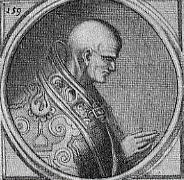
http://upload.wikimedia.org/wikipedia/commons/4/4f/A02_ANASTASIO_IV.jpg
Pope Anastasius IV (1153 - 1154)
A PROCLAMATION OF THE VICAR OF CHRIST CONFIRMING AND EXTENDING THE SACRED RIGHTS, UNIQUE GRANTS AND SPECIAL IMMUNITIES BESTOWED, IN PERPETUITY, ON THE HOSPITALLER ORDER OF SAINT JOHN OF JERUSALEM BY THE HOLY ROMAN CATHOLIC CHURCH.
 
Anastasius, Bishop, and servant of such as are servants of God, to his beloved son Raymond, Master of the Hospital in the city of Jerusalem, and to his brethren, both present and to come, professed forever in the religious life, health and the apostolic blessing. The religion of the Christian Faith piously believes and truly confesses that while Jesus Christ, Our Lord, was rich in all things, He became a poor man for our sake. Wherefore He promises those who would imitate Him rewards of timely consolation: "Blessed are the poor, for theirs is the Kingdom of Heaven." Likewise the Father of orphans and Refuge of the poor exhorting us to be hospitable and generous says in the Gospel: "What you have done for one of my least brethren, you have done for Me." And to prove further the excellence of such goodness, He assures us that He will give a reward even for a cup of cold water. We, therefore, whose express duty it is to provide with paternal care for those near and far, embrace you in your devotion and bestow Our favors according as they are asked. And following the example of Our predecessors of happy memory, Innocent, Celestine, Lucius, Eugene, all Roman Pontiffs, We take under the protection of Saint Peter the Hospital and the home at the Holy City of Jerusalem, and We protect with the privilege of the Holy See all persons and property pertaining to it. 

We decree that whatever possessions or goods that have been acquired by the hospital to sustain the needs of pilgrims and the poor in the parishes of the Church at Jerusalem or of other churches, whether they have been acquired by purchase through the watchful care of those in charge, or bestowed by certain individuals, either through a future grant from kings or princes because of the largess of God, or acquired by some other just means; whatever has been lawfully granted to the parish priests by the venerable brethren of the See of Jerusalem, whether for themselves or for your successors, and to the brethren who care for the pilgrims, We command these (possessions) be preserved peacefully and in their entirety.

If any real estate is given to the same venerable House through someone's devotion, you may build houses there, and erect churches and make cemeteries according to the need of those who live there, as long as there do not exist neighboring abbeys that might be disturbed by this. Moreover, when lands which have been given to you are conferred with a legal title, you may have the faculty and the license to found oratories there and to make cemeteries in accordance with the needs of pilgrims and of those brethren only, who dine at your table. We decree, therefore, that the receptors of your brotherhoods (x) or collections without detriment to their masters shall stand under the protection of Saint Peter and of Us, and wherever they shall travel through the world, they shall have peace.

We decree likewise that whoever has been received in your brotherhood, if by chance the church to which he belongs has been prohibited from holding divine services, and he should happen to die, he shall not be denied a church burial, unless he has been excommunicated or under interdict by name.

Besides, if any of your brothers who have been sent by you to receive these same brotherhoods and collections shall arrive at any city, town, or village, if by chance that place is under interdict from divine services, out of reverence for Almighty God the church shall be opened once in the year at their joyful coming, and when the excommunicated have been turned out, divine services shall there be celebrated.

And since all of your goods are to be expended for the sustenance of the pilgrims and the poor, and they are not to be given to any other use, We decree that no cleric or layman may in any way presume to exact tithes from you for the gain you reap from your labors. We decree that no bishop will be permitted to pronounce a sentence of interdiction, suspension, or excommunication upon the churches under your care. Nevertheless, if a general interdict has been pronounced upon these places, divine services may be celebrated simply, as long as the excommunicated are turned out along with those under interdict by name, the doors are closed, and no bells are rung.

Moreover, so that nothing will be lacking to you for the fullness of salvation and the care of your souls, and that the sacraments of the church and divine services may be conveniently arranged for you and for Christ's poor, We decree that you may take to yourselves clerics and priests no matter whence their origin as long as you have proof of their integrity and their ordination, to the best of your knowledge through letters and consistent testimony of witnesses; and you may keep them with you either at your principal establishment or in those subject to you; provided that they are not under obligation to some locality or diocese, and that they are not considered harmful to the profession and the Order.

And if the bishops by chance are unwilling to yield these men to you, you nevertheless will have the right to take them in and retain them through the authority of the Holy Roman Church. These same clerics shall be subject to no person outside your chapter with the exception of the Roman Pontiff.

We in no way impart the power to you of taking free laymen into your community for service with the poor without objection from someone.

We refuse permission to return to the world to your brethren who once in, and having been received into your community, have made their profession and taken the religious habit. Nor would it be right for anyone of them after making his profession and assuming the cross of the Lord and taking the habit of your Order, to cast it off.

Nor should anyone move to another place, whether it be a major or a minor monastery, without consulting the brethren or the master of the place, and if the brethren should be unwilling, he should not move there even though a license has been obtained. And no license shall be given to any ecclesiastic or secular authority to take them in or keep them.

Consecrations of altars or basilicas, ordinations of clerics who have been promoted to Holy Orders, and other church sacraments are in the hands of the bishop of the diocese; if indeed he is a Catholic and has favor and communion with the Apostolic See, he shall freely and willingly give you these services with no irregularity towards you; otherwise you are permitted to approach a Catholic bishop of your choice who is indisputably supported by Our authority to grant the requests you make.

And at your death, since you are the provider and prefect of the place, no one will be put in charge through deception, craft, or violence, but only he whom the brethren elect according to the will of God.

Furthermore, the legacies or possessions here or beyond the sea, in Asia or Europe, which the hospital now rightly possesses or will be able to obtain through reasonable means, we confirm for you in behalf of your efforts in the hospital work, and through you for the said hospital. Let no one have the rashness to disturb the aforementioned hospital, or take away its possessions, or retain anything that has been stolen from it, to weaken it, or to harass it with any violence; but let everything be preserved whole and entire, which has been given for direction and sustenance and shall be provided for in the future for any purpose with due respect to the authority of the Apostolic See and the canonical justice of the bishop of the diocese.

And if in the future any ecclesiastic or secular person knowing this Our constitution attempts the rashness of going against it after the third warning unless he has made sufficient amends for the defection, he shall be relieved of the dignity of his power and office, and he shall learn that he is liable to divine justice for perpetrating the offense, and he shall be deprived of the most sacred Body and Blood of Our Lord and Our God and Redeemer Jesus Christ, and at the last judgment he shall be subject to the severest vengeance. But to all who preserve the rights of this place may the peace of Our Lord Jesus Christ come in so far as they here are receiving the fruit of their good actions, and when they meet the strict Judge may the reward of eternal peace be theirs. Amen, amen, amen.

Given at the Lateran through the hand of Roland, cardinal priest of the Holy Roman Church and chancellor, on the 21st day of October, in the third indiction, the year of the Incarnation of Our Lord 1154, during the second year of the pontificate of Pope Anastasius IV.


Saturday, December 6, 2014

Archives of the Order (1) - Papal Bull of Pope Paschal II

 
http://www.wavada.org/Images/Tricks/Ch08/PaschalIISmall.jpg
Pope Paschal II (1099 - 1118)
 Piae Postulatio Voluntatis
 
PROCLAMATION OF THE VICAR OF CHRIST RECOGNISING THE HOSPITALLER ORDER OF SAINT JOHN; GRANTING IT PERPETUAL RIGHTS, PRIVILEGES AND INDEPENDENCE; AND, FOR ALL TIME, PLACING IT UNDER THE PROTECTION OF THE HOLY SEE
 
 
Paschal, bishop, and servant of such as are the servants of God, to his venerable son Gerard, founder and Master of the Hospital at Jerusalem, and to his lawful successors for evermore. The requests of a devout desire ought to meet with a corresponding fulfillment. Inasmuch, as of thy affection thou hast requested, with regard to the Hospital which thou hast founded in the city of Jerusalem, in proximity to the Church of the blessed John the Baptist, that it should be supported by the authority of the apostolic see, and fostered by the patronage of the blessed apostle Peter: 
 
We, therefore, much pleased with the pious earnestness of thy hospitality, do receive the petition with our paternal favour, and do ordain and establish, by the authority of this our present decree, that that house of God, your Hospital, shall now be placed, and shall for ever remain, under the protection of the apostolic see, and under that of the blessed Peter. All things whatsoever, therefore, which by thy persevering care and solicitude have been collected for the benefit of the said Hospital, for the support and maintenance of pilgrims, or for relieving the necessities of the poor, whether in the churches of Jerusalem, or in those of parishes within the limits of other cities; and whatsoever things may have been offered already by the faithful, or for the future may through God's grace be so offered, or collected by other lawful means; and whatsoever things have been, or shall be granted to thee, or to thy successors, or to the brethren who are occupied in the care and support of pilgrims, by the venerable brethren the bishops of the diocese of Jerusalem; we hereby decree shall be retained by you in peace and undiminished.

Moreover, as to the tithes of your revenues, which ye collect everywhere at your own charge, and by your own toil, we do hereby fix and decree, that they shall be retained by your own Hospital, all opposition on the part of the bishops and their clergy notwithstanding. We also decree as valid all donations, which have been made to your Hospital by pious princes, either of their tribute moneys or other imposts.

We ordain furthermore, that at thy death no man shall be appointed in thy place, as chief and master, by any underhand subtlety, or by violence; but him only who shall, by the inspiration of God, have been duly elected by the professed brethren of the Institution. Furthermore, all dignities or possessions which your Hospital at present holds, either on this side of the water, to wit in Asia, or in Europe, as also those which hereafter by God's bounty it may obtain; we confirm them to thee and to thy successors, who shall be devoting themselves with a pious zeal to the cares of hospitality, and through you to the said Hospital in perpetuity. We further decree that it shall be unlawful for any man whatsoever rashly to disturb your Hospital, or to carry off any of its property, or if carried off to retain possession of it, or to diminish ought from its revenues, or to harass it with audacious annoyances. But let all its property remain intact, for the sole use and enjoyment of those for whose maintenance and support it has been granted. As to the Hospital or Poor Houses in the Western provinces, at Burgum of St. Aegidius, Lisan Barum, Hispalum, Tarentum, and Messana, which are distinguished by the title of Hospitals of Jerusalem, we decree that they shall for ever remain, as they are this day, under the subjection and disposal of thyself and thy successors.

If, therefore, at a future time, any person, whether ecclesiastical or secular, knowing this paragraph of our constitution, shall attempt to oppose its provisions, and if, after having received a second or third warning, he shall not make a suitable satisfaction and restitution, let him be deprived of all his dignities and honours, and let him know that he stands exposed to the judgment of God, for the iniquity he has perpetrated; and let him be deprived of the Sacraments of the Body and Blood of Christ, and of the benefits of the redemption of Our Lord, and at the last judgment let him meet with the severest vengeance. But to all who deal justly and rightly with the same, on them be the peace of our Lord Jesus Christ, so that not only here below they receive the rewards of a good action, but also before the Judge of all mankind, they may enjoy the blessing of peace eternal.

I PASCHAL, Bishop of the Catholic Church.
I RICHARD, Bishop of Alboe, have signed.
I CALIXTUS, Bishop of the Catholic Church.
I LANDULPHUS, Bishop of Beneventum, have read and signed.

Given at Beneventum, by the hand of John, Cardinal of the Roman Church, and Librarian, on the 15th day of the calends of March, in the 6th indiction of the incarnation of our Lord, in the year 1113, and in the 13th year of the Pontificate of our Lord Pope Paschal II.

Wednesday, November 13, 2013

Benedict XVI on St. John Chrysostom


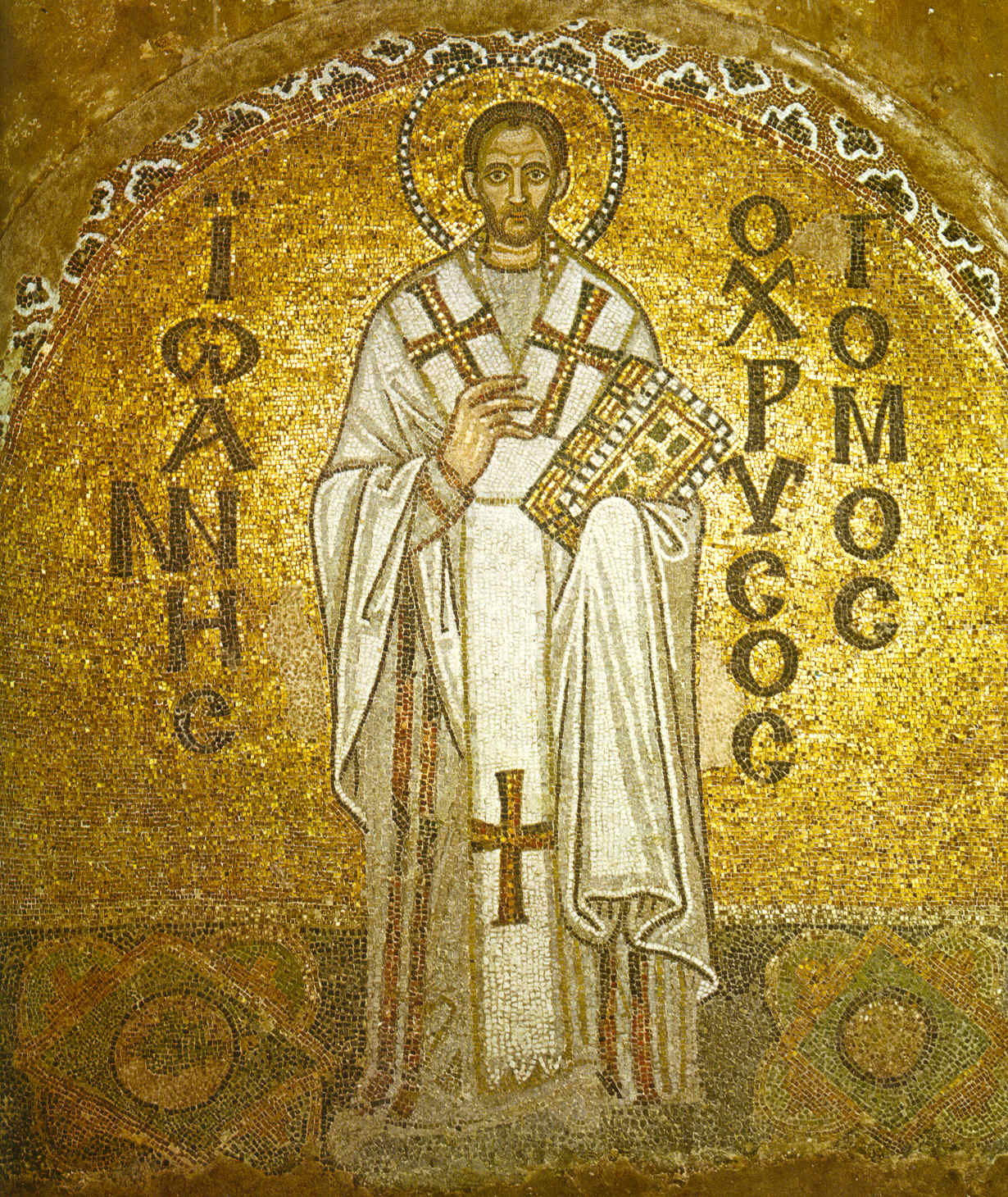
File:Johnchrysostom.jpg
Mosaic of St. John Chrysostom, Hagia Sophia, Istanbul
"It can be said that John of Antioch, nicknamed "Chrysostom", that is, "golden-mouthed", because of his eloquence, is also still alive today because of his works. An anonymous copyist left in writing that "they cross the whole globe like flashes of lightening".

Chrysostom's writings also enable us, as they did the faithful of his time whom his frequent exiles deprived of his presence, to live with his books, despite his absence. This is what he himself suggested in a letter when he was in exile (To Olympias, Letter 8, 45).

He was born in about the year 349 A.D. in Antioch, Syria (today Antakya in Southern Turkey). He carried out his priestly ministry there for about 11 years, until 397, when, appointed Bishop of Constantinople, he exercised his episcopal ministry in the capital of the Empire prior to his two exiles, which succeeded one close upon the other - in 403 and 407.
...
After completing his elementary and advanced studies crowned by courses in philosophy and rhetoric, he had as his teacher, Libanius, a pagan and the most famous rhetorician of that time. At his school John became the greatest orator of late Greek antiquity.

He was baptized in 368 and trained for the ecclesiastical life by Bishop Meletius, who instituted him as lector in 371. This event marked Chrysostom's official entry into the ecclesiastical cursus. From 367 to 372, he attended the Asceterius, a sort of seminary in Antioch, together with a group of young men, some of whom later became Bishops, under the guidance of the exegete Diodore of Tarsus, who initiated John into the literal and grammatical exegesis characteristic of Antiochean tradition.

He then withdrew for four years to the hermits on the neighbouring Mount Silpius. He extended his retreat for a further two years, living alone in a cave under the guidance of an "old hermit". In that period, he dedicated himself unreservedly to meditating on "the laws of Christ", the Gospels and especially the Letters of Paul. Having fallen ill, he found it impossible to care for himself unaided, and therefore had to return to the Christian community in Antioch (cf. Palladius, Dialogue on the Life of St John Chrysostom, 5).

The Lord, his biographer explains, intervened with the illness at the right moment to enable John to follow his true vocation. In fact, he himself was later to write that were he to choose between the troubles of Church government and the tranquillity of monastic life, he would have preferred pastoral service a thousand times (cf. On the Priesthood, 6, 7): it was precisely to this that Chrysostom felt called.
...
Between 378 and 379, he returned to the city. He was ordained a deacon in 381 and a priest in 386, and became a famous preacher in his city's churches. He preached homilies against the Arians, followed by homilies commemorating the Antiochean martyrs and other important liturgical celebrations: this was an important teaching of faith in Christ and also in the light of his Saints.

The year 387 was John's "heroic year", that of the so-called "revolt of the statues". As a sign of protest against levied taxes, the people destroyed the Emperor's statues. It was in those days of Lent and the fear of the Emperor's impending reprisal that Chrysostom gave his 22 vibrant Homilies on the Statues, whose aim was to induce repentance and conversion. This was followed by a period of serene pastoral care (387-397).

Chrysostom is among the most prolific of the Fathers: 17 treatises, more than 700 authentic homilies, commentaries on Matthew and on Paul (Letters to the Romans, Corinthians, Ephesians and Hebrews) and 241 letters are extant. He was not a speculative theologian.

Nevertheless, he passed on the Church's tradition and reliable doctrine in an age of theological controversies, sparked above all by Arianism or, in other words, the denial of Christ's divinity. He is therefore a trustworthy witness of the dogmatic development achieved by the Church from the fourth to the fifth centuries.

His is a perfectly pastoral theology in which there is constant concern for consistency between thought expressed via words and existential experience. It is this in particular that forms the main theme of the splendid catecheses with which he prepared catechumens to receive Baptism.

On approaching death, he wrote that the value of the human being lies in "exact knowledge of true doctrine and in rectitude of life" (Letter from Exile). Both these things, knowledge of truth and rectitude of life, go hand in hand: knowledge has to be expressed in life. All his discourses aimed to develop in the faithful the use of intelligence, of true reason, in order to understand and to put into practice the moral and spiritual requirements of faith.

John Chrysostom was anxious to accompany his writings with the person's integral development in his physical, intellectual and religious dimensions. The various phases of his growth are compared to as many seas in an immense ocean: "The first of these seas is childhood" (Homily, 81, 5 on Matthew's Gospel).

Indeed, "it is precisely at this early age that inclinations to vice or virtue are manifest". Thus, God's law must be impressed upon the soul from the outset "as on a wax tablet" (Homily 3, 1 on John's Gospel): This is indeed the most important age. We must bear in mind how fundamentally important it is that the great orientations which give man a proper outlook on life truly enter him in this first phase of life.

Chrysostom therefore recommended: "From the tenderest age, arm children with spiritual weapons and teach them to make the Sign of the Cross on their forehead with their hand" (Homily, 12, 7 on First Corinthians).

Then come adolescence and youth: "Following childhood is the sea of adolescence, where violent winds blow..., for concupiscence... grows within us" (Homily 81, 5 on Matthew's Gospel).

Lastly comes engagement and marriage: "Youth is succeeded by the age of the mature person who assumes family commitments: this is the time to seek a wife" (ibid.).

He recalls the aims of marriage, enriching them - referring to virtue and temperance - with a rich fabric of personal relationships. Properly prepared spouses therefore bar the way to divorce: everything takes place with joy and children can be educated in virtue. Then when the first child is born, he is "like a bridge; the three become one flesh, because the child joins the two parts" (Homily 12, 5 on the Letter to the Colossians), and the three constitute "a family, a Church in miniature" (Homily 20, 6 on the Letter to the Ephesians).

Chrysostom's preaching usually took place during the liturgy, the "place" where the community is built with the Word and the Eucharist. The assembly gathered here expresses the one Church (Homily 8, 7 on the Letter to the Romans), the same word is addressed everywhere to all (Homily 24, 2 on First Corinthians), and Eucharistic Communion becomes an effective sign of unity (Homily 32, 7 on Matthew's Gospel).

His pastoral project was incorporated into the Church's life, in which the lay faithful assume the priestly, royal and prophetic office with Baptism. To the lay faithful he said: "Baptism will also make you king, priest and prophet" (Homily 3, 5 on Second Corinthians).

From this stems the fundamental duty of the mission, because each one is to some extent responsible for the salvation of others: "This is the principle of our social life... not to be solely concerned with ourselves!" (Homily 9, 2 on Genesis). This all takes place between two poles: the great Church and the "Church in miniature", the family, in a reciprocal relationship."
Benedict XVI, General Audience, 19 September 2007.

Thursday, May 23, 2013

Benedict XVI on St. Francis of Assisi

Fresco of St. Francis at Sacro Speco, Subiaco.
“Continuing our catechesis on the Christian culture of the Middle Ages, we now turn to Saint Francis of Assisi, one of the greatest figures of the Church’s history. The story of Saint Francis’ life and conversion, and his complete devotion to Christ, poor and suffering, is well known. After gathering a small group of companions and followers, including Saint Clare, Francis sought the approval of Pope Innocent III for his movement which was completely committed to the renewal of the Church in holiness and to the preaching of the Gospel.

Near the end of his life, Francis’ configuration to the Crucified Lord culminated in his reception of the stigmata at La Verna. His deep piety found expression in a great devotion to the Eucharist, as the sacrament of Christ’s real presence, and his love for creation as God’s handiwork.

The life and teaching of Saint Francis has inspired countless people to the imitation of Christ through the embrace of inward and outward poverty. May his example teach us ever greater love for the Lord and his Church, and help us to know the immense spiritual joy born of the imitation of Christ and the pursuit of holiness”.

Benedict XVI, General Audience, 27 January 2010.

Sunday, March 24, 2013

Benedict XVI on Judas Iscariot

http://saints.sqpn.com/ncd04475.jpg
Judas kissing Jesus
"I am the living bread which came down from heaven. He who eats my flesh and drinks my blood will live forever'. This revelation, as I have said, remained incomprehensible to them, because they understood it in a material sense.
...
The problem is that Judas did not go away, and his most serious fault was falsehood, which is the mark of the devil.” 
 
Benedict XVI, Angelus, Castel Gandolfo, 26 August 2012.

Monday, March 18, 2013

Benedict XVI on the Eucharist

Let us rediscover the beauty of the Sacrament of Eucharist, which shows us all the humility and holiness of God, who becomes small.

In the Gospel of today’s liturgy, Jesus presents himself as the living bread come down from heaven. May we always hunger for the gift of his presence in the Eucharistic sacrifice, wherein Jesus gives us his very self as food and drink to sustain us on our pilgrim journey to the Father.
...

Jesus explains himself the image of the bread saying, that he was sent to offer his own life, and those who want to follow him are asked to join him in a deep and personal way, participating in his sacrifice of love.
...

Listening to this speech at Capernaum, the crowd understood that Jesus was not a Messiah who aspired to an earthly throne. Jesus was hinting at the sacrifice of the Cross, in which he would become the Bread broken for the masses.”

Benedict XVI, Castel Gandolfo, 19 August 2012.