Showing posts with label Benedict XVI. Show all posts

Saturday, March 22, 2025

Benedict XVI on Saint Catherine of Genoa

Dear Brothers and Sisters,

After Catherine of Siena and Catherine of Bologna, today I would like to speak to you about another Saint: Catherine of Genoa, known above all for her vision of purgatory. The text that describes her life and thought was published in this Ligurian city in 1551. It is in three sections: her Vita [Life], properly speaking, the Dimostratione et dechiaratione del purgatorio — better known as Treatise on purgatory — and her Dialogo tra l’anima e il corpo (cf. Libro de la Vita mirabile et dottrina santa, de la beata Caterinetta da Genoa. Nel quale si contiene una utile et catholica dimostratione et dechiaratione del purgatorio, Genoa 1551). The final version was written by Catherine’s confessor, Fr Cattaneo Marabotto.

Catherine was born in Genoa in 1447. She was the youngest of five. Her father, Giacomo Fieschi, died when she was very young. Her mother, Francesca di Negro provided such an effective Christian education that the elder of her two daughters became a religious.

When Catherine was 16, she was given in marriage to Giuliano Adorno, a man who after various trading and military experiences in the Middle East had returned to Genoa in order to marry.

Married life was far from easy for Catherine, partly because of the character of her husband who was given to gambling. Catherine herself was at first induced to lead a worldly sort of life in which, however, she failed to find serenity. After 10 years, her heart was heavy with a deep sense of emptiness and bitterness.

A unique experience on 20 March 1473 sparked her conversion. She had gone to the Church of San Benedetto in the monastery of Nostra Signora delle Grazie [Our Lady of Grace], to make her confession and, kneeling before the priest, “received”, as she herself wrote, “a wound in my heart from God’s immense love”. It came with such a clear vision of her own wretchedness and shortcomings and at the same time of God’s goodness, that she almost fainted.

Her heart was moved by this knowledge of herself — knowledge of the empty life she was leading and of the goodness of God. This experience prompted the decision that gave direction to her whole life. She expressed it in the words: “no longer the world, no longer sin” (cf. Vita Mirabile, 3rv). Catherine did not stay to make her Confession.

On arriving home she entered the remotest room and spent a long time weeping. At that moment she received an inner instruction on prayer and became aware of God’s immense love for her, a sinner. It was a spiritual experience she had no words to describe (cf. Vita Mirabile, 4r).

It was on this occasion that the suffering Jesus appeared to her, bent beneath the Cross, as he is often portrayed in the Saint’s iconography. A few days later she returned to the priest to make a good confession at last. It was here that began the “life of purification” which for many years caused her to feel constant sorrow for the sins she had committed and which spurred her to impose forms of penance and sacrifice upon herself, in order to show her love to God.

On this journey Catherine became ever closer to the Lord until she attained what is called “unitive life”, namely, a relationship of profound union with God.

In her Vita it is written that her soul was guided and instructed from within solely by the sweet love of God which gave her all she needed. Catherine surrendered herself so totally into the hands of the Lord that she lived, for about 25 years, as she wrote, “without the assistance of any creature, taught and governed by God alone” (Vita, 117r-118r), nourished above all by constant prayer and by Holy Communion which she received every day, an unusual practice in her time. Only many years later did the Lord give her a priest who cared for her soul.

Catherine was always reluctant to confide and reveal her experience of mystical communion with God, especially because of the deep humility she felt before the Lord’s graces. The prospect of glorifying him and of being able to contribute to the spiritual journey of others alone spurred her to recount what had taken place within her, from the moment of her conversion, which is her original and fundamental experience.

The place of her ascent to mystical peaks was Pammatone Hospital, the largest hospital complex in Genoa, of which she was director and animator. Hence Catherine lived a totally active existence despite the depth of her inner life. In Pammatone a group of followers, disciples and collaborators formed around her, fascinated by her life of faith and her charity.

Indeed her husband, Giuliano Adorno, was so so won over that he gave up his dissipated life, became a Third Order Franciscan and moved into the hospital to help his wife.

Catherine’s dedication to caring for the sick continued until the end of her earthly life on 15 September 1510. From her conversion until her death there were no extraordinary events but two elements characterize her entire life: on the one hand her mystical experience, that is, the profound union with God, which she felt as spousal union, and on the other, assistance to the sick, the organization of the hospital and service to her neighbour, especially the neediest and the most forsaken. These two poles, God and neighbour, totally filled her life, virtually all of which she spent within the hospital walls.

Dear friends, we must never forget that the more we love God and the more constantly we pray, the better we will succeed in truly loving those who surround us, who are close to us, so that we can see in every person the Face of the Lord whose love knows no bounds and makes no distinctions. The mystic does not create distance from others or an abstract life, but rather approaches other people so that they may begin to see and act with God’s eyes and heart.

Catherine’s thought on purgatory, for which she is particularly well known, is summed up in the last two parts of the book mentioned above: The Treatise on purgatory and the Dialogues between the body and the soul. It is important to note that Catherine, in her mystical experience, never received specific revelations on purgatory or on the souls being purified there. Yet, in the writings inspired by our Saint, purgatory is a central element and the description of it has characteristics that were original in her time.

The first original passage concerns the “place” of the purification of souls. In her day it was depicted mainly using images linked to space: a certain space was conceived of in which purgatory was supposed to be located.

Catherine, however, did not see purgatory as a scene in the bowels of the earth: for her it is not an exterior but rather an interior fire. This is purgatory: an inner fire.

The Saint speaks of the Soul’s journey of purification on the way to full communion with God, starting from her own experience of profound sorrow for the sins committed, in comparison with God’s infinite love (cf. Vita Mirabile, 171v).

We heard of the moment of conversion when Catherine suddenly became aware of God’s goodness, of the infinite distance of her own life from this goodness and of a burning fire within her. And this is the fire that purifies, the interior fire of purgatory. Here too is an original feature in comparison with the thought of her time.

In fact, she does not start with the afterlife in order to recount the torments of purgatory — as was the custom in her time and perhaps still is today — and then to point out the way to purification or conversion. Rather our Saint begins with the inner experience of her own life on the way to Eternity.

“The soul”, Catherine says, “presents itself to God still bound to the desires and suffering that derive from sin and this makes it impossible for it to enjoy the beatific vision of God”. Catherine asserts that God is so pure and holy that a soul stained by sin cannot be in the presence of the divine majesty (cf. Vita Mirabile, 177r).

We too feel how distant we are, how full we are of so many things that we cannot see God. The soul is aware of the immense love and perfect justice of God and consequently suffers for having failed to respond in a correct and perfect way to this love; and love for God itself becomes a flame, love itself cleanses it from the residue of sin.

In Catherine we can make out the presence of theological and mystical sources on which it was normal to draw in her time. In particular, we find an image typical of Dionysius the Areopagite: the thread of gold that links the human heart to God himself. When God purified man, he bound him with the finest golden thread, that is, his love, and draws him toward himself with such strong affection that man is as it were “overcome and won over and completely beside himself”.

Thus man’s heart is pervaded by God’s love that becomes the one guide, the one driving force of his life (cf. Vita Mirabile, 246rv). This situation of being uplifted towards God and of surrender to his will, expressed in the image of the thread, is used by Catherine to express the action of divine light on the souls in purgatory, a light that purifies and raises them to the splendour of the shining radiance of God (cf. Vita Mirabile, 179r).

Dear friends, in their experience of union with God, Saints attain such a profound knowledge of the divine mysteries in which love and knowledge interpenetrate, that they are of help to theologians themselves in their commitment to study, to intelligentia fidei, to an intelligentia of the mysteries of faith, to attain a really deeper knowledge of the mysteries of faith, for example, of what purgatory is.

With her life St Catherine teaches us that the more we love God and enter into intimacy with him in prayer the more he makes himself known to us, setting our hearts on fire with his love.

In writing about purgatory, the Saint reminds us of a fundamental truth of faith that becomes for us an invitation to pray for the deceased so that they may attain the beatific vision of God in the Communion of Saints (cf. Catechism of the Catholic Church, n. 1032).

Moreover the humble, faithful and generous service in Pammatone Hospital that the Saint rendered throughout her life is a shining example of charity for all and an encouragement, especially for women who, with their precious work enriched by their sensitivity and attention to the poorest and neediest, make a fundamental contribution to society and to the Church. 

Benedict XVI, General Audience, Paul VI Audience Hall, 12 January 2011.

Monday, December 30, 2024

Benedict XVI on the Papacy (Petrus Apostolus)

On the second anniversary of Benedict XVI's death, this article serves as a testament to how Pope Benedict XVI viewed the Papacy.


Shortly before the announcement of Pope Benedict XVI's resignation, on 8 February 2013, he gave a deeply Roman, Petrine, lesson in his meeting with the seminarians of Rome in the chapel of the Pontifical Roman Seminary (photo above from that meeting). Three days later, in a morning meeting with his cardinals, he announced his decision to step down from the papacy.


Excerpts from the official translation by the Holy See below:


"We have heard three verses from the First Letter of St Peter (cf. 1:3-5). Before going into this text it seems to me important to be aware of the fact that it is Peter who is speaking. The first two words of the Letter are Petrus apostolus (cf. v.1): he speaks and he speaks to the Churches in Asia and calls the faithful “chosen”, and “exiles of the Dispersion” (ibid.).


Let us reflect a little on this. Peter is speaking and - as we hear at the end of the Letter - he is speaking from Rome, which he called “Babylon” (cf. 5:13). Peter speaks as if it were a first encyclical with which the first Apostle, Vicar of Christ, addresses the Church of all time.


Peter, an apostle: thus, the one who is speaking is the one who found the Messiah in Jesus Christ, who was the first to speak on behalf of the future Church: “You are the Christ, the Son of the living God” (cf. Mt 16:16).


The one who introduced us to this faith is speaking, the one to whom the Lord said: “I will give you the keys of the kingdom of heaven” (cf. Mt 16:19), to whom he entrusted his flock after the Resurrection, saying to him three times: “Feed my lambs...Tend my sheep” (cf. Jn 21:15-17).


And it is also the man who fell who is speaking, the man who denied Jesus three times and was granted the grace to see Jesus’ look, to feel deeply moved in his heart and to find forgiveness and a renewal of his mission.


However, above all it is important that this man, full of passion, full of longing for God, full of a desire for the Kingdom of God, for the Messiah, this man who has found Jesus, the Lord and the Messiah, is also the man who sinned, who fell; and yet he remained in God’s sight and in this way he remained responsible for the Lord’s Church, he remained the one assigned by Christ, he remained the messenger of Christ’s love.

Peter the Apostle is speaking, but the exegetes tell us: it is impossible for this Letter to have been written by Peter because the Greek is so good that it cannot be the Greek of a fisherman from the Sea of Galilee.


And it is not only the language — the syntax is excellent — but also the thought which is already quite mature, there are actual formulas in which the faith and the reflection of the Church are summed up. These exegetes say, therefore: it had already reached a degree of development that cannot be Peter’s.


How does one respond? There are two important positions: first, Peter himself — that is, the Letter — gives us a clue, for at the end of the writing he says I write to you: “By Silvanus... dia Silvanus”.


This “by” [dia] could mean various things. It may mean that he [Silvanus] brings or transmits; it may mean that Silvanus helped him write it; it may mean that in practice it was really Silvanus who wrote it. In any case, we may conclude that the Letter itself points out to us that Peter was not alone in writing this Letter but it expresses the faith of a Church, which is already on a journey of faith, a faith increasingly mature. He does not write alone, as an isolated individual; he writes with the assistance of the Church, of people who help him to deepen the faith, to enter into the depths of his thought, of his rationality, of his profundity.


And this is very important: Peter is not speaking as an individual, he is speaking ex persona Ecclesiae, he is speaking as a man of the Church, as an individual of course, with his personal responsibility, but also as a person who speaks on behalf of the Church; not only private and original ideas, not as a 19th century genius who wished to express only personal and original ideas that no one else could have expressed first.


No.


He does not speak as an individualistic genius, but speaks, precisely, in the communion of the Church. In the Apocalypse, in the initial vision of Christ, it is said that Christ’s voice is like the sound of many waters (cf. Rev 1:15). This means: Christ’s voice gathers together all the waters of the world, bears within it all the living waters that give life to the world; he is a Person, but this is the very greatness of the Lord, that he bears within him all the rivers of the Old Testament, indeed, of the wisdom of peoples. ...

I would like to say something more: St Peter writes from Rome. This is important.


Here we already have the Bishop of Rome, we have the beginning of Succession, we already have the beginning of the actual Primacy located in Rome, not only granted by the Lord but placed here, in this city, in this world capital.


How did Peter come to Rome? This is a serious question. The Acts of the Apostles tell us that after his escape from Herod’s prison, he went to another place (cf. 12:17) - eis eteron topon. Where he went is not known; some say to Antioch, others, to Rome.


In any case, in this capital it should also be said that before fleeing he entrusted the Judaeo-Christian Church, the Church of Jerusalem, to James, and in entrusting her to James he nevertheless remained Primate of the universal Church, of the Church of the Gentiles but also of the Judaeo-Christian Church.


And here in Rome he found a great Judaeo-Christian community.


The liturgists tell us that in the Roman Canon there are traces of a characteristically Judaeo-Christian language.


Thus we see that in Rome both parts of the Church were to be found: the Judaeo-Christian and the pagan-Christian, united, an expression of the universal Church. And for Peter, moving from Jerusalem to Rome meant moving to the universality of the Church, moving to the Church of the Gentiles and of all the epochs, to the Church that also still belongs to the Jews.

And I think that in going to Rome St Peter not only thought of this transfer: Jerusalem/Rome, Judaeo-Christian Church/universal Church.


He certainly also remembered Jesus’ last words to him, recorded by St John: “when you are old, you will stretch out your hands, and another will gird you and carry you where you do not wish to go” (cf. Jn 21:18).


It is a prophecy of the crucifixion. Philologists show us that “stretch out your hands” is a precise, technical expression for the crucifixion. St Peter knew that his end would be martyrdom, would be the cross: that it would therefore be following Christ completely.


Consequently, in going to Rome there is no doubt that he was also going to martyrdom: martyrdom awaited him in Babylon. The primacy, therefore, has this content of universality but it has a martyrological content as well.


Furthermore, Rome had been a place of martyrdom from the outset. In going to Rome, Peter once again accepts this word of the Lord: he heads for the cross and invites us too to accept the martyrological aspect of Christianity, which may have very different forms.


And the cross may have very different forms, but no one can be Christian without following the Crucified One, without accepting the martyrological moment too.
...


Perhaps today we are tempted to say: we do not want to rejoice at having been chosen, for this would be triumphalism. It would be triumphalism to think that God had chosen me because I was so important. This would really be erroneous triumphalism.


However, being glad because God wanted me is not triumphalism. Rather, it is gratitude, and I think we should re-learn this joy: God wanted me to be born in this way, into a Catholic family, he wanted me to know Jesus from the first.


What a gift to be wanted by God so that I could know his face, so that I could know Jesus Christ, the human face of God, the human history of God in this world! Being joyful because he has chosen me to be a Catholic, to be in this Church of his, where subsistit Ecclesia unica; we should rejoice because God has given me this grace, this beauty of knowing the fullness of God’s truth, the joy of his love.
...


Christians are certainly not only foreigners; we are also Christian nations, we are proud of having contributed to the formation of culture; there is a healthy patriotism, a healthy joy of belonging to a nation that has a great history of culture and of faith.


Yet, as Christians, we are always also foreigners - the destiny of Abraham, described in the Letter to the Hebrews. As Christians we are, even today, also always foreigners.


In the work place, Christians are a minority, they find themselves in an extraneous situation; it is surprising that a person today can still believe and live like this. This is also part of our life: it is a form of being with the Crucified Christ; this being foreigners, not living in the way that everyone else lives, but living — or at least seeking to live — in accordance with his Word, very differently from what everyone says.


And it is precisely this that is characteristic of Christians. They all say: “But everyone does this, why don’t I?”


No, I don’t, because I want to live in accordance with God. St Augustine once said: “Christians are those who do not have their roots below, like trees, but have their roots above, and they do not live this gravity in the natural downwards gravitation."


Let us pray the Lord that he help us to accept this mission of living as exiles, as a minority, in a certain sense, of living as foreigners and yet being responsible for others and, in this way, reinforcing the goodness in our world.
...


Inheritance. It is a very important word in the Old Testament, where Abraham is told that his seed will inherit the earth, and this was always the promise for his descendants.


You will have the earth, you will be heirs of the earth. In the New Testament, this word becomes a word for us; we are heirs, not of a specific country, but of the land of God, of the future of God.


Inheritance is something of the future, and thus this word tells us above all that as Christians we have a future, the future is ours, the future is God’s. Thus, being Christians, we know that the future is ours and the tree of the Church is not a tree that is dying but a tree that constantly puts out new shoots.


Therefore we have a reason not to let ourselves be upset, as Pope John said, by the prophets of doom who say: well, the Church is a tree that grew from the mustard seed, grew for 2,000 years, now she has time behind her, it is now time for her to die.


No.


The Church is ever renewed, she is always reborn. The future belongs to us. Of course, there is a false optimism and a false pessimism. A false pessimism tells us that the epoch of Christianity is over. No: it is beginning again!


The false optimism was the post-Council optimism, when convents closed, seminaries closed and they said “but... nothing, everything is fine!”.... No! Everything is not fine. There are also serious, dangerous omissions and we have to recognize with healthy realism that in this way things are not all right, it is not all right when errors are made.


However, we must also be certain at the same time that if, here and there, the Church is dying because of the sins of men and women, because of their non-belief, at the same time she is reborn.


The future really belongs to God: this is the great certainty of our life, the great, true optimism that we know. The Church is the tree of God that lives for ever and bears within her eternity and the true inheritance: eternal life.
...


And, lastly, “guarded through faith.” The New Testament text, from the Letter of St Peter, uses a rare word here, phrouroumenoi, which means: there are the “guards” and faith is like the guards who preserve the integrity of my being, of my faith.


This word interprets in particular “the guards” at the gates of a city, where they stand and keep watch over the city so that it is not invaded by destructive powers.


Thus faith is a “guard” of my being, of my life, of my inheritance.


We must be grateful for this vigilance of faith that protects us, helps us, guides us, gives us the security: God does not let me fall from his hands.


Sunday, January 1, 2023

The Spiritual Testament of Pope Emeritus Benedict XVI


The Holy See releases the Spiritual Testament of Pope Emeritus Benedict XVI, dated 29 August 2006.

My spiritual testament

When, at this late hour of my life, I look back on the decades I have wandered through, I see first of all how much reason I have to give thanks. Above all, I thank God Himself, the giver of all good gifts, who has given me life and guided me through all kinds of confusion; who has always picked me up when I began to slip, who has always given me anew the light of his countenance. In retrospect, I see and understand that even the dark and arduous stretches of this path were for my salvation and that He guided me well in those very stretches.

I thank my parents, who gave me life in difficult times and prepared a wonderful home for me with their love, which shines through all my days as a bright light until today. My father's clear-sighted faith taught us brothers and sisters to believe and stood firm as a guide in the midst of all my scientific knowledge; my mother's heartfelt piety and great kindness remain a legacy for which I cannot thank her enough. My sister has served me selflessly and full of kind concern for decades; my brother has always paved the way for me with the clear-sightedness of his judgements, with his powerful determination, and with the cheerfulness of his heart; without this ever-new going ahead and going along, I would not have been able to find the right path.

I thank God from the bottom of my heart for the many friends, men and women, whom He has always placed at my side; for the co-workers at all stages of my path; for the teachers and students He has given me. I gratefully entrust them all to His goodness. And I would like to thank the Lord for my beautiful home in the Bavarian foothills of the Alps, in which I was able to see the splendour of the Creator Himself shining through time and again. I thank the people of my homeland for allowing me to experience the beauty of faith time and again. I pray that our country will remain a country of faith and I ask you, dear compatriots, not to let your faith be distracted. 

Finally, I thank God for all the beauty I was able to experience during the various stages of my journey, but especially in Rome and in Italy, which has become my second home.

I ask for forgiveness from the bottom of my heart from all those whom I have wronged in some way.

What I said earlier of my compatriots, I now say to all who were entrusted to my service in the Church: Stand firm in the faith! Do not be confused! Often it seems as if science - on the one hand, the natural sciences; on the other, historical research (especially the exegesis of the Holy Scriptures) - has irrefutable insights to offer that are contrary to the Catholic faith. I have witnessed from times long past the changes in natural science and have seen how apparent certainties against the faith vanished, proving themselves not to be science but philosophical interpretations only apparently belonging to science - just as, moreover, it is in dialogue with the natural sciences that faith has learned to understand the limits of the scope of its affirmations and thus its own specificity. For 60 years now, I have accompanied the path of theology, especially biblical studies, and have seen seemingly unshakeable theses collapse with the changing generations, which turned out to be mere hypotheses: the liberal generation (Harnack, Jülicher, etc.), the existentialist generation (Bultmann, etc.), the Marxist generation. I have seen, and see, how, out of the tangle of hypotheses, the reasonableness of faith has emerged and is emerging anew. Jesus Christ is truly the Way, the Truth, and the Life - and the Church, in all her shortcomings, is truly His Body.

Finally, I humbly ask: pray for me, so that the Lord may admit me to the eternal dwellings, despite all my sins and shortcomings. For all those entrusted to me, my heartfelt prayer goes out day after day.

Benedictus PP XVI


Saturday, May 14, 2022

Report: Cardinal Ratzinger Admitted Third Secret Not Fully Revealed


Report: Cardinal Ratzinger Admitted
Third Secret Not Fully Revealed

Secret Warns of "Bad Council and Bad Mass"

by John Vennari

Father Ingo Dollinger is an elderly German priest, professor of theology in Brazil, and a personal friend of former Pope Benedict XVI.

Father Dollinger stated on more than one occasion that Cardinal Ratzinger admitted to him the full Third Secret is not yet revealed, and the Secret warns against a “bad Council and a bad Mass.”

The Fatima Crusader reported this on a number of occasions, most pointedly in 2009. This news regarding the Third Secret was recently re-confirmed by Dr. Maike Hickson on May 15.

Dr. Hickson, who knows Father Dollinger, telephoned the priest on Pentecost Sunday, and he gave her permission to publicly report the following facts:

“Not long after the June 2000 publication of the Third Secret of Fatima by the Congregation for the Doctrine of the Faith, Cardinal Joseph Ratzinger told Father Dollinger during an in-person conversation that there is still part of the Third Secret that they have not published! ‘There is more than what we published,’ Ratzinger said. He also told Dollinger that the published part of the Secret is authentic and that the unpublished part of the Secret speaks about ‘a bad council and a bad Mass’ that was to come in the near future.”

This statement by Father Dollinger was formerly related in the May 2009 issue of The Fatima Crusader by Father Paul Kramer.

According to Father Kramer’s account, Cardinal Ratzinger revealed to Father Dollinger as far back as the early 1990s that the Secret warned against a bad Council and against changes in the Mass.

Yet the text published by the Vatican on June 26, 2000 makes no mention of these specific warnings.

Father Kramer explained: “The elderly German priest, Ratingzer’s long-time personal friend, took note of the fact that when the vision of the Third Secret was published it did not contain those things, those elements of the Third Secret that Cardinal Razinger had revealed to him nearly ten years earlier. The German priest – Father Dollinger – told me that this question was burning in his mind.”

Father Kramer continues, “Father Dollinger said to me, ‘I confronted Cardinal Ratzinger to his face: ‘How can this be the entire Third Secret? Remember what you told me before?''”

Cardinal Ratzinger replied, “Really, there is something more there,” meaning there is more in the Third Secret than what the Vatican revealed.

Father Nicholas Gruner referred to this episode from Father Dollinger on more than one occasion, including a speech published in The Fatima Crusader in Autumn, 2009.

Crisis of Faith

Even if one wants to question whether the Third Secret actually mentions the Mass and the Council, there appears to be no doubt that the missing part of the Secret speaks of "dangers threatening the Faith." For years prior to the Year 2000 release of the vision of the Secret, Father Gruner’s Fatima Center repeatedly published testimony from Fatima experts and witnesses who relate that the Third Secret predicts a great crisis of Faith in the Church. Here are but a few examples:

Father Alonso

Father Joaquim Alonso, who was the official archivist of Fatima and had many conversations with Sister Lucia, said the following prior to his death in 1981:

“It is therefore completely probable that the text makes concrete references to the crisis of faith within the Church and to the negligence of the pastors themselves [and the] internal struggles in the very bosom of the Church and of grave pastoral negligence of the upper hierarchy.”1

And further,

“Does the unpublished text speak of concrete circumstances? It is very possible that it speaks not only of a real crisis of faith in the Church during this in-between period [that is, prior to the Triumph of the Immaculate Heart of Mary], but like the secret of La Salette, for example, there are more concrete references to the internal struggles of the Catholics or to the fall of priests and religious. Perhaps it even refers to the failures of the upper hierarchy of the Church. For that matter, none of this is foreign to communications Sister Lucia has had on this subject.”2

Cardinal Ratzinger

Cardinal Ratzinger, then Prefect of the Congregation for the Doctrine of the Faith, gave an interview in Jesus magazine on November 11, 1984. In this famous exchange, titled “Here is Why the Faith was in Crisis,” Cardinal Ratzinger spoke of the crisis of faith and of the Third Secret. Here he revealed that the Secret refers to “dangers threatening the faith and the life of the Christian and therefore [the life] of the world.”

The Cardinal further noted that “the things contained in this ‘Third Secret’ correspond to what has been announced in Scripture and what has been said again and again in many other Marian apparitions…”

Bishop Amaral

Bishop Amaral – the third Bishop of Fatima – likewise relates that the Secret warns of dangers to the Faith. In a speech in Vienna, Austria, on September 10, 1984, the bishop said,

“Its contents concern only our faith. To identity the [Third] Secret with catastrophic announcements or with a nuclear holocaust is to deform the meaning of the message. The loss of faith of a continent is worse than the annihilation of nations; and it is true that the faith is continually diminishing in Europe.”3 [emphasis added]

Cardinal Oddi

Silvio Cardinal Oddi gave the following testimony to Italian journalist Lucio Brunelli on March 17, 1990, for the journal Il Sabato:

“It [the Third Secret] has nothing to do with Gorbachev. The Blessed Virgin was alerting us against the apostasy in the Church.”

Cardinal Ciappi

Then there is the oft-quoted testimony of Cardinal Mario Luigi Ciappi, who was personal papal theologians to five popes – Pius XII, John XXIII, Paul VI, John Paul I and John Paul II. The Cardinal wrote the following in a personal communication to Professor Baumgartner in Salzburg:

“In the Third Secret it is foretold, among other things, that the great apostasy in the Church will begin at the top.”4

Warnings from Sister Lucia

We close with some quick observations from Sister Lucia, where she warns of the diabolic disorientation of members of the upper hierarchy, and she calls upon Catholics to “stand up against it.”

The full Secret, Sister Lucia had told us, was supposed to be revealed at the time of her death or in 1960, whichever came first.

In 1960, however, the Secret was not released, and Sister Lucy was silenced. She was not allowed to speak about anything not yet published on the Message of Fatima without prior authorization of the Vatican.

Yet, in 1957, and in the late 60s and early 70s, the years “bracketing” 1960 wherein the Secret should have been released, Sister Lucy seemed to indicate what the Secret contained. In these statements, Sister Lucy speaks of the devil gaining power over priests and consecrated souls. She speaks of the diabolic disorientation infecting the upper hierarchy.

In her 1957 conversation with Father Fuentes, her last public interview that was not pre-approved by the Vatican, Sister Lucy said: “The devil is about to wage a decisive battle with the Blessed Virgin, as he knows what it is that offends God the most, and which in a short space of time will gain for him the greatest number of souls. Thus the devil does everything to overcome souls consecrated to God, because in this way he will succeed in leaving the souls of the faithful abandoned by their leaders, thereby the more easily will he seize them.”

More than a decade later, Sister Lucy denounced the progressivist forces in the Church seeking to downplay and suppress the Rosary. “This campaign is diabolical,” she wrote in 1969 to one of her priest-nephews, “do not let yourself be deceived.” This is from the 1973 book, Uma Vida ao Serviço de Fátima, Chapter 6, “Um Pequeno Tratado, da Vidente, sobre a Natureza e Recitação do Terço”, containing excerpts from letters of Sister Lucy written between 1969-1971.

In these letters, she also voiced strong words about the leadership in the Church following Vatican II. She wrote in 1970 to Mother Martins, a former companion in the Dorothean Sisters: “It is painful to see such a great disorientation in so many who occupy places of responsibility ... the devil has succeeded in infiltrating evil under cover of good, and the blind are beginning to guide others, as the Lord tells us in His Gospel, and souls are letting themselves be deceived.”

It is noteworthy that in 1957, Sister Lucy said the devil was about to wage a decisive battle. By 1971, she says the devil has begun to succeed.

“Gladly,” Sister Lucy continued, “I sacrifice myself and offer my life to God for peace in His Church, for priests and for all consecrated souls, especially for those who are so deceived and misled ... he (the devil) has succeeded in leading into error and deceiving souls having a heavy responsibility through the place which they occupy ... They are blind men guiding other blind men.”

“Stand up to it”

It is no mystery why Sister Lucy was silenced. A voice as powerful as hers making such statements, a voice loved and respected as Our Lady’s chosen vessel, would threaten the entire post-Conciliar aggiornamento.

The contemplative Carmelite accepted her imposition of silence. She understood it as Heaven’s chosen path for her. “I must remain in silence, in prayer and in penance,” Sister Lucy said in a 1970 letter to her friend Dona Maria Theresa da Cunha. “In this way, I can and must help you the most ... such is the part the Lord has chosen for me: to pray and sacrifice myself for those who struggle to work in the Lord’s vineyard and for the extension of His Kingdom.”

Those of us outside the Carmel, however, she exhorted to battle: “This is a diabolic disorientation invading the world and misleading souls! It is necessary to stand up to it …”

Sister Lucia’s marching orders reconfirm our duty as Catholics. We keep the true Faith, the true Mass, the daily Rosary, and publicly resist the destructive Conciliar aggiornamento in any legitimate manner we can.

1 The Whole Truth About Fatima, Vol. III, p. 704.

2 Ibid, p. 705.

3 Fatima, Tragedy and Triumph, pp. 243-244.

4 Referenced from The Devil’s Final Battle [Second Edition, 2010], p. 36.

Wednesday, September 18, 2019

Benedict XVI on Saint Ambrose of Milan

Image result for saint ambrose


"Holy Bishop Ambrose - about whom I shall speak to you today - died in Milan in the night between 3 and 4 April 397. It was dawn on Holy Saturday. The day before, at about five o'clock in the afternoon, he had settled down to pray, lying on his bed with his arms wide open in the form of a cross. Thus, he took part in the solemn Easter Triduum, in the death and Resurrection of the Lord. "We saw his lips moving", said Paulinus, the faithful deacon who wrote his Life at St Augustine's suggestion, "but we could not hear his voice". The situation suddenly became dramatic. Honoratus, Bishop of Vercelli, who was assisting Ambrose and was sleeping on the upper floor, was awoken by a voice saying again and again, "Get up quickly! Ambrose is dying...". "Honoratus hurried downstairs", Paulinus continues, "and offered the Saint the Body of the Lord. As soon as he had received and swallowed it, Ambrose gave up his spirit, taking the good Viaticum with him. His soul, thus refreshed by the virtue of that food, now enjoys the company of Angels" (Life, 47). On that Holy Friday 397, the wide open arms of the dying Ambrose expressed his mystical participation in the death and Resurrection of the Lord. This was his last catechesis: in the silence of the words, he continued to speak with the witness of his life.
 
Ambrose was not old when he died. He had not even reached the age of 60, since he was born in about 340 A.D. in Treves, where his father was Prefect of the Gauls. His family was Christian.
 
Upon his father's death while he was still a boy, his mother took him to Rome and educated him for a civil career, assuring him a sound instruction in rhetoric and jurisprudence. In about 370 he was sent to govern the Provinces of Emilia and Liguria, with headquarters in Milan. It was precisely there that the struggle between orthodox and Arians was raging and became particularly heated after the death of the Arian Bishop Auxentius. Ambrose intervened to pacify the members of the two opposing factions; his authority was such that although he was merely a catechumen, the people acclaimed him Bishop of Milan.
 
Until that moment, Ambrose had been the most senior magistrate of the Empire in northern Italy. Culturally well-educated but at the same time ignorant of the Scriptures, the new Bishop briskly began to study them. From the works of Origen, the indisputable master of the "Alexandrian School", he learned to know and to comment on the Bible. Thus, Ambrose transferred to the Latin environment the meditation on the Scriptures which Origen had begun, introducing in the West the practice of lectio divina. The method of lectio served to guide all of Ambrose's preaching and writings, which stemmed precisely from prayerful listening to the Word of God. The famous introduction of an Ambrosian catechesis shows clearly how the holy Bishop applied the Old Testament to Christian life: "Every day, when we were reading about the lives of the Patriarchs and the maxims of the Proverbs, we addressed morality", the Bishop of Milan said to his catechumens and neophytes, "so that formed and instructed by them you may become accustomed to taking the path of the Fathers and to following the route of obedience to the divine precepts" (On the Mysteries 1, 1). In other words, the neophytes and catechumens, in accordance with the Bishop's decision, after having learned the art of a well-ordered life, could henceforth consider themselves prepared for Christ's great mysteries. Thus, Ambrose's preaching - which constitutes the structural nucleus of his immense literary opus - starts with the reading of the Sacred Books ("the Patriarchs" or the historical Books and "Proverbs", or in other words, the Wisdom Books) in order to live in conformity with divine Revelation.
 
It is obvious that the preacher's personal testimony and the level of exemplarity of the Christian community condition the effectiveness of the preaching. In this perspective, a passage from St Augustine's Confessions is relevant. He had come to Milan as a teacher of rhetoric; he was a sceptic and not Christian. He was seeking the Christian truth but was not capable of truly finding it.
 
What moved the heart of the young African rhetorician, sceptic and downhearted, and what impelled him to definitive conversion was not above all Ambrose's splendid homilies (although he deeply appreciated them). It was rather the testimony of the Bishop and his Milanese Church that prayed and sang as one intact body. It was a Church that could resist the tyrannical ploys of the Emperor and his mother, who in early 386 again demanded a church building for the Arians' celebrations. In the building that was to be requisitioned, Augustine relates, "the devout people watched, ready to die with their Bishop". This testimony of the Confessions is precious because it points out that something was moving in Augustine, who continues: "We too, although spiritually tepid, shared in the excitement of the whole people" (Confessions 9, 7).
 
Augustine learned from the life and example of Bishop Ambrose to believe and to preach. We can refer to a famous sermon of the African, which centuries later merited citation in the conciliar Constitution on Divine Revelation, Dei Verbum: "Therefore, all clerics, particularly priests of Christ and others who, as deacons or catechists, are officially engaged in the ministry of the Word", Dei Verbum recommends, "should immerse themselves in the Scriptures by constant sacred reading and diligent study. For it must not happen that anyone becomes" - and this is Augustine's citation - ""an empty preacher of the Word of God to others, not being a hearer of the Word in his own heart'" (n. 25). Augustine had learned precisely from Ambrose how to "hear in his own heart" this perseverance in reading Sacred Scripture with a prayerful approach, so as truly to absorb and assimilate the Word of God in one's heart.
 
Dear brothers and sisters, I would like further to propose to you a sort of "patristic icon", which, interpreted in the light of what we have said, effectively represents "the heart" of Ambrosian doctrine. In the sixth book of the Confessions, Augustine tells of his meeting with Ambrose, an encounter that was indisputably of great importance in the history of the Church. He writes in his text that whenever he went to see the Bishop of Milan, he would regularly find him taken up with catervae of people full of problems for whose needs he did his utmost. There was always a long queue waiting to talk to Ambrose, seeking in him consolation and hope. When Ambrose was not with them, with the people (and this happened for the space of the briefest of moments), he was either restoring his body with the necessary food or nourishing his spirit with reading. Here Augustine marvels because Ambrose read the Scriptures with his mouth shut, only with his eyes (cf. Confessions, 6, 3). Indeed, in the early Christian centuries reading was conceived of strictly for proclamation, and reading aloud also facilitated the reader's understanding. That Ambrose could scan the pages with his eyes alone suggested to the admiring Augustine a rare ability for reading and familiarity with the Scriptures. Well, in that "reading under one's breath", where the heart is committed to achieving knowledge of the Word of God - this is the "icon" to which we are referring -, one can glimpse the method of Ambrosian catechesis; it is Scripture itself, intimately assimilated, which suggests the content to proclaim that will lead to the conversion of hearts.
 
Thus, with regard to the magisterium of Ambrose and of Augustine, catechesis is inseparable from witness of life. What I wrote on the theologian in the Introduction to Christianity might also be useful to the catechist. An educator in the faith cannot risk appearing like a sort of clown who recites a part "by profession". Rather - to use an image dear to Origen, a writer who was particularly appreciated by Ambrose -, he must be like the beloved disciple who rested his head against his Master's heart and there learned the way to think, speak and act. The true disciple is ultimately the one whose proclamation of the Gospel is the most credible and effective.
 
Like the Apostle John, Bishop Ambrose - who never tired of saying: "Omnia Christus est nobis! To us Christ is all!" - continues to be a genuine witness of the Lord. Let us thus conclude our Catechesis with his same words, full of love for Jesus: "Omnia Christus est nobis! If you have a wound to heal, he is the doctor; if you are parched by fever, he is the spring; if you are oppressed by injustice, he is justice; if you are in need of help, he is strength; if you fear death, he is life; if you desire Heaven, he is the way; if you are in the darkness, he is light.... Taste and see how good is the Lord:  blessed is the man who hopes in him!" (De Virginitate, 16, 99). Let us also hope in Christ. We shall thus be blessed and shall live in peace." - Benedict XVI, General Audience, St. Peter's Square, 24 October 2007

Monday, August 26, 2019

Benedict XVI on Sts. Timothy and Titus


"Having spoken at length on the great Apostle Paul, today let us look at his two closest collaborators: Timothy and Titus. Three Letters traditionally attributed to Paul are addressed to them, two to Timothy and one to Titus.
 
Timothy is a Greek name which means "one who honours God". Whereas Luke mentions him six times in the Acts, Paul in his Letters refers to him at least 17 times (and his name occurs once in the Letter to the Hebrews).
 
One may deduce from this that Paul held him in high esteem, even if Luke did not consider it worth telling us all about him.
 
Indeed, the Apostle entrusted Timothy with important missions and saw him almost as an alter ego, as is evident from his great praise of him in his Letter to the Philippians. "I have no one like him (isópsychon) who will be genuinely anxious for your welfare" (2: 20).
 
Timothy was born at Lystra (about 200 kilometres northwest of Tarsus) of a Jewish mother and a Gentile father (cf. Acts 16: 1).
 
The fact that his mother had contracted a mixed-marriage and did not have her son circumcised suggests that Timothy grew up in a family that was not strictly observant, although it was said that he was acquainted with the Scriptures from childhood (cf. II Tm 3: 15). The name of his mother, Eunice, has been handed down to us, as well as that of his grandmother, Lois (cf. II Tm 1: 5).
 
When Paul was passing through Lystra at the beginning of his second missionary journey, he chose Timothy to be his companion because "he was well spoken of by the brethren at Lystra and Iconium" (Acts 16: 2), but he had him circumcised "because of the Jews that were in those places" (Acts 16: 3).
 
Together with Paul and Silas, Timothy crossed Asia Minor as far as Troy, from where he entered Macedonia. We are informed further that at Philippi, where Paul and Silas were falsely accused of disturbing public order and thrown into prison for having exposed the exploitation of a young girl who was a soothsayer by several unscrupulous individuals (cf. Acts 16: 16-40), Timothy was spared.
 
When Paul was then obliged to proceed to Athens, Timothy joined him in that city and from it was sent out to the young Church of Thessalonica to obtain news about her and to strengthen her in the faith (cf. I Thes 3: 1-2). He then met up with the Apostle in Corinth, bringing him good news about the Thessalonians and working with him to evangelize that city (cf. II Cor 1: 19).
 
We find Timothy at Ephesus during Paul's third missionary journey. It was probably from there that the Apostle wrote to Philemon and to the Philippians; he sent both Letters jointly with Timothy (cf. Phlm 1; Phil 1: 1).
 
From Ephesus, Paul sent Timothy to Macedonia, together with a certain Erastus (cf. Acts 19: 22), and then also to Corinth with the mission of taking a letter to the Corinthians, in which he recommended that they welcome him warmly (cf. I Cor 4: 17; 16: 10-11).
 
We encounter him again as the joint sender of the Second Letter to the Corinthians, and when Paul wrote the Letter to the Romans from Corinth he added Timothy's greetings as well as the greetings of the others (cf. Rom 16: 21).
 
From Corinth, the disciple left for Troy on the Asian coast of the Aegean See and there awaited the Apostle who was bound for Jerusalem at the end of his third missionary journey (cf. Acts 20: 4).
 
From that moment in Timothy's biography, the ancient sources mention nothing further to us, except for a reference in the Letter to the Hebrews which says: "You should understand that our brother Timothy has been released, with whom I shall see you if he comes soon" (13: 23).
 
To conclude, we can say that the figure of Timothy stands out as a very important pastor.
 
According to the later Storia Ecclesiastica by Eusebius, Timothy was the first Bishop of Ephesus (cf. 3, 4). Some of his relics, brought from Constantinople, were found in Italy in 1239 in the Cathedral of Termoli in the Molise.
 
Then, as regards the figure of Titus, whose name is of Latin origin, we know that he was Greek by birth, that is, a pagan (cf. Gal 2: 3). Paul took Titus with him to Jerusalem for the so-called Apostolic Council, where the preaching of the Gospel to the Gentiles that freed them from the constraints of Mosaic Law was solemnly accepted.
 
In the Letter addressed to Titus, the Apostle praised him and described him as his "true child in a common faith" (Ti 1: 4). After Timothy's departure from Corinth, Paul sent Titus there with the task of bringing that unmanageable community to obedience.
 
Titus restored peace between the Church of Corinth and the Apostle, who wrote to this Church in these terms: "But God, who comforts the downcast, comforted us by the coming of Titus, and not only by his coming but also by the comfort with which he was comforted in you, as he told us of your longing, your mourning, your zeal for me.... And besides our own comfort we rejoiced still more at the joy of Titus, because his mind has been set at rest by you all" (II Cor 7: 6-7, 13).
 
From Corinth, Titus was again sent out by Paul - who called him "my partner and fellow worker in your service" (II Cor 8: 23) - to organize the final collections for the Christians of Jerusalem (cf. II Cor 8: 6).
 
Further information from the Pastoral Letters describes him as Bishop of Crete (cf. Ti 1: 5), from which, at Paul's invitation, he joined the Apostle at Nicopolis in Epirus (cf. Ti 3: 12). Later, he also went to Dalmatia (cf. II Tm 4: 10). We lack any further information on the subsequent movements of Titus or on his death.
 
To conclude, if we consider together the two figures of Timothy and Titus, we are aware of certain very significant facts. The most important one is that in carrying out his missions, Paul availed himself of collaborators. He certainly remains the Apostle par excellence, founder and pastor of many Churches.
 
Yet it clearly appears that he did not do everything on his own but relied on trustworthy people who shared in his endeavours and responsibilities.
 
Another observation concerns the willingness of these collaborators. The sources concerning Timothy and Titus highlight their readiness to take on various offices that also often consisted in representing Paul in circumstances far from easy. In a word, they teach us to serve the Gospel with generosity, realizing that this also entails a service to the Church herself.
 
Lastly, let us follow the recommendation that the Apostle Paul makes to Titus in the Letter addressed to him: "I desire you to insist on these things, so that those who have believed in God may be careful to apply themselves to good deeds; these are excellent and profitable to men" (Ti 3: 8).
 
Through our commitment in practice we can and must discover the truth of these words, and precisely in this Season of Advent, we too can be rich in good deeds and thus open the doors of the world to Christ, our Saviour."
 
Benedict XVI, General Audience, Paul VI Audience Hall, 13 December 2006


Monday, August 12, 2019

Benedict XVI on Saint John Bosco


Image result for giovanni bosco


“This morning we celebrate the feast day of St. John Bosco, a priest and educator. I urge the youth to see him as an authentic teacher of life. To my ill brothers and sisters, I urge you to learn from his spirituality, so you many always trust in Christ. And you, dear newlyweds, seek his intercession, so you may fulfill your spousal role, with generosity.” 


Benedict XVI, General Audience, Saint Peter's Square, 31 January 2013 

Monday, July 15, 2019

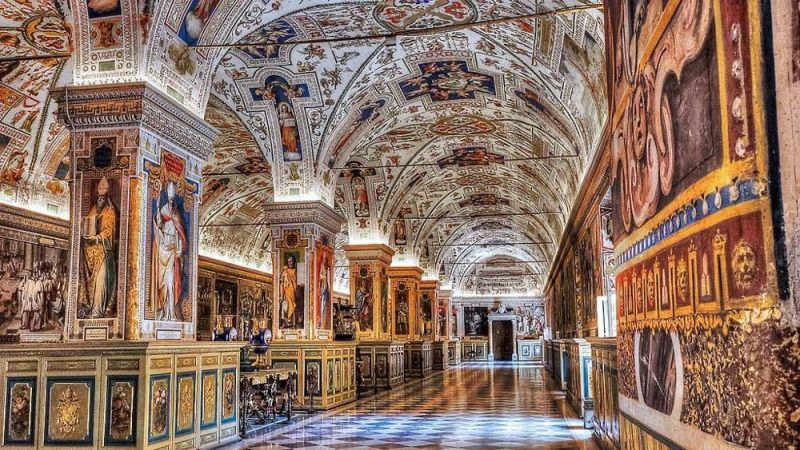
Benedict XVI on the Vatican Museums

Image result for vatican museum

"For many people a visit to the Vatican Museums during their stay in Rome represents their deepest and sometimes only contact with the Holy See. Therefore, is it a good opportunity to learn about the Christian message. We could say that the artistic heritage of Vatican City constitutes a kind of great 'parable' through which the Pope speaks to men and women from all over the world - and therefore from many cultural and religious backgrounds - people who perchance never read a papal address or homily. ... The language of art is a language of parables, possessing a special kind of universal openness. The 'Via Pulchtitudinis' can open people’s minds and hearts to the eternal, raising them to the heights of God.

I greatly appreciated the fact that the film makes repeated reference to the efforts of Roman Pontiffs to conserve and cherish artistic heritage, and to their efforts in modern times to renew the Church’s dialogue with artists. The collection of modern religious art in the Vatican Museums is living proof of the fruitfulness of that dialogue. Indeed, ... the entire great structure of the Vatican Museums ... possesses a dimension which we could define as 'evangelising'."


Benedict XVI, 25 October 2012

Thursday, February 28, 2019

Benedict XVI on the Year of Faith

Pope John XXIII riding in procession to St Peter’s Basilica, at start of the Second Vatican Ecumenical Council. Photograph: Paul Schutzer/Time Life Pictures/Getty Images
Pope John XXIII riding in procession to St Peter’s Basilica, at the start of the Second Vatican Ecumenical Council.
 
"The Year of Faith which we launch today is linked harmoniously with the Church’s whole path over the last fifty years: from the Council, through the Magisterium of the Servant of God Paul VI, who proclaimed a Year of Faith in 1967, up to the Great Jubilee of the year 2000, with which Blessed John Paul II re-proposed to all humanity Jesus Christ as the one Saviour, yesterday, today and forever. Between these two Popes, Paul VI and John Paul II, there was a deep and profound convergence, precisely upon Christ as the centre of the cosmos and of history, and upon the apostolic eagerness to announce Him to the world. Jesus is the centre of the Christian faith. The Christian believes in God Whose face was revealed by Jesus Christ. He is the fulfilment of the Scriptures and their definitive interpreter".
 
"Today’s Gospel tells us that Jesus Christ, consecrated by the Father in the Holy Spirit, is the true and perennial subject of evangelisation. ... This mission of Christ, this movement of His continues in space and time, over centuries and continents. It is a movement which starts with the Father and, in the power of the Spirit, goes forth to bring the good news to the poor, in both a material and a spiritual sense. The Church is the first and necessary instrument of this work of Christ because it is united to Him as a body to its head".
 
"Vatican Council II did not wish to deal with the theme of faith in one specific document. It was, however, animated by a desire, as it were, to immerse itself anew in the Christian mystery so as to re-propose it fruitfully to contemporary man. ... In his opening speech Blessed John XXIII presented the principal purpose of the Council in this way: “What above all concerns the Ecumenical Council is this: that the sacred deposit of Christian doctrine be safeguarded and taught more effectively. … Therefore, the principal purpose of this Council is not the discussion of this or that doctrinal theme, a Council is not required for that, ... [but] this certain and immutable doctrine, which is to be faithfully respected, needs to be explored and presented in a way which responds to the needs of our time”.
 
"In the light of these words, we can understand what I myself felt at the time: during the Council there was an emotional tension as we faced the common task of making the truth and beauty of the faith shine out in our time, without sacrificing it to the demands of the present or leaving it tied to the past: the eternal presence of God resounds in the faith, transcending time, yet it can only be welcomed by us in our own unrepeatable today. Therefore I believe that the most important thing ... is to revive in the whole Church that positive tension, that yearning to announce Christ again to contemporary man. But, so that this interior thrust towards the new evangelisation neither remain just an idea nor be lost in confusion, ... I have often insisted on the need to return, as it were, to the “letter” of the Council - that is to its texts - also to draw from them its authentic spirit, and why I have repeated that the true legacy of Vatican II is to be found in them".
 
"The Council did not formulate anything new in matters of faith, nor did it wish to replace what was ancient. Rather, it concerned itself with seeing that the same faith might continue to be lived in the present day, that it might remain a living faith in a world of change. ... The Council Fathers wished to present the faith in a meaningful way; and if they opened themselves trustingly to dialogue with the modern world it is because they were certain of their faith, of the solid rock on which they stood. In the years following, however, many embraced uncritically the dominant mentality, placing in doubt the very foundations of the deposit of faith, which they sadly no longer felt able to accept as truths."
 
"If today the Church proposes a new Year of Faith and a new evangelisation, it is not to honour an anniversary, but because there is more need of it, even more than there was fifty years ago! ... Even the initiative to create a pontifical council for the promotion of the new evangelisation ... is to be understood in this context. Recent decades have seen the advance of a spiritual “desertification”. In the Council’s time it was already possible from a few tragic pages of history to know what a life or a world without God looked like, but now we see it every day around us. ... But it is in starting from the experience of this desert ... that we can again discover the joy of believing, its vital importance for us".
 
"In the desert we rediscover the value of what is essential for living; thus in today’s world there are innumerable signs, often expressed implicitly or negatively, of the thirst for God, for the ultimate meaning of life. And in the desert people of faith are needed who, with their own lives, point out the way to the Promised Land and keep hope alive. Living faith opens the heart to the grace of God which frees us from pessimism. Today, more than ever, evangelising means witnessing to the new life, transformed by God, and thus showing the path".
 
"The journey is a metaphor for life, and the wise wayfarer is one who has learned the art of living, and can share it with his brethren - as happens to pilgrims along the Way of St. James or similar routes which, not by chance, have again become popular in recent years. How come so many people today feel the need to make these journeys? Is it not because they find there, or at least intuit, the meaning of our existence in the world? This, then, is how we can picture the Year of Faith: a pilgrimage in the deserts of today’s world, taking with us only what is necessary: ... the Gospel and the faith of the Church, of which the Council documents are a luminous expression, as is the Catechism of the Catholic Church, published twenty years ago."
 
"Venerable and dear brothers, 11 October 1962 was the Feast of Mary Most Holy, Mother of God. Let us entrust to her the Year of Faith, as I did last week when I went on pilgrimage to Loreto. May the Virgin Mary always shine out as a star along the way of the new evangelisation".
 
Extracts from a homily by Pope Benedict XVI during the course of a Mass celebrated in St. Peter's Square on 11 October 2012.