Showing posts with label Jesus Christ. Show all posts

Saturday, March 22, 2025

Benedict XVI on Saint Catherine of Genoa

Dear Brothers and Sisters,

After Catherine of Siena and Catherine of Bologna, today I would like to speak to you about another Saint: Catherine of Genoa, known above all for her vision of purgatory. The text that describes her life and thought was published in this Ligurian city in 1551. It is in three sections: her Vita [Life], properly speaking, the Dimostratione et dechiaratione del purgatorio — better known as Treatise on purgatory — and her Dialogo tra l’anima e il corpo (cf. Libro de la Vita mirabile et dottrina santa, de la beata Caterinetta da Genoa. Nel quale si contiene una utile et catholica dimostratione et dechiaratione del purgatorio, Genoa 1551). The final version was written by Catherine’s confessor, Fr Cattaneo Marabotto.

Catherine was born in Genoa in 1447. She was the youngest of five. Her father, Giacomo Fieschi, died when she was very young. Her mother, Francesca di Negro provided such an effective Christian education that the elder of her two daughters became a religious.

When Catherine was 16, she was given in marriage to Giuliano Adorno, a man who after various trading and military experiences in the Middle East had returned to Genoa in order to marry.

Married life was far from easy for Catherine, partly because of the character of her husband who was given to gambling. Catherine herself was at first induced to lead a worldly sort of life in which, however, she failed to find serenity. After 10 years, her heart was heavy with a deep sense of emptiness and bitterness.

A unique experience on 20 March 1473 sparked her conversion. She had gone to the Church of San Benedetto in the monastery of Nostra Signora delle Grazie [Our Lady of Grace], to make her confession and, kneeling before the priest, “received”, as she herself wrote, “a wound in my heart from God’s immense love”. It came with such a clear vision of her own wretchedness and shortcomings and at the same time of God’s goodness, that she almost fainted.

Her heart was moved by this knowledge of herself — knowledge of the empty life she was leading and of the goodness of God. This experience prompted the decision that gave direction to her whole life. She expressed it in the words: “no longer the world, no longer sin” (cf. Vita Mirabile, 3rv). Catherine did not stay to make her Confession.

On arriving home she entered the remotest room and spent a long time weeping. At that moment she received an inner instruction on prayer and became aware of God’s immense love for her, a sinner. It was a spiritual experience she had no words to describe (cf. Vita Mirabile, 4r).

It was on this occasion that the suffering Jesus appeared to her, bent beneath the Cross, as he is often portrayed in the Saint’s iconography. A few days later she returned to the priest to make a good confession at last. It was here that began the “life of purification” which for many years caused her to feel constant sorrow for the sins she had committed and which spurred her to impose forms of penance and sacrifice upon herself, in order to show her love to God.

On this journey Catherine became ever closer to the Lord until she attained what is called “unitive life”, namely, a relationship of profound union with God.

In her Vita it is written that her soul was guided and instructed from within solely by the sweet love of God which gave her all she needed. Catherine surrendered herself so totally into the hands of the Lord that she lived, for about 25 years, as she wrote, “without the assistance of any creature, taught and governed by God alone” (Vita, 117r-118r), nourished above all by constant prayer and by Holy Communion which she received every day, an unusual practice in her time. Only many years later did the Lord give her a priest who cared for her soul.

Catherine was always reluctant to confide and reveal her experience of mystical communion with God, especially because of the deep humility she felt before the Lord’s graces. The prospect of glorifying him and of being able to contribute to the spiritual journey of others alone spurred her to recount what had taken place within her, from the moment of her conversion, which is her original and fundamental experience.

The place of her ascent to mystical peaks was Pammatone Hospital, the largest hospital complex in Genoa, of which she was director and animator. Hence Catherine lived a totally active existence despite the depth of her inner life. In Pammatone a group of followers, disciples and collaborators formed around her, fascinated by her life of faith and her charity.

Indeed her husband, Giuliano Adorno, was so so won over that he gave up his dissipated life, became a Third Order Franciscan and moved into the hospital to help his wife.

Catherine’s dedication to caring for the sick continued until the end of her earthly life on 15 September 1510. From her conversion until her death there were no extraordinary events but two elements characterize her entire life: on the one hand her mystical experience, that is, the profound union with God, which she felt as spousal union, and on the other, assistance to the sick, the organization of the hospital and service to her neighbour, especially the neediest and the most forsaken. These two poles, God and neighbour, totally filled her life, virtually all of which she spent within the hospital walls.

Dear friends, we must never forget that the more we love God and the more constantly we pray, the better we will succeed in truly loving those who surround us, who are close to us, so that we can see in every person the Face of the Lord whose love knows no bounds and makes no distinctions. The mystic does not create distance from others or an abstract life, but rather approaches other people so that they may begin to see and act with God’s eyes and heart.

Catherine’s thought on purgatory, for which she is particularly well known, is summed up in the last two parts of the book mentioned above: The Treatise on purgatory and the Dialogues between the body and the soul. It is important to note that Catherine, in her mystical experience, never received specific revelations on purgatory or on the souls being purified there. Yet, in the writings inspired by our Saint, purgatory is a central element and the description of it has characteristics that were original in her time.

The first original passage concerns the “place” of the purification of souls. In her day it was depicted mainly using images linked to space: a certain space was conceived of in which purgatory was supposed to be located.

Catherine, however, did not see purgatory as a scene in the bowels of the earth: for her it is not an exterior but rather an interior fire. This is purgatory: an inner fire.

The Saint speaks of the Soul’s journey of purification on the way to full communion with God, starting from her own experience of profound sorrow for the sins committed, in comparison with God’s infinite love (cf. Vita Mirabile, 171v).

We heard of the moment of conversion when Catherine suddenly became aware of God’s goodness, of the infinite distance of her own life from this goodness and of a burning fire within her. And this is the fire that purifies, the interior fire of purgatory. Here too is an original feature in comparison with the thought of her time.

In fact, she does not start with the afterlife in order to recount the torments of purgatory — as was the custom in her time and perhaps still is today — and then to point out the way to purification or conversion. Rather our Saint begins with the inner experience of her own life on the way to Eternity.

“The soul”, Catherine says, “presents itself to God still bound to the desires and suffering that derive from sin and this makes it impossible for it to enjoy the beatific vision of God”. Catherine asserts that God is so pure and holy that a soul stained by sin cannot be in the presence of the divine majesty (cf. Vita Mirabile, 177r).

We too feel how distant we are, how full we are of so many things that we cannot see God. The soul is aware of the immense love and perfect justice of God and consequently suffers for having failed to respond in a correct and perfect way to this love; and love for God itself becomes a flame, love itself cleanses it from the residue of sin.

In Catherine we can make out the presence of theological and mystical sources on which it was normal to draw in her time. In particular, we find an image typical of Dionysius the Areopagite: the thread of gold that links the human heart to God himself. When God purified man, he bound him with the finest golden thread, that is, his love, and draws him toward himself with such strong affection that man is as it were “overcome and won over and completely beside himself”.

Thus man’s heart is pervaded by God’s love that becomes the one guide, the one driving force of his life (cf. Vita Mirabile, 246rv). This situation of being uplifted towards God and of surrender to his will, expressed in the image of the thread, is used by Catherine to express the action of divine light on the souls in purgatory, a light that purifies and raises them to the splendour of the shining radiance of God (cf. Vita Mirabile, 179r).

Dear friends, in their experience of union with God, Saints attain such a profound knowledge of the divine mysteries in which love and knowledge interpenetrate, that they are of help to theologians themselves in their commitment to study, to intelligentia fidei, to an intelligentia of the mysteries of faith, to attain a really deeper knowledge of the mysteries of faith, for example, of what purgatory is.

With her life St Catherine teaches us that the more we love God and enter into intimacy with him in prayer the more he makes himself known to us, setting our hearts on fire with his love.

In writing about purgatory, the Saint reminds us of a fundamental truth of faith that becomes for us an invitation to pray for the deceased so that they may attain the beatific vision of God in the Communion of Saints (cf. Catechism of the Catholic Church, n. 1032).

Moreover the humble, faithful and generous service in Pammatone Hospital that the Saint rendered throughout her life is a shining example of charity for all and an encouragement, especially for women who, with their precious work enriched by their sensitivity and attention to the poorest and neediest, make a fundamental contribution to society and to the Church. 

Benedict XVI, General Audience, Paul VI Audience Hall, 12 January 2011.

Monday, December 30, 2024

Benedict XVI on the Papacy (Petrus Apostolus)

On the second anniversary of Benedict XVI's death, this article serves as a testament to how Pope Benedict XVI viewed the Papacy.


Shortly before the announcement of Pope Benedict XVI's resignation, on 8 February 2013, he gave a deeply Roman, Petrine, lesson in his meeting with the seminarians of Rome in the chapel of the Pontifical Roman Seminary (photo above from that meeting). Three days later, in a morning meeting with his cardinals, he announced his decision to step down from the papacy.


Excerpts from the official translation by the Holy See below:


"We have heard three verses from the First Letter of St Peter (cf. 1:3-5). Before going into this text it seems to me important to be aware of the fact that it is Peter who is speaking. The first two words of the Letter are Petrus apostolus (cf. v.1): he speaks and he speaks to the Churches in Asia and calls the faithful “chosen”, and “exiles of the Dispersion” (ibid.).


Let us reflect a little on this. Peter is speaking and - as we hear at the end of the Letter - he is speaking from Rome, which he called “Babylon” (cf. 5:13). Peter speaks as if it were a first encyclical with which the first Apostle, Vicar of Christ, addresses the Church of all time.


Peter, an apostle: thus, the one who is speaking is the one who found the Messiah in Jesus Christ, who was the first to speak on behalf of the future Church: “You are the Christ, the Son of the living God” (cf. Mt 16:16).


The one who introduced us to this faith is speaking, the one to whom the Lord said: “I will give you the keys of the kingdom of heaven” (cf. Mt 16:19), to whom he entrusted his flock after the Resurrection, saying to him three times: “Feed my lambs...Tend my sheep” (cf. Jn 21:15-17).


And it is also the man who fell who is speaking, the man who denied Jesus three times and was granted the grace to see Jesus’ look, to feel deeply moved in his heart and to find forgiveness and a renewal of his mission.


However, above all it is important that this man, full of passion, full of longing for God, full of a desire for the Kingdom of God, for the Messiah, this man who has found Jesus, the Lord and the Messiah, is also the man who sinned, who fell; and yet he remained in God’s sight and in this way he remained responsible for the Lord’s Church, he remained the one assigned by Christ, he remained the messenger of Christ’s love.

Peter the Apostle is speaking, but the exegetes tell us: it is impossible for this Letter to have been written by Peter because the Greek is so good that it cannot be the Greek of a fisherman from the Sea of Galilee.


And it is not only the language — the syntax is excellent — but also the thought which is already quite mature, there are actual formulas in which the faith and the reflection of the Church are summed up. These exegetes say, therefore: it had already reached a degree of development that cannot be Peter’s.


How does one respond? There are two important positions: first, Peter himself — that is, the Letter — gives us a clue, for at the end of the writing he says I write to you: “By Silvanus... dia Silvanus”.


This “by” [dia] could mean various things. It may mean that he [Silvanus] brings or transmits; it may mean that Silvanus helped him write it; it may mean that in practice it was really Silvanus who wrote it. In any case, we may conclude that the Letter itself points out to us that Peter was not alone in writing this Letter but it expresses the faith of a Church, which is already on a journey of faith, a faith increasingly mature. He does not write alone, as an isolated individual; he writes with the assistance of the Church, of people who help him to deepen the faith, to enter into the depths of his thought, of his rationality, of his profundity.


And this is very important: Peter is not speaking as an individual, he is speaking ex persona Ecclesiae, he is speaking as a man of the Church, as an individual of course, with his personal responsibility, but also as a person who speaks on behalf of the Church; not only private and original ideas, not as a 19th century genius who wished to express only personal and original ideas that no one else could have expressed first.


No.


He does not speak as an individualistic genius, but speaks, precisely, in the communion of the Church. In the Apocalypse, in the initial vision of Christ, it is said that Christ’s voice is like the sound of many waters (cf. Rev 1:15). This means: Christ’s voice gathers together all the waters of the world, bears within it all the living waters that give life to the world; he is a Person, but this is the very greatness of the Lord, that he bears within him all the rivers of the Old Testament, indeed, of the wisdom of peoples. ...

I would like to say something more: St Peter writes from Rome. This is important.


Here we already have the Bishop of Rome, we have the beginning of Succession, we already have the beginning of the actual Primacy located in Rome, not only granted by the Lord but placed here, in this city, in this world capital.


How did Peter come to Rome? This is a serious question. The Acts of the Apostles tell us that after his escape from Herod’s prison, he went to another place (cf. 12:17) - eis eteron topon. Where he went is not known; some say to Antioch, others, to Rome.


In any case, in this capital it should also be said that before fleeing he entrusted the Judaeo-Christian Church, the Church of Jerusalem, to James, and in entrusting her to James he nevertheless remained Primate of the universal Church, of the Church of the Gentiles but also of the Judaeo-Christian Church.


And here in Rome he found a great Judaeo-Christian community.


The liturgists tell us that in the Roman Canon there are traces of a characteristically Judaeo-Christian language.


Thus we see that in Rome both parts of the Church were to be found: the Judaeo-Christian and the pagan-Christian, united, an expression of the universal Church. And for Peter, moving from Jerusalem to Rome meant moving to the universality of the Church, moving to the Church of the Gentiles and of all the epochs, to the Church that also still belongs to the Jews.

And I think that in going to Rome St Peter not only thought of this transfer: Jerusalem/Rome, Judaeo-Christian Church/universal Church.


He certainly also remembered Jesus’ last words to him, recorded by St John: “when you are old, you will stretch out your hands, and another will gird you and carry you where you do not wish to go” (cf. Jn 21:18).


It is a prophecy of the crucifixion. Philologists show us that “stretch out your hands” is a precise, technical expression for the crucifixion. St Peter knew that his end would be martyrdom, would be the cross: that it would therefore be following Christ completely.


Consequently, in going to Rome there is no doubt that he was also going to martyrdom: martyrdom awaited him in Babylon. The primacy, therefore, has this content of universality but it has a martyrological content as well.


Furthermore, Rome had been a place of martyrdom from the outset. In going to Rome, Peter once again accepts this word of the Lord: he heads for the cross and invites us too to accept the martyrological aspect of Christianity, which may have very different forms.


And the cross may have very different forms, but no one can be Christian without following the Crucified One, without accepting the martyrological moment too.
...


Perhaps today we are tempted to say: we do not want to rejoice at having been chosen, for this would be triumphalism. It would be triumphalism to think that God had chosen me because I was so important. This would really be erroneous triumphalism.


However, being glad because God wanted me is not triumphalism. Rather, it is gratitude, and I think we should re-learn this joy: God wanted me to be born in this way, into a Catholic family, he wanted me to know Jesus from the first.


What a gift to be wanted by God so that I could know his face, so that I could know Jesus Christ, the human face of God, the human history of God in this world! Being joyful because he has chosen me to be a Catholic, to be in this Church of his, where subsistit Ecclesia unica; we should rejoice because God has given me this grace, this beauty of knowing the fullness of God’s truth, the joy of his love.
...


Christians are certainly not only foreigners; we are also Christian nations, we are proud of having contributed to the formation of culture; there is a healthy patriotism, a healthy joy of belonging to a nation that has a great history of culture and of faith.


Yet, as Christians, we are always also foreigners - the destiny of Abraham, described in the Letter to the Hebrews. As Christians we are, even today, also always foreigners.


In the work place, Christians are a minority, they find themselves in an extraneous situation; it is surprising that a person today can still believe and live like this. This is also part of our life: it is a form of being with the Crucified Christ; this being foreigners, not living in the way that everyone else lives, but living — or at least seeking to live — in accordance with his Word, very differently from what everyone says.


And it is precisely this that is characteristic of Christians. They all say: “But everyone does this, why don’t I?”


No, I don’t, because I want to live in accordance with God. St Augustine once said: “Christians are those who do not have their roots below, like trees, but have their roots above, and they do not live this gravity in the natural downwards gravitation."


Let us pray the Lord that he help us to accept this mission of living as exiles, as a minority, in a certain sense, of living as foreigners and yet being responsible for others and, in this way, reinforcing the goodness in our world.
...


Inheritance. It is a very important word in the Old Testament, where Abraham is told that his seed will inherit the earth, and this was always the promise for his descendants.


You will have the earth, you will be heirs of the earth. In the New Testament, this word becomes a word for us; we are heirs, not of a specific country, but of the land of God, of the future of God.


Inheritance is something of the future, and thus this word tells us above all that as Christians we have a future, the future is ours, the future is God’s. Thus, being Christians, we know that the future is ours and the tree of the Church is not a tree that is dying but a tree that constantly puts out new shoots.


Therefore we have a reason not to let ourselves be upset, as Pope John said, by the prophets of doom who say: well, the Church is a tree that grew from the mustard seed, grew for 2,000 years, now she has time behind her, it is now time for her to die.


No.


The Church is ever renewed, she is always reborn. The future belongs to us. Of course, there is a false optimism and a false pessimism. A false pessimism tells us that the epoch of Christianity is over. No: it is beginning again!


The false optimism was the post-Council optimism, when convents closed, seminaries closed and they said “but... nothing, everything is fine!”.... No! Everything is not fine. There are also serious, dangerous omissions and we have to recognize with healthy realism that in this way things are not all right, it is not all right when errors are made.


However, we must also be certain at the same time that if, here and there, the Church is dying because of the sins of men and women, because of their non-belief, at the same time she is reborn.


The future really belongs to God: this is the great certainty of our life, the great, true optimism that we know. The Church is the tree of God that lives for ever and bears within her eternity and the true inheritance: eternal life.
...


And, lastly, “guarded through faith.” The New Testament text, from the Letter of St Peter, uses a rare word here, phrouroumenoi, which means: there are the “guards” and faith is like the guards who preserve the integrity of my being, of my faith.


This word interprets in particular “the guards” at the gates of a city, where they stand and keep watch over the city so that it is not invaded by destructive powers.


Thus faith is a “guard” of my being, of my life, of my inheritance.


We must be grateful for this vigilance of faith that protects us, helps us, guides us, gives us the security: God does not let me fall from his hands.


Saturday, March 25, 2023

Archives of the Order (6) - Ad Providam Christi Vicarii


Ad Providam Christi Vicarii 

For an everlasting record. It belongs to Christ’s vicar, exercising his vigilant care from the apostolic watch-tower, to judge the changing conditions of the times, to examine the causes of the affairs which crop up and to observe the characters of the people concerned. In this way he can give due consideration to each affair and act opportunely; he can tear out the thistles of vice from the field of the Lord so that virtue may increase; and he can remove the thorns of false dealing so as to plant rather than to destroy. He transfers slips dedicated to God into the places left empty by the eradication of the harmful thistles. By thus transferring and uniting in a provident and profitable way, he brings a joy greater than the harm he has caused to the people uprooted; true justice has compassion for sorrow. By enduring the harm and replacing it profitably, he increases the growth of the virtues and rebuilds what has been destroyed with something better.

A little while ago we suppressed definitively and perpetually the order of the Knights Templar of Jerusalem because of the abominable, even unspeakable, deeds of its master, brothers and other persons of the order in all parts of the world. These men were spattered with indecent errors and crimes, with depravity- they were blemished and stained. We are silent here as to detail because the memory is so sad and unclean. With the approval of the sacred council we abolished the constitution of the order, its habit and name, not without bitterness of heart. We did this not by definitive sentence, since this would be unlawful according to the inquiries and processes carried out, but by apostolic provision or ordinance. We issued a strict prohibition that nobody might henceforth enter the order or wear its habit or presume to behave as a Templar. Anyone doing otherwise incurred automatic excommunication. We commanded, by our apostolic authority, that all the property of the order be left to the judgment and disposition of the apostolic see. We strictly forbade anyone, of whatever state or condition, to interfere in any way regarding the persons or property of the order or to act in prejudice of the direction or disposition of the apostolic see in this matter, or to alter or even to tamper; we decreed all attempts of this kind to be henceforth null and void, whether made knowingly or in ignorance.

Afterwards we took care lest the said property, which over a long period had been given, bequeathed, granted and acquired from the worshippers of Christ for the help of the holy Land and to assail the enemies of the christian faith, should be left without management and perish as belonging to nobody or be used in ways other than those intended by the pious devotion of the faithful. There was the further danger that tardiness in our arrangements and dispositions might lead to destruction or dilapidation. We therefore held difficult, lengthy and varied consultations and discussions with our brothers, the cardinals of the holy Roman church, with patriarchs, archbishops, bishops and prelates, with certain outstanding and distinguished persons, and with the procurators at the council of the chapters, convents, churches and monasteries, and of the remaining absent prelates, in order that, through this painstaking deliberation, a wholesome and beneficial disposal of the said property might be made to the honour of God, the increase of the faith, the exaltation of the church, the help of the holy Land, and the salvation and peace of the faithful. 

After especially long carefully thought out, deliberate and complete consultations, for many just reasons, we and the said fathers and patriarchs, archbishops, bishops, other prelates, and the outstanding and distinguished persons, then present at the council, finally came to a conclusion. The property should become forever that of the order of the Hospital of saint John of Jerusalem, of the Hospital itself and of our beloved sons the master and brothers of the Hospital, in the name of the Hospital and order of these same men, who as athletes of the Lord expose themselves to the danger of death for the defence of the faith, bearing heavy and perilous losses in lands overseas.

We have observed with the fullness of sincere charity that this order of the Hospital and the Hospital itself is one of the bodies in which religious observance flourishes. Factual evidence tells us that divine worship is fervent, works of piety and mercy are practised with great earnestness, the brothers of the Hospital despise the attractions of the world and are devoted servants of the most High. As fearless warriors of Christ they are ardent in their efforts to recover the holy Land, despising all human perils. We bear in mind also that the more plentifully they are supplied with means, the more will the energy of the master and brothers of the order and Hospital grow, their ardour increase and their bravery be strengthened to repel the insults offered to our Redeemer and to crush the enemies of the faith. They will be able to carry more lightly and easily the burdens demanded in the execution of such an enterprise. They will therefore, not unworthily, be made more watchful and apply themselves with greater zeal.

In order that we may grant them increased support, we bestow on them, with the approval of the sacred council, the house itself of the Knights Templar and the other houses, churches, chapels, oratories, cities, castles, towns, lands, granges, places, possessions, jurisdictions, revenues, rights, all the other property, whether immovable, movable or self-moving, and all the members together with their rights and belongings, both beyond and on this side of the sea, in each and every part of the world, at the time when the master himself and some brothers of the order were arrested as a body in the kingdom of France, namely in October 1308. The gift is to include everything which the Templars had, held or possessed of themselves or through others, or which belonged to the said house and order of Knights Templar, or to the master and brothers of the order as also the titles, actions and rights which at the time of their arrest belonged in any way to the house, order or persons of the order of Knights Templar, or could belong to them, against whomsoever of whatever dignity, state or condition, with all the privileges, indults, immunities and liberties with which the said master and brothers of the house and order of Knights Templar, and the house and order itself, had been legitimately endowed by the apostolic see or by catholic emperors, kings and princes, or by other members of the faithful, or in any other way. All this we present, grant, unite, incorporate, apply and annex in perpetuity, by the fullness of our apostolic power, to the said order of the Hospital of saint John of Jerusalem and to the Hospital itself.

We except the property of the said former order of Knights Templar in the kingdoms and lands of our beloved sons in Christ, the illustrious kings of Castille, Aragon, Portugal and Majorca, outside the kingdom of France. We reserve this property, from the said gift, grant, union, application, incorporation and annexation, to the disposal and regulation of the apostolic see. We wish the prohibition made a little while ago by other proceedings of ours to remain in full force. Nobody of any state or condition may intervene in any way as regards these persons and property in prejudice to the regulation or disposition of the apostolic see. We wish that our decree concerning these persons and property in the kingdoms and lands of the above kings should remain in full force until the apostolic see makes another arrangement.

Occupiers and unlawful detainers of the property, irrespective of state, condition, eminence or dignity, even if this is pontifical, imperial or royal, unless they abandon the property within a month after it is called for by the master and brothers of the Hospital, or by any of them, or by their procurators [. . .]. The property must be fully and freely restored to the order of Hospitallers and to the said Hospital, or to the master, priors, preceptors or brothers of the said Hospital, in any regions or provinces, or to any of them individually, or to their procurator or procurators, in the name of the said order of Hospitallers, even if the priors, preceptors and brothers and their procurators or any one of them have no special mandate from the master of the Hospital, provided that the procurators hold or show a special commission from the priors and preceptors or from any one of them, in the provinces or regions in which these priors and preceptors have been delegated. The priors, preceptors and brothers are obliged to give a full reckoning to the master concerning everything: conduct, actions, receipts and negotiations.

 The procurators are to render a similar account to the priors and preceptors, and to each one of them, by whom they were delegated. All who have knowingly given counsel, aid or favour to the occupiers and detainers mentioned above concerning such occupation or detention, publicly or secretly, lie under excommunication. Chapters, colleges or governing bodies of churches and monasteries, and the corporations of cities, castles, towns and other places, as well as the cities, castles, towns and other places themselves which were at fault in this, and the cities, castles and places in which the detainers and occupiers hold temporal lordship, if such temporal lords place obstacles to the giving up of the property and its restoration to the master and brothers of the Hospital, in the name of the Hospital, not desisting from such conduct within a month after the property is called for, are automatically laid under interdict. They cannot be absolved from this until they offer full satisfaction. Moreover the occupiers and detainers and those who have given them counsel, aid or favour, whether individuals or the chapters, colleges or governing bodies of churches or monasteries, as also the corporations of cities, castles, lands or other places, incur, in addition to the above-mentioned penalties, automatic deprivation of everything they hold as fiefs from the Roman or other churches. These fiefs are to revert freely without opposition to the churches concerned, and the prelates or rulers of those churches may dispose of the fiefs at will, as they judge will be to the advantage of the churches. 

Given at Vienne on 2 May in the seventh year of our pontificate (1312).

Pope Clement V

Saturday, January 14, 2023

Cardinal Ratzinger on the 9th Station of the Cross


NINTH STATION


Jesus falls for the third time

V/. Adoramus te, Christe, et benedicimus tibi.
R/. Quia per sanctam crucem tuam redemisti mundum.

From the Book of Lamentations. 3:27-32

It is good for a man that he bear the yoke in his youth. Let him sit alone in silence when he has laid it on him; let him put his mouth in the dust - there may yet be hope; let him give his cheek to the smiter, and be filled with insults. For the Lord will not cast off for ever, but, though he cause grief, he will have compassion, according to the abundance of his steadfast love.


MEDITATION


by Joseph Ratzinger

What can the third fall of Jesus under the Cross say to us?


We have considered the fall of man in general, and the falling of many Christians away from Christ and into a godless secularism. Should we not also think of how much Christ suffers in his own Church?


How often is the holy sacrament of his Presence abused, how often must he enter empty and evil hearts!


How often do we celebrate only ourselves, without even realizing that he is there!


How often is his Word twisted and misused!


What little faith is present behind so many theories, so many empty words!


How much filth there is in the Church, and even among those who, in the priesthood, ought to belong entirely to him!


How much pride, how much self-complacency!


What little respect we pay to the Sacrament of Reconciliation, where he waits for us, ready to raise us up whenever we fall!


All this is present in his Passion. His betrayal by his disciples, their unworthy reception of his Body and Blood, is certainly the greatest suffering endured by the Redeemer; it pierces his heart. We can only call to him from the depths of our hearts: Kyrie eleison ­ Lord, save us (cf. Mt 8: 25).


PRAYER

Lord, your Church often seems like a boat about to sink, a boat taking in water on every side.


In your field we see more weeds than wheat.


The soiled garments and face of your Church throw us into confusion.


Yet it is we ourselves who have soiled them! It is we who betray you time and time again, after all our lofty words and grand gestures.


Have mercy on your Church; within her too, Adam continues to fall.


When we fall, we drag you down to earth, and Satan laughs, for he hopes that you will not be able to rise from that fall; he hopes that being dragged down in the fall of your Church, you will remain prostrate and overpowered.


But you will rise again. You stood up, you arose and you can also raise us up.


Save and sanctify your Church. Save and sanctify us all.


Cardinal Ratzinger, Via Crucis, 25 March 2005, Rome.

Saturday, April 24, 2021

Ratzinger on Purgatory


"Purgatory is not, as Tertullian thought, some kind of supra-worldly concentration camp where man is forced to undergo punishment in a more or less arbitrary fashion. Rather it is the inwardly necessary process of transformation in which a person becomes capable of Christ, capable of God, and thus capable of unity with the whole communion of saints".

Joseph Ratzinger, Eschatology: Death and Eternal Life, CUA Press, p. 230. 

Thursday, April 8, 2021

Eastern Christianity liturgy according to Saint John Paul II


In Venice, before the representatives of the ecclesiastical world, who held a rather narrow idea of the Church and were opposed to this vision, Saint Cyril defended it with courage. He showed that many peoples had already in the past introduced and now possessed a liturgy written and celebrated in their own language, such as " the Armenians, the Persians, the Abasgians, the Georgians, the Sogdians, the Goths, the Avars, the Tirsians, the Khazars, the Arabs, the Copts, the Syrians and many others".

Reminding them that God causes the sun to rise and the rain to fall on all people without exception, he said: "Do not all breathe the air in the same way? And you are not ashamed to decree only three languages (Hebrew, Greek and Latin), deciding that all other peoples and races should remain blind and deaf! Tell me: do you hold this because you consider God is so weak that he cannot grant it, or so envious that he does not wish it?". To the historical and logical arguments which they brought against him Cyril replied by referring to the inspired basis of Sacred Scripture: "Let every tongue confess that Jesus Christ is Lord, to the glory of God the Father"; "All the earth worships you; they sing praises to you, sing praises to your name"; "Praise the Lord, all nations! Extol him, all peoples!".

...

Furthermore, the translation of the sacred books, carried out by Cyril and Methodius together with their pupils, conferred a capacity and cultural dignity upon the Old Slavonic liturgical language, which became for many hundreds of years not only the ecclesiastical but also the official and literary language, and even the common language of the more educated classes of the greater part of the Slav nations, and in particular of all the Slavs of the Eastern Rite. It was also used in the Church of the Holy Cross in Cracow, where the Slav Benedictines had established themselves. Here were published the first liturgical books printed in this language. Up to the present day this is the language used in the Byzantine liturgy of the Slavonic Eastern Churches of the Rite of Constantinople, both Catholic and Orthodox, in Eastern and South Eastern Europe, as well as in various countries of Western Europe. It is also used in the Roman liturgy of the Catholics of Croatia.

22. In the historical development of the Slavs of Eastern Rite, this language played a role equal to that of the Latin language in the West. It also lasted longer than Latin in part until the nineteenth century-and exercised a much more direct influence on the formation of the local literary languages, thanks to its close kinship with them. These merits vis-à-vis the culture of all the Slav peoples and nations make the work of evangelization carried out by Saints Cyril and Methodius in a certain sense constantly present in the history and in the life of these peoples and nations.

John Paul II, Encyclical Slavorum Apostoli about two saintly brothers, Saints Cyril and Methodius (2 June 1985).


Tuesday, December 10, 2019

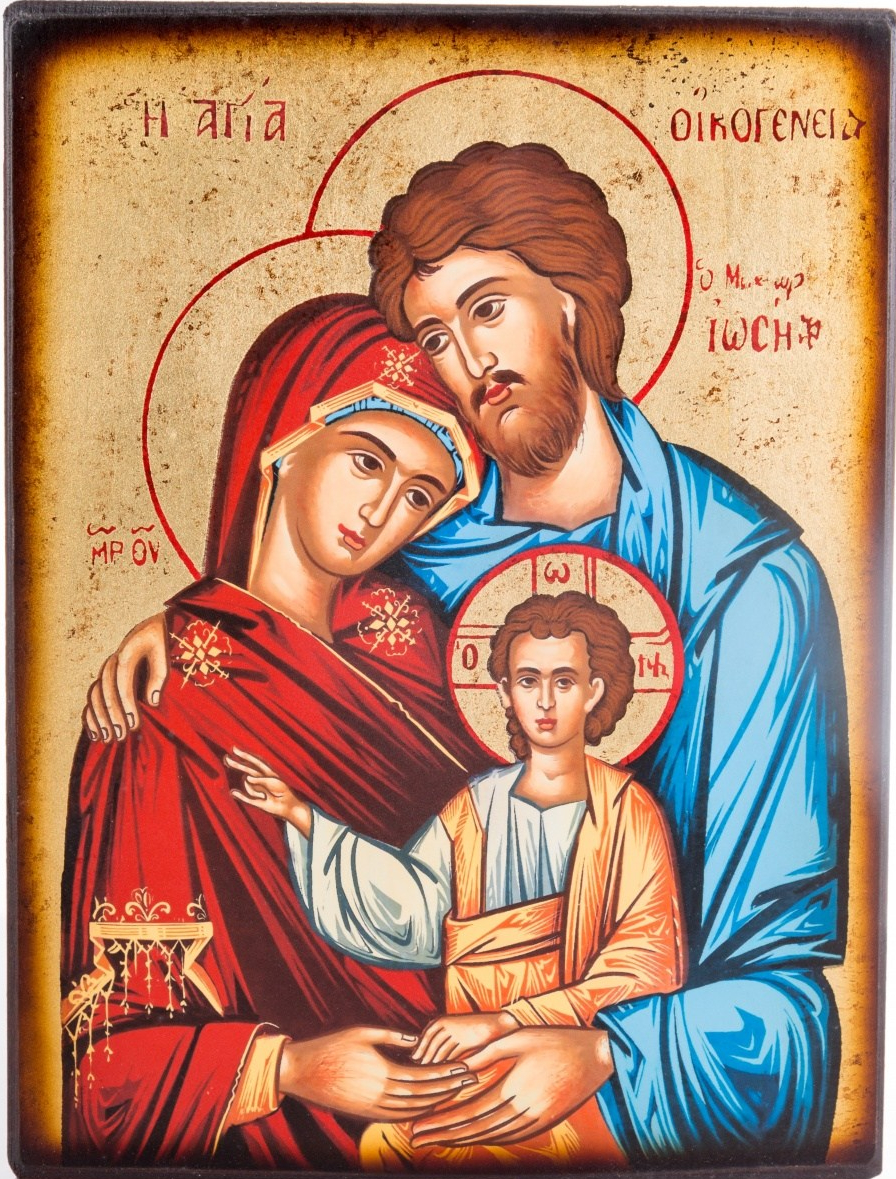
Benedict XVI on the Holy Family of Nazareth

Image result for holy family


"Today’s meeting is taking place in the atmosphere of Christmas, imbued with deep joy at the Birth of the Saviour. We have just celebrated this Mystery whose echo ripples through the Liturgy of all these days. It is a Mystery of Light that all people in every era can relive with faith and prayer. It is through prayer itself that we become capable of drawing close to God with intimacy and depth.
 
Therefore, bearing in mind the theme of prayer that I am developing in the Catecheses in this period, I would therefore like to invite you to reflect today on the way that prayer was part of the life of the Holy Family of Nazareth. Indeed, the house of Nazareth is a school of prayer where one learns to listen, meditate on and penetrate the profound meaning of the manifestation of the Son of God, following the example of Mary, Joseph and Jesus.
 
The Discourse of the Servant of God Paul VI during his Visit to Nazareth is memorable. The Pope said that at the school of the Holy Family we “understand why we must maintain a spiritual discipline, if we wish to follow the teaching of the Gospel and become disciples of Christ”. He added: “In the first place it teaches us silence. Oh! If only esteem for silence, a wonderful and indispensable spiritual atmosphere, could be reborn within us! Whereas we are deafened by the din, the noise and discordant voices in the frenetic, turbulent life of our time. O silence of Nazareth! Teach us to be steadfast in good thoughts, attentive to our inner life, ready to hear God’s hidden inspiration clearly and the exhortations of true teachers” (Discourse in Nazareth, 5 January 1964).
 
We can draw various ideas for prayer and for the relationship with God and with the Holy Family from the Gospel narratives of the infancy of Jesus. We can begin with the episode of the Presentation of Jesus in the Temple. St Luke tells how “when the time came for their purification according to the law of Moses”, Mary and Joseph “brought him up to Jerusalem to present him to the Lord” (2:22). Like every Jewish family that observed the law, Jesus’ parents went to the Temple to consecrate their first-born son to God and to make the sacrificial offering. Motivated by their fidelity to the precepts of the Law, they set out from Bethlehem and went to Jerusalem with Jesus who was only 40 days old. Instead of a year-old lamb they presented the offering of simple families, namely, two turtle doves. The Holy Family’s pilgrimage was one of faith, of the offering of gifts — a symbol of prayer — and of the encounter with the Lord whom Mary and Joseph already perceived in their Son Jesus.
 
Mary was a peerless model of contemplation of Christ. The face of the Son belonged to her in a special way because he had been knit together in her womb and had taken a human likeness from her. No one has contemplated Jesus as diligently as Mary. The gaze of her heart was already focused on him at the moment of the Annunciation, when she conceived him through the action of the Holy Spirit; in the following months she gradually became aware of his presence, until, on the day of his birth, her eyes could look with motherly tenderness upon the face of her son as she wrapped him in swaddling clothes and laid him in the manger.
 
Memories of Jesus, imprinted on her mind and on her heart, marked every instant of Mary’s existence. She lived with her eyes fixed on Christ and cherished his every word. St Luke says: “Mary kept all these things, pondering them in her heart” (2:19) and thus describes Mary’s approach to the Mystery of the Incarnation which was to extend throughout her life: keeping these things, pondering on them in her heart. Luke is the Evangelist who acquaints us with Mary’s heart, with her faith (cf. 1:45), her hope and her obedience (cf. 1:38) and, especially, with her interiority and prayer (cf. 1:46-56), her free adherence to Christ (cf. 1:55).
 
And all this proceeded from the gift of the Holy Spirit who overshadowed her (cf. 1:35), as he was to come down on the Apostles in accordance with Christ’s promise (cf. Acts 1:8). This image of Mary which St Luke gives us presents Our Lady as a model for every believer who cherishes and compares Jesus’ words with his actions, a comparison which is always progress in the knowledge of Jesus. After Bl. Pope John Paul II’s example (cf. Apostolic Letter Rosarium Virginis Mariae) we can say that the prayer of the Rosary is modelled precisely on Mary, because it consists in contemplating the mysteries of Christ in spiritual union with the Mother of the Lord.
 
Mary’s ability to live by God’s gaze, is so to speak, contagious. The first to experience this was St Joseph. His humble and sincere love for his betrothed and his decision to join his life to Mary’s attracted and introduced him, “a just man”, (Mt 1:19), to a special intimacy with God. Indeed, with Mary and later, especially, with Jesus, he began a new way of relating to God, accepting him in his life, entering his project of salvation and doing his will. After trustfully complying with the Angel’s instructions “Do not fear to take Mary your wife” (Mt 1:20) — he took Mary to him and shared his life with her; he truly gave the whole of himself to Mary and to Jesus and this led him to perfect his response to the vocation he had received.
 
As we know, the Gospel has not recorded any of Joseph’s words: his is a silent and faithful, patient and hard-working presence. We may imagine that he too, like his wife and in close harmony with her, lived the years of Jesus’ childhood and adolescence savouring, as it were, his presence in their family.
 
Joseph fulfilled every aspect of his paternal role. He must certainly have taught Jesus to pray, together with Mary. In particular Joseph himself must have taken Jesus to the Synagogue for the rites of the Sabbath, as well as to Jerusalem for the great feasts of the people of Israel. Joseph, in accordance with the Jewish tradition, would have led the prayers at home both every day — in the morning, in the evening, at meals — and on the principal religious feasts. In the rhythm of the days he spent at Nazareth, in the simple home and in Joseph’s workshop, Jesus learned to alternate prayer and work, as well as to offer God his labour in earning the bread the family needed.
 
And lastly, there is another episode that sees the Holy Family of Nazareth gathered together in an event of prayer. When Jesus was 12 years old, as we have heard, he went with his parents to the Temple of Jerusalem. This episode fits into the context of pilgrimage, as St Luke stresses: “His parents went to Jerusalem every year at the feast of the Passover. And when he was twelve years old, they went up according to custom” (2:41-42).
 
Pilgrimage is an expression of religious devotion that is nourished by and at the same time nourishes prayer. Here, it is the Passover pilgrimage, and the Evangelist points out to us that the family of Jesus made this pilgrimage every year in order to take part in the rites in the Holy City. Jewish families, like Christian families, pray in the intimacy of the home but they also pray together with the community, recognizing that they belong to the People of God, journeying on; and the pilgrimage expresses exactly this state of the People of God on the move. Easter is the centre and culmination of all this and involves both the family dimension and that of liturgical and public worship.
 
In the episode of the 12-year-old Jesus, the first words of Jesus are also recorded: “How is it that you sought me? Did you not know that I must be in my Father’s house?” (2:49). After three days spent looking for him his parents found him in the temple, sitting among the teachers, listening to them and asking them questions (cf. 2:46). His answer to the question of why he had done this to his father and mother was that he had only done what the Son should do, that is, to be with his Father.
 
Thus he showed who is the true Father, what is the true home, and that he had done nothing unusual or disobedient. He had stayed where the Son ought to be, that is, with the Father, and he stressed who his Father was.
 
The term “Father” therefore dominates the tone of this answer and the Christological mystery appears in its entirety. Hence, this word unlocks the mystery, it is the key to the Mystery of Christ, who is the Son, and also the key to our mystery as Christians who are sons and daughters in the Son. At the same time Jesus teaches us to be children by being with the Father in prayer. The Christological mystery, the mystery of Christian existence, is closely linked to, founded on, prayer. Jesus was one day to teach his disciples to pray, telling them: when you pray say “Father”. And, naturally, do not just say the word say it with your life, learn to say it meaningfully with your life. “Father”; and in this way you will be true sons in the Son, true Christians.
 
It is important at this point, when Jesus was still fully integrated in the life of the Family of Nazareth, to note the resonance that hearing this word “Father” on Jesus’ lips must have had in the hearts of Mary and Joseph. It is also important to reveal, to emphasize, who the Father is, and, with his awareness, to hear this word on the lips of the Only-Begotten Son who, for this very reason, chose to stay on for three days in the Temple, which is the “Father’s house”.
 
We may imagine that from this time the life of the Holy Family must have been even fuller of prayer since from the heart of Jesus the boy — then an adolescent and a young man — this deep meaning of the relationship with God the Father would not cease to spread and to be echoed in the hearts of Mary and Joseph.
 
This episode shows us the real situation, the atmosphere of being with the Father. So it was that the Family of Nazareth became the first model of the Church in which, around the presence of Jesus and through his mediation, everyone experiences the filial relationship with God the Father which also transforms interpersonal, human relationships.
 
Dear friends, because of these different aspects that I have outlined briefly in the light of the Gospel, the Holy Family is the icon of the domestic Church, called to pray together. The family is the domestic Church and must be the first school of prayer. It is in the family that children, from the tenderest age, can learn to perceive the meaning of God, also thanks to the teaching and example of their parents: to live in an atmosphere marked by God’s presence. An authentically Christian education cannot dispense with the experience of prayer. If one does not learn how to pray in the family it will later be difficult to bridge this gap. And so I would like to address to you the invitation to pray together as a family at the school of the Holy Family of Nazareth and thereby really to become of one heart and soul, a true family. Many thanks."
 
Benedict XVI, General Audience (Paul VI Audience Hall), 28 December 2011


Monday, August 12, 2019

Benedict XVI on Saint John Bosco


Image result for giovanni bosco


“This morning we celebrate the feast day of St. John Bosco, a priest and educator. I urge the youth to see him as an authentic teacher of life. To my ill brothers and sisters, I urge you to learn from his spirituality, so you many always trust in Christ. And you, dear newlyweds, seek his intercession, so you may fulfill your spousal role, with generosity.” 


Benedict XVI, General Audience, Saint Peter's Square, 31 January 2013