Showing posts with label Mary. Show all posts

Tuesday, December 10, 2019

Benedict XVI on the Holy Family of Nazareth

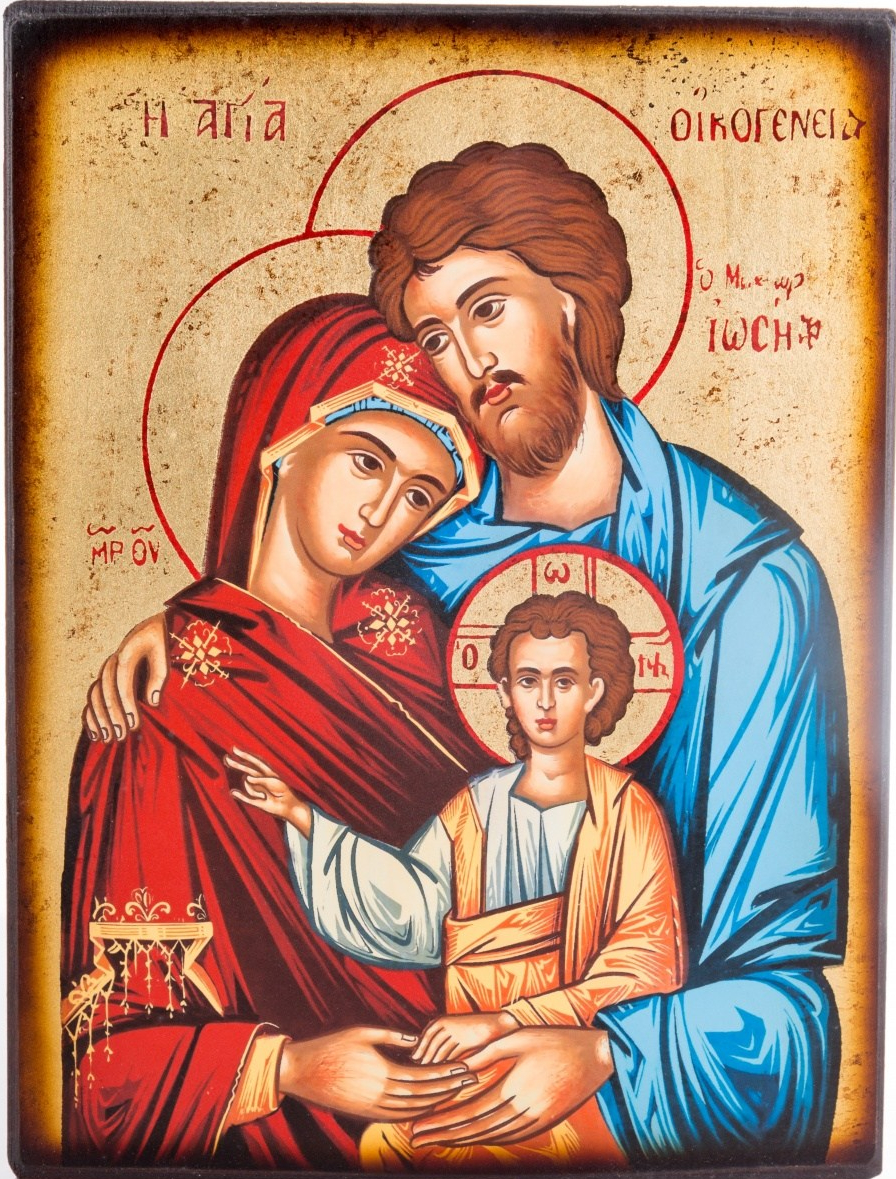
Image result for holy family


"Today’s meeting is taking place in the atmosphere of Christmas, imbued with deep joy at the Birth of the Saviour. We have just celebrated this Mystery whose echo ripples through the Liturgy of all these days. It is a Mystery of Light that all people in every era can relive with faith and prayer. It is through prayer itself that we become capable of drawing close to God with intimacy and depth.
 
Therefore, bearing in mind the theme of prayer that I am developing in the Catecheses in this period, I would therefore like to invite you to reflect today on the way that prayer was part of the life of the Holy Family of Nazareth. Indeed, the house of Nazareth is a school of prayer where one learns to listen, meditate on and penetrate the profound meaning of the manifestation of the Son of God, following the example of Mary, Joseph and Jesus.
 
The Discourse of the Servant of God Paul VI during his Visit to Nazareth is memorable. The Pope said that at the school of the Holy Family we “understand why we must maintain a spiritual discipline, if we wish to follow the teaching of the Gospel and become disciples of Christ”. He added: “In the first place it teaches us silence. Oh! If only esteem for silence, a wonderful and indispensable spiritual atmosphere, could be reborn within us! Whereas we are deafened by the din, the noise and discordant voices in the frenetic, turbulent life of our time. O silence of Nazareth! Teach us to be steadfast in good thoughts, attentive to our inner life, ready to hear God’s hidden inspiration clearly and the exhortations of true teachers” (Discourse in Nazareth, 5 January 1964).
 
We can draw various ideas for prayer and for the relationship with God and with the Holy Family from the Gospel narratives of the infancy of Jesus. We can begin with the episode of the Presentation of Jesus in the Temple. St Luke tells how “when the time came for their purification according to the law of Moses”, Mary and Joseph “brought him up to Jerusalem to present him to the Lord” (2:22). Like every Jewish family that observed the law, Jesus’ parents went to the Temple to consecrate their first-born son to God and to make the sacrificial offering. Motivated by their fidelity to the precepts of the Law, they set out from Bethlehem and went to Jerusalem with Jesus who was only 40 days old. Instead of a year-old lamb they presented the offering of simple families, namely, two turtle doves. The Holy Family’s pilgrimage was one of faith, of the offering of gifts — a symbol of prayer — and of the encounter with the Lord whom Mary and Joseph already perceived in their Son Jesus.
 
Mary was a peerless model of contemplation of Christ. The face of the Son belonged to her in a special way because he had been knit together in her womb and had taken a human likeness from her. No one has contemplated Jesus as diligently as Mary. The gaze of her heart was already focused on him at the moment of the Annunciation, when she conceived him through the action of the Holy Spirit; in the following months she gradually became aware of his presence, until, on the day of his birth, her eyes could look with motherly tenderness upon the face of her son as she wrapped him in swaddling clothes and laid him in the manger.
 
Memories of Jesus, imprinted on her mind and on her heart, marked every instant of Mary’s existence. She lived with her eyes fixed on Christ and cherished his every word. St Luke says: “Mary kept all these things, pondering them in her heart” (2:19) and thus describes Mary’s approach to the Mystery of the Incarnation which was to extend throughout her life: keeping these things, pondering on them in her heart. Luke is the Evangelist who acquaints us with Mary’s heart, with her faith (cf. 1:45), her hope and her obedience (cf. 1:38) and, especially, with her interiority and prayer (cf. 1:46-56), her free adherence to Christ (cf. 1:55).
 
And all this proceeded from the gift of the Holy Spirit who overshadowed her (cf. 1:35), as he was to come down on the Apostles in accordance with Christ’s promise (cf. Acts 1:8). This image of Mary which St Luke gives us presents Our Lady as a model for every believer who cherishes and compares Jesus’ words with his actions, a comparison which is always progress in the knowledge of Jesus. After Bl. Pope John Paul II’s example (cf. Apostolic Letter Rosarium Virginis Mariae) we can say that the prayer of the Rosary is modelled precisely on Mary, because it consists in contemplating the mysteries of Christ in spiritual union with the Mother of the Lord.
 
Mary’s ability to live by God’s gaze, is so to speak, contagious. The first to experience this was St Joseph. His humble and sincere love for his betrothed and his decision to join his life to Mary’s attracted and introduced him, “a just man”, (Mt 1:19), to a special intimacy with God. Indeed, with Mary and later, especially, with Jesus, he began a new way of relating to God, accepting him in his life, entering his project of salvation and doing his will. After trustfully complying with the Angel’s instructions “Do not fear to take Mary your wife” (Mt 1:20) — he took Mary to him and shared his life with her; he truly gave the whole of himself to Mary and to Jesus and this led him to perfect his response to the vocation he had received.
 
As we know, the Gospel has not recorded any of Joseph’s words: his is a silent and faithful, patient and hard-working presence. We may imagine that he too, like his wife and in close harmony with her, lived the years of Jesus’ childhood and adolescence savouring, as it were, his presence in their family.
 
Joseph fulfilled every aspect of his paternal role. He must certainly have taught Jesus to pray, together with Mary. In particular Joseph himself must have taken Jesus to the Synagogue for the rites of the Sabbath, as well as to Jerusalem for the great feasts of the people of Israel. Joseph, in accordance with the Jewish tradition, would have led the prayers at home both every day — in the morning, in the evening, at meals — and on the principal religious feasts. In the rhythm of the days he spent at Nazareth, in the simple home and in Joseph’s workshop, Jesus learned to alternate prayer and work, as well as to offer God his labour in earning the bread the family needed.
 
And lastly, there is another episode that sees the Holy Family of Nazareth gathered together in an event of prayer. When Jesus was 12 years old, as we have heard, he went with his parents to the Temple of Jerusalem. This episode fits into the context of pilgrimage, as St Luke stresses: “His parents went to Jerusalem every year at the feast of the Passover. And when he was twelve years old, they went up according to custom” (2:41-42).
 
Pilgrimage is an expression of religious devotion that is nourished by and at the same time nourishes prayer. Here, it is the Passover pilgrimage, and the Evangelist points out to us that the family of Jesus made this pilgrimage every year in order to take part in the rites in the Holy City. Jewish families, like Christian families, pray in the intimacy of the home but they also pray together with the community, recognizing that they belong to the People of God, journeying on; and the pilgrimage expresses exactly this state of the People of God on the move. Easter is the centre and culmination of all this and involves both the family dimension and that of liturgical and public worship.
 
In the episode of the 12-year-old Jesus, the first words of Jesus are also recorded: “How is it that you sought me? Did you not know that I must be in my Father’s house?” (2:49). After three days spent looking for him his parents found him in the temple, sitting among the teachers, listening to them and asking them questions (cf. 2:46). His answer to the question of why he had done this to his father and mother was that he had only done what the Son should do, that is, to be with his Father.
 
Thus he showed who is the true Father, what is the true home, and that he had done nothing unusual or disobedient. He had stayed where the Son ought to be, that is, with the Father, and he stressed who his Father was.
 
The term “Father” therefore dominates the tone of this answer and the Christological mystery appears in its entirety. Hence, this word unlocks the mystery, it is the key to the Mystery of Christ, who is the Son, and also the key to our mystery as Christians who are sons and daughters in the Son. At the same time Jesus teaches us to be children by being with the Father in prayer. The Christological mystery, the mystery of Christian existence, is closely linked to, founded on, prayer. Jesus was one day to teach his disciples to pray, telling them: when you pray say “Father”. And, naturally, do not just say the word say it with your life, learn to say it meaningfully with your life. “Father”; and in this way you will be true sons in the Son, true Christians.
 
It is important at this point, when Jesus was still fully integrated in the life of the Family of Nazareth, to note the resonance that hearing this word “Father” on Jesus’ lips must have had in the hearts of Mary and Joseph. It is also important to reveal, to emphasize, who the Father is, and, with his awareness, to hear this word on the lips of the Only-Begotten Son who, for this very reason, chose to stay on for three days in the Temple, which is the “Father’s house”.
 
We may imagine that from this time the life of the Holy Family must have been even fuller of prayer since from the heart of Jesus the boy — then an adolescent and a young man — this deep meaning of the relationship with God the Father would not cease to spread and to be echoed in the hearts of Mary and Joseph.
 
This episode shows us the real situation, the atmosphere of being with the Father. So it was that the Family of Nazareth became the first model of the Church in which, around the presence of Jesus and through his mediation, everyone experiences the filial relationship with God the Father which also transforms interpersonal, human relationships.
 
Dear friends, because of these different aspects that I have outlined briefly in the light of the Gospel, the Holy Family is the icon of the domestic Church, called to pray together. The family is the domestic Church and must be the first school of prayer. It is in the family that children, from the tenderest age, can learn to perceive the meaning of God, also thanks to the teaching and example of their parents: to live in an atmosphere marked by God’s presence. An authentically Christian education cannot dispense with the experience of prayer. If one does not learn how to pray in the family it will later be difficult to bridge this gap. And so I would like to address to you the invitation to pray together as a family at the school of the Holy Family of Nazareth and thereby really to become of one heart and soul, a true family. Many thanks."
 
Benedict XVI, General Audience (Paul VI Audience Hall), 28 December 2011


Thursday, February 28, 2019

Benedict XVI on the Year of Faith

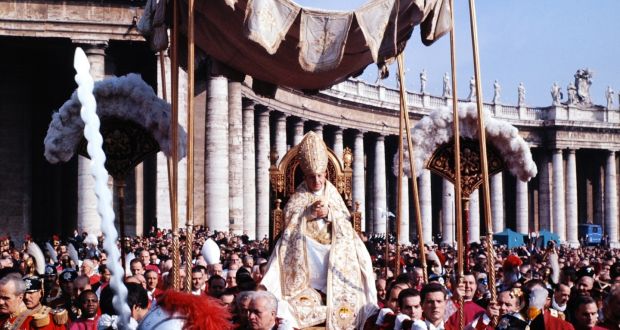
Pope John XXIII riding in procession to St Peter’s Basilica, at start of the Second Vatican Ecumenical Council. Photograph: Paul Schutzer/Time Life Pictures/Getty Images
Pope John XXIII riding in procession to St Peter’s Basilica, at the start of the Second Vatican Ecumenical Council.
 
"The Year of Faith which we launch today is linked harmoniously with the Church’s whole path over the last fifty years: from the Council, through the Magisterium of the Servant of God Paul VI, who proclaimed a Year of Faith in 1967, up to the Great Jubilee of the year 2000, with which Blessed John Paul II re-proposed to all humanity Jesus Christ as the one Saviour, yesterday, today and forever. Between these two Popes, Paul VI and John Paul II, there was a deep and profound convergence, precisely upon Christ as the centre of the cosmos and of history, and upon the apostolic eagerness to announce Him to the world. Jesus is the centre of the Christian faith. The Christian believes in God Whose face was revealed by Jesus Christ. He is the fulfilment of the Scriptures and their definitive interpreter".
 
"Today’s Gospel tells us that Jesus Christ, consecrated by the Father in the Holy Spirit, is the true and perennial subject of evangelisation. ... This mission of Christ, this movement of His continues in space and time, over centuries and continents. It is a movement which starts with the Father and, in the power of the Spirit, goes forth to bring the good news to the poor, in both a material and a spiritual sense. The Church is the first and necessary instrument of this work of Christ because it is united to Him as a body to its head".
 
"Vatican Council II did not wish to deal with the theme of faith in one specific document. It was, however, animated by a desire, as it were, to immerse itself anew in the Christian mystery so as to re-propose it fruitfully to contemporary man. ... In his opening speech Blessed John XXIII presented the principal purpose of the Council in this way: “What above all concerns the Ecumenical Council is this: that the sacred deposit of Christian doctrine be safeguarded and taught more effectively. … Therefore, the principal purpose of this Council is not the discussion of this or that doctrinal theme, a Council is not required for that, ... [but] this certain and immutable doctrine, which is to be faithfully respected, needs to be explored and presented in a way which responds to the needs of our time”.
 
"In the light of these words, we can understand what I myself felt at the time: during the Council there was an emotional tension as we faced the common task of making the truth and beauty of the faith shine out in our time, without sacrificing it to the demands of the present or leaving it tied to the past: the eternal presence of God resounds in the faith, transcending time, yet it can only be welcomed by us in our own unrepeatable today. Therefore I believe that the most important thing ... is to revive in the whole Church that positive tension, that yearning to announce Christ again to contemporary man. But, so that this interior thrust towards the new evangelisation neither remain just an idea nor be lost in confusion, ... I have often insisted on the need to return, as it were, to the “letter” of the Council - that is to its texts - also to draw from them its authentic spirit, and why I have repeated that the true legacy of Vatican II is to be found in them".
 
"The Council did not formulate anything new in matters of faith, nor did it wish to replace what was ancient. Rather, it concerned itself with seeing that the same faith might continue to be lived in the present day, that it might remain a living faith in a world of change. ... The Council Fathers wished to present the faith in a meaningful way; and if they opened themselves trustingly to dialogue with the modern world it is because they were certain of their faith, of the solid rock on which they stood. In the years following, however, many embraced uncritically the dominant mentality, placing in doubt the very foundations of the deposit of faith, which they sadly no longer felt able to accept as truths."
 
"If today the Church proposes a new Year of Faith and a new evangelisation, it is not to honour an anniversary, but because there is more need of it, even more than there was fifty years ago! ... Even the initiative to create a pontifical council for the promotion of the new evangelisation ... is to be understood in this context. Recent decades have seen the advance of a spiritual “desertification”. In the Council’s time it was already possible from a few tragic pages of history to know what a life or a world without God looked like, but now we see it every day around us. ... But it is in starting from the experience of this desert ... that we can again discover the joy of believing, its vital importance for us".
 
"In the desert we rediscover the value of what is essential for living; thus in today’s world there are innumerable signs, often expressed implicitly or negatively, of the thirst for God, for the ultimate meaning of life. And in the desert people of faith are needed who, with their own lives, point out the way to the Promised Land and keep hope alive. Living faith opens the heart to the grace of God which frees us from pessimism. Today, more than ever, evangelising means witnessing to the new life, transformed by God, and thus showing the path".
 
"The journey is a metaphor for life, and the wise wayfarer is one who has learned the art of living, and can share it with his brethren - as happens to pilgrims along the Way of St. James or similar routes which, not by chance, have again become popular in recent years. How come so many people today feel the need to make these journeys? Is it not because they find there, or at least intuit, the meaning of our existence in the world? This, then, is how we can picture the Year of Faith: a pilgrimage in the deserts of today’s world, taking with us only what is necessary: ... the Gospel and the faith of the Church, of which the Council documents are a luminous expression, as is the Catechism of the Catholic Church, published twenty years ago."
 
"Venerable and dear brothers, 11 October 1962 was the Feast of Mary Most Holy, Mother of God. Let us entrust to her the Year of Faith, as I did last week when I went on pilgrimage to Loreto. May the Virgin Mary always shine out as a star along the way of the new evangelisation".
 
Extracts from a homily by Pope Benedict XVI during the course of a Mass celebrated in St. Peter's Square on 11 October 2012.

Friday, January 19, 2018

Pope Benedict XVI's Prayer to the Holy Face


   "Lord Jesus,
   As the first apostles,
   Whom you asked: “What do you seek?”,
   Accepted your invitation to: “Come and see,”
   Recognizing you as the Son of God,
   The Promised Messiah for the world’s redemption,
   We too, your disciples in this difficult time
   Want to follow you and be your friends,
   Drawn by the brilliance of your face much desired yet hidden.

   Show us, we pray you, your face ever new,
   That mirror, mystery laden, of God’s infinite mercy.
   Grant that we may contemplate it
   With the eyes of our mind and our hearts:
   The Son’s face, radiance of the Father’s glory
   And the imprint of his Nature (cf. Hb 1,3),
   The human face of God that has burst into history
   To reveal the horizons of eternity.
   The silent face of Jesus suffering and risen,
   When loved and accepted changes the heart and life.
   “Your face, Lord, do I seek,
   Do not hide your face from me” (Ps. 27, 8ff).

   How many times through the centuries and millenia has not resounded
   The ardent invocation of the Psalmist among the faithful!
   Lord, with faith, we too repeat the same invocation:
   “Man of suffering, as one from whom others hide their faces” (Is. 53, 3),
   Do not hide your face from us!
   We want to draw from your eyes,
   That look on us with tenderness and compassion.
   The force of love and peace which shows us the way of life,
   And the courage to follow you without fear or compromise,
   So as to be witnesses of your Gospel,
   With concrete signs of acceptance, love and forgiveness.

   O Holy Face of Christ,
   Light that enlightens the darkness of doubt and sadness,
   Life that has defeated forever the force of evil and death,
   O inscrutable gaze
   That never ceases to watch over men and people,
   Face concealed in the Eucharistic signs
   And in the faces of those that live with us,
   Make us God’s pilgrims in this world,
   Longing for the Infinite and ready for the final encounter,
   When we shall see you, Lord, “face to face”(1 Cor. 13, 12),
   And be able to contemplate you forever in heavenly Glory.

   Mary, Mother of the Holy Face,
   Help us have “hands innocent and a heart pure,”
   Hands illumined by the truth of love
   And hearts enraptured by divine beauty,
   That transformed by the encounter with Christ,
   We may gift ourselves to the poor and the suffering,
   Whose faces reflect the hidden presence
   Of your Son Jesus,
   Who lives and reigns forever and ever. Amen!"
 
Benedict XVI, Rome, 1 September 2007, written and sent to the Guardian of the Basilica of the Holy Face in Manoppello (Italy) in memory of his pilgrimage to the Sanctuary a year before, on 1 September 2006.

Saturday, August 27, 2016

Benedict XVI on Pope John Paul I


"Because of this virtue of his, it only took 33 days for Pope Luciani to win people's hearts. In his addresses he always referred to events in practical life, from his family memories and from popular wisdom. His simplicity was a vehicle for a solid, rich teaching which, thanks to the gift of an exceptional memory and a vast knowledge, he embellished with numerous citations from ecclesiastical and secular writers. Thus, he was an incomparable catechist, following in the footsteps of St. Piux X, who came from the same region and was his predecessor first on the throne of St. Mark and then on that of St. Peter.

... 'We must feel small before God' ... 'I am not ashamed to feel like a child before his mother; one believes in one's mother; I believe in the Lord, in what he has revealed to me.' These words reveal the full depth of his faith. As we thank God for having given him to the church and to the world, let us treasure his example, striving to cultivate his same humility which enabled him to talk to everyone, especially the small and the 'distant.' For this, let us invoke Mary Most Holy, the humble handmaid of the Lord." 


Benedict XVI, Angelus, 28 September 2008.


Saturday, July 25, 2015

Prayers of St. Anthony of Padua to Our Lady

http://uploads7.wikiart.org/images/alonzo-cano/vision-of-st-anthony-of-padua-1662.jpg 


We beg you, our Lady and our hope, you, who are the star of the sea, illumine your children, engulfed in the turbulent sea of sin; guide us to the safe harbor of forgiveness, so we may successfully complete the journey of our life with your protection. With his help whom you carried in your womb, and nourished at your holy breasts. To him be honor and glory throughout all ages. Amen.

We ask you, Our Lady, you who are called the morning star, dispel with your light the thick fog of allurements to evil which fills our souls. Like the light of the moon, replenish our emptiness, and dissipate the darkness of our sins, so that we may attain the fullness of eternal life and the light of never diminishing glory. With his help, who made you our light, and although born from you, gave you life. To him be honor and glory from age to age. Amen.

Our Lady, our only hope, we are asking you to illumine our souls with the brilliance of your grace, to cleanse us with the splendor of your purity, to cheer us with the warmth of your presence, and to reconcile us to your Son, that we may be worthy of his glory. With his help who assumed his glorious flesh from you and who wished to live in your womb for nine months. To him be honor and glory through all eternity. Amen.

Lady and Mother of God, your name is like a fortified tower in which every sinner finds refuge and salvation. O sweet name, a name which comforts sinners. O name of blessed hope. You, O Virgin, are in the recesses of the soul. Your name is like a shining light, like a sweet taste in the mouth, like a delightful song in the ears of your children. Amen.

O Mary, you are a throne in which is located the glory of the Father. On this throne Jesus Christ, true Wisdom, took his place, Glory Itself, greater than any of the angels, who lived on earth in our flesh. You, blessed Mary, became the seat of that Glory, Jesus Christ, to whom be honor and praise from age to age. Amen.

Wednesday, April 15, 2015

Benedict XVI on Fatima - a prophecy for 2017?


"At a time when the human family was ready to sacrifice all that was most sacred on the altar of the petty and selfish interests of nations, races, ideologies, groups and individuals, our Blessed Mother came from heaven, offering to implant in the hearts of all those who trust in her the Love of God burning in her own heart. At that time it was only to three children, yet the example of their lives spread and multiplied, especially as a result of the travels of the Pilgrim Virgin, in countless groups throughout the world dedicated to the cause of fraternal solidarity. May the seven years which separate us from the centenary of the apparitions hasten the fulfilment of the prophecy of the triumph of the Immaculate Heart of Mary, to the glory of the Most Holy Trinity."

Homily of Pope Benedict XVI during Holy Mass at the Esplanade of the Shrine of Our Lady of Fátima
Thursday, 13 May 2010

Sunday, January 18, 2015

Archives of the Order (3) - The Rule of the Order of St. John

THE RULE OF THE ORDER OF ST. JOHN


This is the CONSTITUTION ORDAINED BY BROTHER RAYMOND.-
In the name of God, I Raymond Servant of Christ's poor and Warden of the Hospital of Jerusalem, with the counsel of all the Chapter, both clerical and lay brethren, have established these commandments in the House of the Hospital of Jerusalem.
  1. HOW THE BRETHREN SHOULD MAKE THEIR PROFESSION: Firstly, I ordain that all the brethren, engaging in the service of the poor, should keep the three thing with the aid of God which they have promised to God, that is to say, chastity and obedience, which means whatever thing is commanded them by their masters, and to live without property of their own: because God will require these three things of them at the Last Judgement.
  2. WHAT THE BRETHREN SHOULD CLAIM AS THEIR DUE: And let them not claim more as their due than bread and water and raiment, which things are promised to them. And their clothing should be humble, because Our Lord's poor, whose servants we confess ourselves to be, go naked. And it is a thing wrong and improper for the servant that he should be proud, and his Lord should be humble.
  3. CONCERNING THE CONDUCT OF THE BRETHREN AND THE SERVICE OF THE CHURCHES AND THE RECEPTION OF THE SICK: Moreover this is decreed that their conduct should be decorous in church, and that their conversation should be appropriate, that is to say, that the clerics, deacons and sub-deacons, should serve the priest at the altar in white raiment, and if the thing shall be necessary another cleric should render the service, and there should be a light every day in the church, both by day and by night, and the priest should go in white raiment to visit the sick, bearing reverently the Body of Our Lord, and the deacon and the sub-deacon, or at least an acolyte should go before, bearing a lantern with a candle burning, and the sponge with the holy water.
  4. HOW THE BRETHREN SHOULD GO ABROAD AND BEHAVE: Moreover, when the brethren shall go to the cities and castles, let them not go alone but two or three together, and they shall not go there with those whom they would, but with those whom their Master shall order, and when they shall become there where they would go, let them remain together as united in their conduct as in their dress. And let nothing be done in their movements which might offend the eyes of anyone, but only that which reveals their holiness. Moreover, when they shall be in a church or in a house or in any other place where there are women, let them keep guard over their modesty, and let no women wash their heads or their feet, or make their beds. May Our Lord, who dwells among his saints, keep guard over them in this matter.
  5. BY WHOM AND HOW ALMS SHOULD BE SOUGHT: Also let religious persons, both clerical and lay brethren, go forth to seek alms for the holy poor; also when they shall seek for a lodging (hostel), let them go to the church or to some suitable person and let them ask of him their food for charity sake, and let them buy nothing else. But if they should not find anyone who will give them the necessaries, let them buy by measure one meal only, on which they shall live.
  6. CONCERNING THE ALMS OBTAINED AND CONCERNING THE PRODUCE OF THE HOUSES: Also let them take neither land nor security from the alms collected, but let them deliver them up to the Master with an account in writing, and let the Master deliver them up with his own account in writing to the poor in the hospital; and let the Master receive from all the Obediences the third part of the bread and wine and of all food, and that which shall be surplus should be added to the alms, and let him hand it over in Jerusalem to the poor with his own account in writing.
  7. WHO AND IN WHAT MANNER THEY SHOULD GO ABROAD TO PREACH: And let not any of the brethren, of whatever Obedience they may be, go to preach or to make collections, except only those whom the Chapter and the Master of the Church shall send. And let those same brethren, who shall go to make collections, be received in whatever Obedience they shall come, and let them receive such food as the brethren have ordained among themselves, and let them demand no other thing. Also let them carry with them a light, and in whatever house they shall be lodged (herbergié), let them cause the light to burn before them.
  8. CONCERNING THE CLOTHING AND FOOD OF THE BRETHREN: Furthermore also we forbid the brethren to wear at any time brightly coloured cloth (dras ysambruns ne galembruns) or furs of animals (pennes sauvages) or fustian. Also let them not eat more than twice in the day, and let them eat no meat on Wednesdays or Saturdays, or from Septuagesima until Easter, except those who are sick or feeble; and let them never lie down naked, but clothed in shirts or linen or wool, or in other similar garments.
  9. CONCERNING BRETHREN GUILTY OF FORNICATION: But if any of the brethren, and may such a thing never happen, through sinful passion shall fall into fornication, if he shall sin in secret, let him do his penance in secret, and let him impose upon himself suitable penance; and if it shall be well known and proved absolutely for certain, then in that town in which he shall have committed the sin, on the Sunday after Mass, when the people shall have left the church, let him be severely beaten and flogged with hard rods (verges) or leather thongs (corroies) in the sight of all by his Master or by other brethren commanded by the Master, and let him be expelled out of all our company: and afterwards if Our Lord shall enlighten the heart of that man, and he shall return to the House of the Poor, and shall confess himself to be guilty and a sinner and the transgressor against the law of God, and shall promise amendment, he should be received and for a whole year should be treated as a stranger, and the brethren should observe during this period of time whether he be satisfactory, and afterwards let them do as shall seem good to them.
  10. CONCERNING BRETHREN QUARRELING AND STRIKING ONE ANOTHER: Also if any brother dispute with another brother, and the Procurator of the House shall have heard the complaint, the penance should be as follows: he shall fast for seven days, the Wednesday and the Friday on bread and water, and he shall eat seated on the ground without table and without napkin (toaille). And if the brother shall strike another brother he shall fast for forty days. And if he shall depart from the House, or the Master under whose authority he shall be, wilfully and without the leave of his Master, and afterwards he shall return, he shall eat for forty days seated on the ground, and shall fast on Wednesdays and Fridays on bread and water; and for as long a time as he has been absent, let him be treated as a stranger, unless by chance the time should have been so long that the Chapter should think proper to modify it.
  11. CONCERNING THE SILENCE OF THE BRETHREN: Also at table, as the Apostle says, let each one eat his bread in silence, and let him not drink after Compline. Also let the brethren keep silence in their beds.
  12. CONCERNING BRETHREN MISBEHAVING: And if any brother shall not conduct himself well, and shall be admonished and corrected by his Master or by other brethren twice or three times, and if, at the instigation of the Devil, he will not amend his ways not obey, he should be sent to us on foot with a written report of his sin; and always a small allowance (procuration) should be given to him sufficient to enable him to come to us, and we will correct him; and also no brother should strike the sergeants subject to him for any fault or sin they may commit, but let the Master of the House and the brethren exact vengeance in the presence of all; but always let the sentence (justice) of the House be maintained completely.
  13. CONCERNING BRETHREN FOUND WITH PRIVATE PROPERTY: And if any of the brethren have made a disposition of private property at his death, he shall have concealed it from his Master, and afterwards it shall be found upon him, let that money be tied round his neck, and let him be led naked through the Hospital of Jerusalem, or through the other houses where he dwells, and let him be beaten severely by another brother and do penance for forty days, and he shall fast on Wednesdays and Fridays on bread and water.
  14. WHAT OFFICE SHOULD BE CELEBRATED FOR THE DECEASED BRETHREN: Moreover we command that this statue should be made, which is most necessary for us all, and we ordain it in commanding that for all the brethren who die in your Obedience thirty Masses should be chanted for the soul of each; and at the first Mass each of the brethren, who shall be present, shall offer one candle with one Denier. Which Deniers, as many as there shall be, should be given to the poor for God's sake; and the priest who shall chant the Masses, if he be not of the House, should have provision in the Obedience on those days; and on completion of the office, the Master should render charity to the said priest, and let all the garments of the deceased brother be given to the poor; also let the brother priests, who shall sing the Masses, pray for his soul to Our Lord Jesus Christ, and let each of the clerics chant the Psalter, and each of the lay brothers 150 paternosters. And also concerning all other sins and matters and complaints let them judge and decide in Chapter with righteous judgement.
  15. HOW THE THINGS HERE DETAILED ARE TO BE FIRMLY MAINTAINED: All these things, just as we have detailed them above, we command and ordain in the Name of Almighty God, and of the Blessed Mary, and of the Blessed St. John, and of the poor, that these same things should be kept with the utmost strictness.
  16. HOW OUR LORDS THE SICK SHOULD BE RECEIVED AND SERVED: And in that Obedience in which the Master and the Chapter of the Hospital shall permit, when the sick man shall come there, let him be received thus, let him partake of the Holy Sacrament, first having confessed his sins to the priest, and afterwards let him be carried to bed, and there as if he were a Lord, each day before the brethren to eat, let him be refreshed with food charitably according to the ability of the House; also on every Sunday let the Epistle and the Gospel be chanted in that House, and let the House be sprinkled with holy water at the procession. Also if any of the brethren, who hold Obedience in different lands, coming to any secular person offering allegiance and giving him the money of the poor, in order that those persons should cause the said brethren to prevail by force against the Master, let such brethren be cast out of all the company
  17. IN WHAT MANNER BRETHREN MAY CORRECT BRETHREN: Also if two or more brethren shall be together, and one of them shall conduct himself outrageously by evil living, the other of the brethren should not denounce him to the people nor to the Prior, but first let him chastise him by himself, and if he would no be chastised, let him join with himself two or three brethren to chastise him. And if he should amend his ways, they should rejoice at it; but if he be not willing to amend his ways, then let him write down the guilt of the brother, and let him send it to the Master privately, and according at the Master and the Chapter shall order let it be done concerning him.
  18. HOW ONE BROTHER SHOULD ACCUSE ANOTHER BROTHER: Let no brother accuse another brother unless he be well able to prove it; and if he shall accuse him and be unable to prove it, he is no true brother.
  19. THAT THE BRETHREN BEAR ON THEIR BREASTS THE SIGN OF THE CROSS: Also let all the brethren of all the Obediences, who now and henceforward shall offer themselves to God and to the Holy Hospital of Jerusalem bear on their breasts the cross, on their cassocks (chapes) and on their mantles, to the honour of God and the Holy Cross that God by that banner (gonfanon), and through faith and works and obedience, may guard and defend us in soul and in body, with all our Christian benefactors from the power of the Devil in this world and the next. Amen.

Wednesday, March 12, 2014

Benedict XVI on St. Gregory the Great

https://blogger.googleusercontent.com/img/b/R29vZ2xl/AVvXsEhICQCb3rmacNxIRz-WxuT-Dk3lKLoYhveN3EEF5x2PUNbM-VsVTZr1YfjqzZJcXAYWu4rC8YTdGevDBR2f5gWyoLnEWYryp23JsOaxgF41XlwA9qXaWN-5ypEp-jbIy02kehdMDEsqxsM/s1600/gregory2+%2528small%2529.jpg
Pope Saint Gregory the Great
His exceptional, I would say, almost unique figure is an example to hold up both to pastors of the Church and to public administrators: indeed, he was first Prefect and then Bishop of Rome. As an imperial official, he was so distinguished for his administrative talents and moral integrity that he served in the highest civil office, Praefectus Urbis, when he was only 30 years old. 

Within him, however, the vocation to the monastic life was maturing; he embraced it in 574, upon his father's death. The Benedictine Rule then became the backbone of his existence. Even when the Pope sent him as his Representative to the Emperor of the East in Constantinople, he maintained a simple and poor monastic lifestyle.

Called back to Rome, Gregory, although living in a monastery, was a close collaborator of Pope Pelagius II, and when the Pope died, the victim of a plague epidemic, Gregory was acclaimed by all as his Successor.

He sought in every way to escape this appointment but in the end was obliged to yield. He left the cloister reluctantly and dedicated himself to the community, aware of doing his duty and being a simple and poor "servant of the servants of God".

"He is not really humble," he wrote, "who understands that he must be a leader of others by decree of the divine will and yet disdains this pre-eminence. If, on the contrary, he submits to divine dispositions, and does not have the vice of obstinacy, and is prepared to benefit others with those gifts when the highest dignity of governing souls is imposed on him, he must flee from it with his heart, but against his will, he must obey" ( Pastoral Rule, I, 6). It is like a dialogue that the Pope has with himself at that time.

With prophetic foresight, Gregory intuited that a new civilization was being born from the encounter of the Roman legacy with so-called "barbarian" peoples, thanks to the cohesive power and moral elevation of Christianity. Monasticism was proving to be a treasure not only for the Church but for the whole of society.

With delicate health but strong moral character St Gregory the Great carried out intense pastoral and civil action. He left a vast collection of letters, wonderful homilies, a famous commentary on the Book of Job and writings on the life of St Benedict, as well as numerous liturgical texts, famous for the reform of song that was called "Gregorian", after him.

However, his most famous work is certainly the Pastoral Rule, which had the same importance for the clergy as the Rule of St Benedict had for monks in the Middle Ages.

The life of a pastor of souls must be a balanced synthesis of contemplation and action, inspired by the love "that rises wonderfully to high things when it is compassionately drawn to the low things of neighbours; and the more kindly it descends to the weak things of this world, the more vigorously it recurs to the things on high" (II, 5).

In this ever timely teaching, the Fathers of the Second Vatican Council found inspiration to outline the image of today's Pastor.

Let us pray to the Virgin Mary that the example and teaching of St Gregory the Great may be followed by pastors of the Church and also by those in charge of civil institutions. 

Benedict XVI, Angelus, Castel Gandolfo, 3 September 2006.

Friday, February 21, 2014

Benedict XVI on the Chair of St. Peter

http://www.anglicanphiladelphia.org/stmichael/cathedrapetri.jpgDear Brothers and Sisters! The Latin liturgy celebrates today the feast of the Chair of Peter. It is a very ancient tradition, witnessed in Rome since the end of the fourth century, which renders thanksgiving to God for the mission entrusted to the Apostle Peter and his successors.

"Cathedra" literally means the established seat of the bishop, located in the mother church of a diocese, which for this reason is called "cathedral," and it is the symbol of the authority of the bishop and, in particular, of his "magisterium," that is, of the evangelical teaching that he, insofar as a successor of the apostles, is called to guard and transmit to the Christian community.

When the bishop takes possession of the local Church that is entrusted to him, he, bearing the miter and the shepherd's crosier, sits on the cathedra. From that seat he will guide, as teacher and shepherd, the journey of the faithful in faith, hope and charity.

Which was, then, the "cathedra" if St. Peter? He, chosen by Christ as "rock" on which to build the Church (cf. Matthew 16:18), began his ministry in Jerusalem, after the ascension of the Lord and Pentecost. The first "seat" of the Church was the Cenacle, and in all probability in that room, where Mary, the Mother of Jesus, also prayed with the disciples, a special place was reserved for Simon Peter.

Subsequently, the see of Peter was Antioch, a city situated on the Oronte River in Syria, today Turkey, which at the time was the third metropolis of the Roman Empire after Rome and Alexandria in Egypt. Of that city, evangelized by Barnabas and Paul, where "for the first time the disciples were called Christians" (Acts 11:26), Peter was the first Bishop.

In fact, the Roman Martyrology, before the reform of the calendar, established also a specific celebration of the Chair of Peter at Antioch. From there, Providence led Peter to Rome, where he concluded with martyrdom his course of service to the Gospel. For this reason, the See of Rome, which had received the greatest honor, received also the task entrusted by Christ to Peter of being at the service of all the local Churches for the building and unity of the whole People of God.

In this way the See of Rome came to be known as that of the Successor of Peter, and the "cathedra" of its Bishop represented that of the apostle charged by Christ to feed all his flock. It is attested by the most ancient Fathers of the Church, as for example St. Irenaeus, bishop of Lyon, who in his treatise "Against Heresies" describes the Church of Rome as "greatest and most ancient, known by all; … founded and constituted at Rome by the two glorious Apostles Peter and Paul"; and he adds: "With this Church, because of her outstanding superiority, the universal Church must be in agreement, that is, the faithful everywhere" (III, 3, 2-3).

Tertullian, for his part, affirms: "How blessed this Church of Rome is! The Apostles themselves shed on her, with their blood, the whole of the doctrine" ("La Prescrizione degli Eretici," 36). The Chair of the Bishop of Rome represents, therefore, not only his service to the Roman community, but also his mission of guide of the whole People of God.

To celebrate the "Chair" of Peter, as we do today, means, therefore, to attribute to it a strong spiritual significance and to recognize in it a privileged sign of the love of God, good and eternal Shepherd, who wants to gather the whole of his Church and guide her along the way of salvation.

Among so many testimonies of the Fathers, I would like to refer to that of St. Jerome, taken from a letter of his to the Bishop of Rome, particularly interesting because he makes explicit reference in fact to the "chair" of Peter, presenting it as the safe harbor of truth and peace. Jerome writes thus: "I decided to consult the chair of Peter, where that faith is found exalted by the lips of an Apostle; I now come to ask for nourishment for my soul there, where once you received the garment of Christ. I follow no leader save Christ, so I enter into communion with your beatitude, that is, with the chair of Peter for this I know is the rock upon which the Church is built! ("Le Lettere," I, 15,1-2).

Dear Brothers and Sisters, in the apse of St. Peter's Basilica, as you know, is found the monument to the Chair of the Apostle, a mature work of Bernini, made in the shape of a great bronze throne, supported by the statues of four Doctors of the Church, two from the West, St. Augustine and St. Ambrose, and two from the East, St. John Chrysostom and St. Athanasius.

I invite you to pause before that evocative work, which today it is possible to admire decorated with so many candles, and pray in a particular way for the ministry that God has entrusted to me. Raising one's gaze to the alabaster glass window that opens precisely above the chair, invoke the Holy Spirit, so that he will always sustain with his light and strength my daily service to the whole Church. 

Benedict XVI, General Audience, Rome, 22 February 2006.

Friday, April 12, 2013

Benedict XVI on Ecclesia in Medio Oriente

Benedict XVI signing Ecclesia in Medio Oriente

"Your presence makes my signing of the Post-Synodal Apostolic Exhortation Ecclesia in Medio Oriente all the more solemn; it testifies that this document, while addressed to the universal Church, has a particular importance for the entire Middle East.

Providentially, this event takes place on the Feast of the Exaltation of the Holy Cross, a celebration originating in the East in 335, following the dedication of the Basilica of the Resurrection built over Golgotha and our Lord’s tomb by the Emperor Constantine the Great, whom you venerate as saint. A month from now we will celebrate the seventeen-hundredth anniversary of the appearance to Constantine of the Chi-Rho, radiant in the symbolic night of his unbelief and accompanied by the words: "In this sign you will conquer!" Later, Constantine signed the Edict of Milan, and gave his name to Constantinople. It seems to me that the Post-Synodal Exhortation can be read and understood in the light of this Feast of the Exaltation of the Cross, and more particularly in the light of the Chi-Rho, the two first letters of the Greek word "Christos". Reading it in this way leads to renewed appreciation of the identity of each baptized person and of the Church, and is at the same time a summons to witness in and through communion. 

Are not Christian communion and witness grounded in the Paschal Mystery, in the crucifixion, death and resurrection of Christ? Is it not there that they find their fulfilment? There is an inseparable bond between the cross and the resurrection which Christians must never forget. Without this bond, to exalt the cross would mean to justify suffering and death, seeing them merely as our inevitable fate. For Christians, to exalt the cross means to be united to the totality of God’s unconditional love for mankind. It means making an act of faith! To exalt the cross, against the backdrop of the resurrection, means to desire to experience and to show the totality of this love. It means making an act of love! To exalt the cross means to be a committed herald of fraternal and ecclesial communion, the source of authentic Christian witness. It means making an act of hope!

In examining the present situation of the Church in the Middle East, the Synod Fathers reflected on the joys and struggles, the fears and hopes of Christ’s disciples in these lands. In this way, the entire Church was able to hear the troubled cry and see the desperate faces of many men and women who experience grave human and material difficulties, who live amid powerful tensions in fear and uncertainty, who desire to follow Christ – the One who gives meaning to their existence – yet often find themselves prevented from doing so. That is why I wanted the First Letter of Saint Peter to serve as the framework of the document. At the same time, the Church was able to admire all that is beautiful and noble in the Churches in these lands. How can we fail to thank God at every moment for all of you (cf. 1 Th 1:2; Part One of the Post-Synodal Exhortation), dear Christians of the Middle East! How can we fail to praise him for your courage and faith? How can we fail to thank him for the flame of his infinite love which you continue to keep alive and burning in these places which were the first to welcome his incarnate Son? How can we fail to praise and thank him for your efforts to build ecclesial and fraternal communion, and for the human solidarity which you constantly show to all God’s children?

Ecclesia in Medio Oriente makes it possible to rethink the present in order to look to the future with the eyes of Christ. By its biblical and pastoral orientation, its invitation to deeper spiritual and ecclesiological reflection, its call for liturgical and catechetical renewal, and its summons to dialogue, the Exhortation points out a path for rediscovering what is essential: being a follower of Christ even in difficult and sometimes painful situations which may lead to the temptation to ignore or to forget the exaltation of the cross. It is here and now that we are called to celebrate the victory of love over hate, forgiveness over revenge, service over domination, humility over pride, and unity over division. In the light of today’s Feast, and in view of a fruitful application of the Exhortation, I urge all of you to fear not, to stand firm in truth and in purity of faith. This is the language of the cross, exalted and glorious! This is the "folly" of the cross: a folly capable of changing our sufferings into a declaration of love for God and mercy for our neighbour; a folly capable of transforming those who suffer because of their faith and identity into vessels of clay ready to be filled to overflowing by divine gifts more precious than gold (cf. 2 Cor 4:7-18). This is more than simply picturesque language: it is a pressing appeal to act concretely in a way which configures us ever more fully to Christ, in a way which helps the different Churches to reflect the beauty of the first community of believers (cf. Acts 2:41-47: Part Two of the Exhortation); in a way like that of the Emperor Constantine, who could bear witness and bring Christians forth from discrimination to enable them openly and freely to live their faith in Christ crucified, dead and risen for the salvation of all.

Ecclesia in Medio Oriente provides some elements that are helpful for a personal and communal examination of conscience, and an objective evaluation of the commitment and desire for holiness of each one of Christ’s disciples. The Exhortation shows openness to authentic interreligious dialogue based on faith in the one God, the Creator. It also seeks to contribute to an ecumenism full of human, spiritual and charitable fervour, in evangelical truth and love, drawing its strength from the commandment of the risen Lord: "Go therefore and make disciples of all nations, baptizing them in the name of the Father and of the Son and of the Holy Spirit, teaching them to observe all that I have commanded you. Behold, I am with you always, to the close of the age" (Mt 28:19-20).

The Exhortation as a whole is meant to help each of the Lord’s disciples to live fully and to pass on faithfully to others what he or she has become by Baptism: a child of light, sharing in God’s own light, a lamp newly lit amid the troubled darkness of this world, so that the light may shine in the darkness (cf. Jn 1:4f. and 2 Cor 4:1-6). The document seeks to help purify the faith from all that disfigures it, from everything that can obscure the splendour of Christ’s light. For communion is true fidelity to Christ, and Christian witness is the radiance of the paschal mystery which gives full meaning to the cross, exalted and glorious. As his followers, "we proclaim Christ crucified … the power of God and the wisdom of God" (1 Cor 1:23-24; cf. Part Three of the Exhortation).

"Fear not, little flock" (Lk 12:32) and remember the promise made to Constantine: "In this sign you will conquer!" Churches of the Middle East, fear not, for the Lord is truly with you, to the close of the age! Fear not, because the universal Church walks at your side and is humanly and spiritually close to you! It is with this hope and this word of encouragement to be active heralds of the faith by your communion and witness, that on Sunday I will entrust the Post-Synodal Exhortation Ecclesia in Medio Oriente to my venerable brother Patriarchs, Archbishops and Bishops, and to all priests, deacons, men and women religious, the seminarians and all the lay faithful. "Be of good cheer" (Jn 16:33)! Through the intercession of the Virgin Mary, the Theotókos, I invoke God’s abundant gifts upon all of you with great affection! God grant that all the peoples of the Middle East may live in peace, fraternity and religious freedom! May God bless all of you!"

Benedict XVI, Melkite Greek Basilica of Saint Paul, in Harissa, Lebanon, 14 September 2012.

Friday, March 15, 2013

Benedict XVI on the Assumption of Mary

http://www.domestic-church.com/CONTENT.DCC/19980701.GRAPHICS/assumption.jpg“It is Mary herself who prophetically pronounces some words that lead us in this direction: 'henceforth all generations shall call me blessed "(Lk 1.48). It is a prophecy for the entire history of the Church.
...
 
In the Assumption we see that in God there is room for man, God himself is the house with many rooms that Jesus tells us: God is man's house. Opening up to God we do not lose anything. On the contrary, our life becomes more rich and great.
...
It's certain that a world away from God will not be better, but worse. Only the presence of God can ensure a good world.
...

Let us entrust ourselves to her maternal intercession, that she might ask the Lord to strengthen our belief in eternal life, help us to live well and with hope the time that God gives to us – a Christian hope, which is not just nostalgia for Heaven, but living and active desire for God here in the world, a desire that makes us indefatigable pilgrims, feeding in us the courage and strength of faith, a fortitude that is at once the power of love.

Benedict XVI, Mass for the Solemnity of the Assumption of Mary in the parish of San Tommaso da Villanova at Castel Gandolfo, 15 August 2012.


Wednesday, February 27, 2013

Benedict XVI on temptations


"In this Year of Faith, Lent is a favorable time to rediscover faith in God as the fundamental criterion of our life and of the life of the Church. This always entails a struggle, a spiritual combat, because the spirit of evil naturally sets itself against our sanctification and seeks to make us deviate from the way of God.

At the beginning of his public ministry Jesus had to unmask and reject the false images of the Messiah that the tempter proposed to him. But these temptations are also false images of man, which always assail our conscience, disguising themselves as suitable and efficacious, even good, proposals.

The evangelists Matthew and Luke present three temptations of Jesus, differing in part only in their order. The nucleus of these temptations always consists in using God for one's own ends, giving more importance to success or to material goods. The tempter is deceptive: he does not direct us immediately toward evil, but toward a false good, making us believe that the true realities are power and what satisfies primary needs.

In this way, God becomes secondary; he is reduced to a means, in the end he becomes unreal, no longer counts, disappears. In the final analysis, in temptations, faith is at stake, because God is at stake. In the decisive moments of life and, if we see clearly, at every moment of life, we are faced with a choice: do we want to follow the “I” or God? Do we want to follow individual interest or the true Good, that which is really good?

As the Fathers of the Church teach us, temptations are part of Jesus's 'descent' into our human condition, into the abyss of sin and its consequences. A 'descent' that Jesus undertook to the very end, to the point of death on the cross and the descent into the netherworld of extreme distance from God. In this way, he is the hand that God stretched out to man, to the lost sheep, to bring him back to safety.

As St. Augustine teaches, Jesus has taken temptations from us, to give us his victory (cf. Enarr. in Psalmos, 60,3: PL 36, 724).

We are not, therefore, afraid to face, we also, the combat against the spirit of evil: the important thing is that we do it with Him, with Christ, the Victor.

And to stand with Him we turn to the Mother, Mary: let us invoke her with filial confidence in the hour of trial, and she will make us feel the powerful presence her divine Son, to reject the temptations with the Word of Christ, and so to put God once again at the center of our life."  Benedict XVI, Angelus, 17 February 2013.

Thursday, February 21, 2013

Benedict XVI to the youth in Lebanon

Benedict XVI in Lebanon, September 2012


Dear friends,

you are living today in this part of the world which witnessed the birth of Jesus and the growth of Christianity. It is a great honour! It is also a summons to fidelity, to love of this region and, above all, to your calling to be witnesses and messengers of the joy of Christ. The faith handed down from the Apostles leads to complete freedom and joy, as the many Saints and Blesseds of this country have shown. Their message lights up the universal Church. It can light up your lives as well. Many of the Apostles and saints lived in troubled times and their faith was the source of their courage and their witness. Find in their example and intercession the inspiration and support that you need!
...

You have a special place in my heart and in the whole Church, because the Church is always young! The Church trusts you. She counts on you! Be young in the Church! Be young with the Church! The Church needs your enthusiasm and your creativity! Youth is the time when we aspire to great ideals, when we study and train for our future work. All this is important and it takes time. Seek beauty and strive for goodness! Bear witness to the grandeur and the dignity of your body which "is for the Lord" (1 Cor 6:13b). Be thoughtful, upright and pure of heart! In the words of Blessed John Paul II, I say to you: "Do not be afraid! Open the doors of your minds and hearts to Christ!" An encounter with Jesus "gives life a new horizon and a decisive direction" (Deus Caritas Est, 1). In Christ you will find the strength and courage to advance along the paths of life, and to overcome difficulties and suffering. In him you will find the source of joy. Christ says to you: "Salàmi ō-tīkum" This is the true revolution brought by Christ: that of love.
...

Bring the love of Christ to everyone! How? By turning unreservedly to God the Father, who is the measure of everything that is right, true and good. Meditate on God’s word! Discover how relevant and real the Gospel can be. Pray! Prayer and the sacraments are the sure and effective means to be a Christian and to live "rooted and built up in Christ, and established in the faith" (Col 2:7). The Year of Faith, which is about to begin, will be a time to rediscover the treasure of the faith which you received at Baptism. You can grow in knowledge and understanding of this treasure by studying the Catechism, so that your faith can be both living and lived. You will then become witnesses to others of the love of Christ. In him, all men and women are our brothers and sisters. The universal brotherhood which he inaugurated on the cross lights up in a resplendent and challenging way the revolution of love. "Love one another as I have loved you" (Jn 13:35). This is the legacy of Jesus and the sign of the Christian. This is the true revolution of love!

Christ asks you, then, to do as he did: to be completely open to others, even if they belong to a different cultural, religious or national group. Making space for them, respecting them, being good to them, making them ever more rich in humanity and firm in the peace of the Lord. I know that many among you take part in various activities sponsored by parishes, schools, movements and associations. It is a fine thing to be engaged with and for others. Experiencing together moments of friendship and joy enables us to resist the onset of division, which must always be rejected! Brotherhood is a foretaste of heaven!
...

Yesterday I signed the Apostolic Exhortation Ecclesia in Medio Oriente. This letter is also addressed to you, dear young people, as it is to the entire People of God. Read it carefully and meditate upon it so as to put it into practice. To help you, I remind you of the words of Saint Paul to the Corinthians: "You yourselves are our letter of recommendation, written in your hearts, to be known and read by all men; and you show that you are a letter from Christ delivered by us, written not with ink but with the Spirit of the living God, not on tablets of stone but on tablets of human hearts" (2 Cor 3:2-3). Dear friends, you too can be a living letter of Christ. This letter will not be written with pen and paper, but with the witness of your lives and your faith. In this way, with courage and enthusiasm, you will enable those around you to understand that God wants the happiness of all without distinction and that Christians are his servants and his faithful witnesses.

Young people of Lebanon, you are the hope and the future of your country. You are Lebanon, a land of welcome, of openness, with a remarkable power of adaptation. At this moment, we cannot forget those millions of individuals who make up the Lebanese diaspora and maintain solid bonds with their land of origin. Young people of Lebanon, be welcoming and open, as Christ asks you and as your country teaches you.

I should like now to greet the young Muslims who are with us this evening. I thank you for your presence, which is so important. Together with the young Christians, you are the future of this fine country and of the Middle East in general. Seek to build it up together! And when you are older, continue to live in unity and harmony with Christians. For the beauty of Lebanon is found in this fine symbiosis. It is vital that the Middle East in general, looking at you, should understand that Muslims and Christians, Islam and Christianity, can live side by side without hatred, with respect for the beliefs of each person, so as to build together a free and humane society.

I understand, too, that present among us there are some young people from Syria. I want to say how much I admire your courage. Tell your families and friends back home that the Pope has not forgotten you. Tell those around you that the Pope is saddened by your sufferings and your griefs. He does not forget Syria in his prayers and concerns, he does not forget those in the Middle East who are suffering. It is time for Muslims and Christians to come together so as to put an end to violence and war.

In conclusion, let us turn to Mary, the Mother of the Lord, our Lady of Lebanon. From the heights of Mount Harissa she protects and accompanies you with a mother’s love. She watches over all the Lebanese people and over the many pilgrims who come from all directions to entrust to her their joys and their sorrows! This evening, let us once more entrust to the Virgin Mary and to Blessed John Paul II, who came here before me, your own lives and the lives of all the young people of Lebanon and the countries of the region, particularly those suffering from violence or from loneliness, those in need of strength and consolation. May God bless you all! And now together, let us lift up our prayer to Mary: "A salamou á-laïki ya Mariam" (Hail Mary)

 Benedict XVI, Meeting with the youth of Lebanon, 15 September 2012