Showing posts with label Faith. Show all posts

Sunday, January 1, 2023

The Spiritual Testament of Pope Emeritus Benedict XVI


The Holy See releases the Spiritual Testament of Pope Emeritus Benedict XVI, dated 29 August 2006.

My spiritual testament

When, at this late hour of my life, I look back on the decades I have wandered through, I see first of all how much reason I have to give thanks. Above all, I thank God Himself, the giver of all good gifts, who has given me life and guided me through all kinds of confusion; who has always picked me up when I began to slip, who has always given me anew the light of his countenance. In retrospect, I see and understand that even the dark and arduous stretches of this path were for my salvation and that He guided me well in those very stretches.

I thank my parents, who gave me life in difficult times and prepared a wonderful home for me with their love, which shines through all my days as a bright light until today. My father's clear-sighted faith taught us brothers and sisters to believe and stood firm as a guide in the midst of all my scientific knowledge; my mother's heartfelt piety and great kindness remain a legacy for which I cannot thank her enough. My sister has served me selflessly and full of kind concern for decades; my brother has always paved the way for me with the clear-sightedness of his judgements, with his powerful determination, and with the cheerfulness of his heart; without this ever-new going ahead and going along, I would not have been able to find the right path.

I thank God from the bottom of my heart for the many friends, men and women, whom He has always placed at my side; for the co-workers at all stages of my path; for the teachers and students He has given me. I gratefully entrust them all to His goodness. And I would like to thank the Lord for my beautiful home in the Bavarian foothills of the Alps, in which I was able to see the splendour of the Creator Himself shining through time and again. I thank the people of my homeland for allowing me to experience the beauty of faith time and again. I pray that our country will remain a country of faith and I ask you, dear compatriots, not to let your faith be distracted. 

Finally, I thank God for all the beauty I was able to experience during the various stages of my journey, but especially in Rome and in Italy, which has become my second home.

I ask for forgiveness from the bottom of my heart from all those whom I have wronged in some way.

What I said earlier of my compatriots, I now say to all who were entrusted to my service in the Church: Stand firm in the faith! Do not be confused! Often it seems as if science - on the one hand, the natural sciences; on the other, historical research (especially the exegesis of the Holy Scriptures) - has irrefutable insights to offer that are contrary to the Catholic faith. I have witnessed from times long past the changes in natural science and have seen how apparent certainties against the faith vanished, proving themselves not to be science but philosophical interpretations only apparently belonging to science - just as, moreover, it is in dialogue with the natural sciences that faith has learned to understand the limits of the scope of its affirmations and thus its own specificity. For 60 years now, I have accompanied the path of theology, especially biblical studies, and have seen seemingly unshakeable theses collapse with the changing generations, which turned out to be mere hypotheses: the liberal generation (Harnack, Jülicher, etc.), the existentialist generation (Bultmann, etc.), the Marxist generation. I have seen, and see, how, out of the tangle of hypotheses, the reasonableness of faith has emerged and is emerging anew. Jesus Christ is truly the Way, the Truth, and the Life - and the Church, in all her shortcomings, is truly His Body.

Finally, I humbly ask: pray for me, so that the Lord may admit me to the eternal dwellings, despite all my sins and shortcomings. For all those entrusted to me, my heartfelt prayer goes out day after day.

Benedictus PP XVI


Thursday, May 3, 2018

Ratzinger on Kneeling

benedict_kneeling.jpg


It may well be that kneeling is alien to modern culture—insofar as it is a culture,
for this culture has turned away from the faith and no longer knows the One
before whom kneeling is the right, indeed the intrinsically necessary gesture.
The man who learns to believe learns also to kneel, and a faith or a liturgy no
longer familiar with kneeling would be sick at the core. Where it has been lost,
kneeling must be rediscovered, so that, in our prayer, we remain in fellowship
with the apostles and martyrs, in fellowship with the whole cosmos, indeed in
union with Jesus Christ Himself.

Joseph, Cardinal Ratzinger, The Spirit of the Liturgy (San Francisco: Ignatius Press, 2000), p. 194.

Tuesday, October 25, 2016

Benedict XVI on ad orientem


“In the liturgy’s orientation to the East, we see that Christians, together with the Lord, want to progress toward the salvation of creation in its entirety.

...

Christ, the crucified and risen Lord, is at the same time also the ‘sun’ that illuminates the world. Faith is also always directed toward the totality of creation. Therefore, Patriarch Bartholomew fulfills an essential aspect of his priestly mission precisely with his commitment to creation.

...

A shepherd of the flock of Jesus Christ is never oriented merely to the circle of his own faithful. The community of the Church is universal also in the sense that it includes all of reality.”

Benedict XVI,  L'Osservatore Romano, 12 October 2016

Wednesday, October 7, 2015

Ratzinger on Modernism

http://arthistoryresources.net/modernism/modernism-images/Descent-Modernists-new.jpg

“The text was, if one may use the label, utterly the product of the 'anti-Modernist' mentality that had taken shape about the turn of the century. The text was written in a spirit of condemnation and negation, which ... had a frigid and even offensive tone to many of the Fathers. And this despite the fact that the content of the text was new to no one. It was exactly like dozens of text-books familiar to the bishops from their seminary days: and in some cases, their former professors were actually responsible for the texts now presented to them.”

...

“The real question behind the discussion can be put this way: Was the intellectual position of ‘anti-Modernism’ — the old policy of exclusiveness, condemnation and defense leading to an almost neurotic denial of all that was new — to be continued? Or would the Church, after it had taken all the necessary precautions to defend the Faith, turn over a new leaf and move on into a new and positive encounter with its own origins, with its brothers and with the world today?”


Father Jospeh Ratzinger, Theological Highlights of Vatican II, (1966, pp. 17-18)

Saturday, November 22, 2014

Ratzinger on communion for remarried divorcees

http://wp.patheos.com.s3.amazonaws.com/blogs/godandthemachine/files/2014/01/ratzinger-jung_204x306-200x300.jpg
Ratzinger as a priest
“With utmost prudence, I wish to attempt to formulate a proposal which I believe fits into the category of situations where making an exception is strictly necessary. In cases where both spouses see their first marriage as having been irretrievably destroyed a long time ago; and when a second marriage follows and proves to be a moral union and filled with the spirit of the faith, especially with regard to children’s education (where the destruction of this second marriage would lead to the destruction of a moral greatness and would cause moral harm), in this case, those who have contracted a second marriage of this kind should be allowed to approach the sacrament of communion, through extra-judicial means and with the parish priest and members of the community as witnesses.”

...

“It is important to stress that the annulment process is subject to the discretion of the individual. This factor, as well as the difference in possibilities open to individuals depending inevitably on their level of education but also on their financial situation, should steer us away from the idea that this route is an irrefutably just one.”

...

 “The marriage annulment process is necessarily limited to what can be demonstrated legally and yet this is precisely how certain decisive facts can be neglected. Most importantly, this means that formal criteria (such as defects of form or ecclesiastical form which is intentionally overlooked) are attributed disproportionate importance which leads to injustices.”

...

“When moral obligations toward children, the family and the wife result from a second marriage, and there no such obligations toward the first marriage; when for moral reason, renouncing the second marriage is unacceptable  and continence is not a realistic possibility (magnorum est, as Gregory II says), then it seems only fair that after a trial period, the person in question should be allowed to join the community of faithful who receive communion and it would be fully in line with Church tradition.”

...

“Marriage is a sacramentum, it remains an irrevocable and fundamental expression of a commitment made. However, this does not mean that the Church cannot extend communion to those who recognise this doctrine and principle of life but find themselves in an emergency situation of an exceptional nature in which they are particularly in need of full communion with the Body of the Lord.”


Zur Frage nach der Unauflöslichkeit der Ehe. Bemerkungen zum dogmengeschichtlichen Befund und zu seiner gegenwärtigen Bedeutung; in: Ehe und Ehescheidung. Diskussion unter Christen, edited by F. Henrich and V. Eid, (Münchener Akademie-Schriften 59, Munich, 1972), pp. 35-56.

Saturday, October 18, 2014

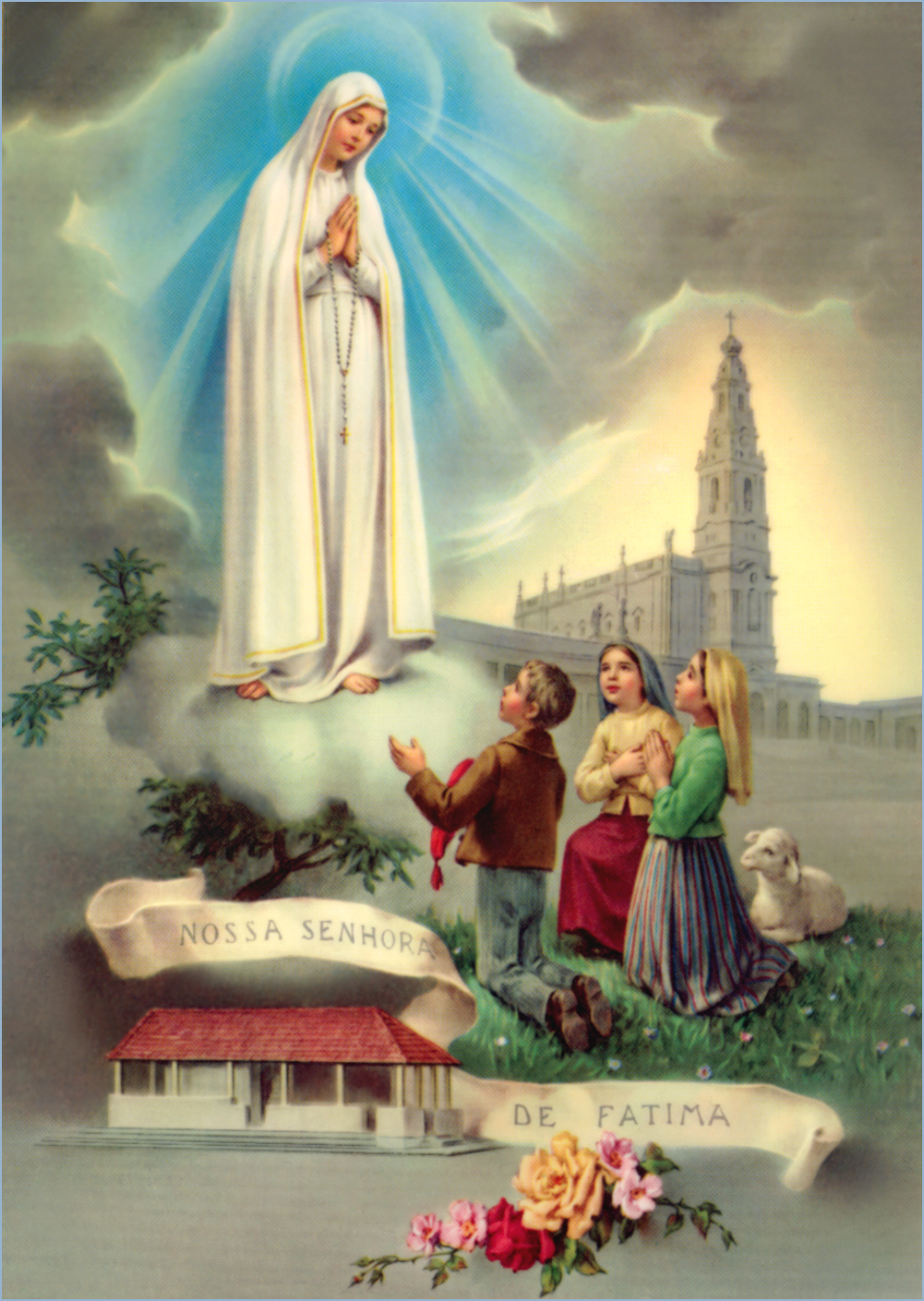
Ratzinger on Fatima (1)

http://www.catholictradition.org/Mary/fatima12c-seers.jpgOn 11 November 1984, Cardinal Ratzinger, gave an interview in Jesus magazine, a publication of the Pauline Sisters. The interview is entitled “Here is Why the Faith is in Crisis,” and was published with the Cardinal's explicit permission. In this interview Cardinal Ratzinger admits that a crisis of faith is affecting the Church around the world. In this context, he reveals that he has read the Third Secret and that the Secret refers to “dangers threatening the faith and the life of the Christian and therefore (the life) of the world.”

Ratzinger says in the same interview that the Secret also refers to “the importance of the Novissimi [the Last Times/the Last Things]” and that “If it is not published, at least for now, it is to avoid confusing religious prophecy with sensationalism ...” The Cardinal further reveals that “the things contained in this ‘Third Secret’ correspond to what has been announced in Scripture and has been said again and again in many other Marian apparitions, first of all that of Fatima ...”

Sources:  Frère Michel de la Sainte Trinité, The Whole Truth About Fatima - Volume III, pp. 822-823. See also Jesus magazine, November 11, 1984, p. 79. See also The Fatima Crusader, Issue 37, Summer 1991, p. 7.

Sunday, February 17, 2013

Benedict XVI on Faith

“In the days full of worries and problems, but also in those of rest and relaxation, the Lord invites us not forget that it's necessary to worry about the material bread and restoring forces, even more fundamental is growing in a relationship with God, strengthening our faith in Him who is the 'bread of life.”
 
“Faith is fundamental. This is not about to follow an idea, or a project, but to find Jesus as a living person and become willingly involved totally for Him and His Gospel.” 

Benedict XVI, Angelus, 5 August 2012