Showing posts with label General Audience. Show all posts

Saturday, March 22, 2025

Benedict XVI on Saint Catherine of Genoa

Dear Brothers and Sisters,

After Catherine of Siena and Catherine of Bologna, today I would like to speak to you about another Saint: Catherine of Genoa, known above all for her vision of purgatory. The text that describes her life and thought was published in this Ligurian city in 1551. It is in three sections: her Vita [Life], properly speaking, the Dimostratione et dechiaratione del purgatorio — better known as Treatise on purgatory — and her Dialogo tra l’anima e il corpo (cf. Libro de la Vita mirabile et dottrina santa, de la beata Caterinetta da Genoa. Nel quale si contiene una utile et catholica dimostratione et dechiaratione del purgatorio, Genoa 1551). The final version was written by Catherine’s confessor, Fr Cattaneo Marabotto.

Catherine was born in Genoa in 1447. She was the youngest of five. Her father, Giacomo Fieschi, died when she was very young. Her mother, Francesca di Negro provided such an effective Christian education that the elder of her two daughters became a religious.

When Catherine was 16, she was given in marriage to Giuliano Adorno, a man who after various trading and military experiences in the Middle East had returned to Genoa in order to marry.

Married life was far from easy for Catherine, partly because of the character of her husband who was given to gambling. Catherine herself was at first induced to lead a worldly sort of life in which, however, she failed to find serenity. After 10 years, her heart was heavy with a deep sense of emptiness and bitterness.

A unique experience on 20 March 1473 sparked her conversion. She had gone to the Church of San Benedetto in the monastery of Nostra Signora delle Grazie [Our Lady of Grace], to make her confession and, kneeling before the priest, “received”, as she herself wrote, “a wound in my heart from God’s immense love”. It came with such a clear vision of her own wretchedness and shortcomings and at the same time of God’s goodness, that she almost fainted.

Her heart was moved by this knowledge of herself — knowledge of the empty life she was leading and of the goodness of God. This experience prompted the decision that gave direction to her whole life. She expressed it in the words: “no longer the world, no longer sin” (cf. Vita Mirabile, 3rv). Catherine did not stay to make her Confession.

On arriving home she entered the remotest room and spent a long time weeping. At that moment she received an inner instruction on prayer and became aware of God’s immense love for her, a sinner. It was a spiritual experience she had no words to describe (cf. Vita Mirabile, 4r).

It was on this occasion that the suffering Jesus appeared to her, bent beneath the Cross, as he is often portrayed in the Saint’s iconography. A few days later she returned to the priest to make a good confession at last. It was here that began the “life of purification” which for many years caused her to feel constant sorrow for the sins she had committed and which spurred her to impose forms of penance and sacrifice upon herself, in order to show her love to God.

On this journey Catherine became ever closer to the Lord until she attained what is called “unitive life”, namely, a relationship of profound union with God.

In her Vita it is written that her soul was guided and instructed from within solely by the sweet love of God which gave her all she needed. Catherine surrendered herself so totally into the hands of the Lord that she lived, for about 25 years, as she wrote, “without the assistance of any creature, taught and governed by God alone” (Vita, 117r-118r), nourished above all by constant prayer and by Holy Communion which she received every day, an unusual practice in her time. Only many years later did the Lord give her a priest who cared for her soul.

Catherine was always reluctant to confide and reveal her experience of mystical communion with God, especially because of the deep humility she felt before the Lord’s graces. The prospect of glorifying him and of being able to contribute to the spiritual journey of others alone spurred her to recount what had taken place within her, from the moment of her conversion, which is her original and fundamental experience.

The place of her ascent to mystical peaks was Pammatone Hospital, the largest hospital complex in Genoa, of which she was director and animator. Hence Catherine lived a totally active existence despite the depth of her inner life. In Pammatone a group of followers, disciples and collaborators formed around her, fascinated by her life of faith and her charity.

Indeed her husband, Giuliano Adorno, was so so won over that he gave up his dissipated life, became a Third Order Franciscan and moved into the hospital to help his wife.

Catherine’s dedication to caring for the sick continued until the end of her earthly life on 15 September 1510. From her conversion until her death there were no extraordinary events but two elements characterize her entire life: on the one hand her mystical experience, that is, the profound union with God, which she felt as spousal union, and on the other, assistance to the sick, the organization of the hospital and service to her neighbour, especially the neediest and the most forsaken. These two poles, God and neighbour, totally filled her life, virtually all of which she spent within the hospital walls.

Dear friends, we must never forget that the more we love God and the more constantly we pray, the better we will succeed in truly loving those who surround us, who are close to us, so that we can see in every person the Face of the Lord whose love knows no bounds and makes no distinctions. The mystic does not create distance from others or an abstract life, but rather approaches other people so that they may begin to see and act with God’s eyes and heart.

Catherine’s thought on purgatory, for which she is particularly well known, is summed up in the last two parts of the book mentioned above: The Treatise on purgatory and the Dialogues between the body and the soul. It is important to note that Catherine, in her mystical experience, never received specific revelations on purgatory or on the souls being purified there. Yet, in the writings inspired by our Saint, purgatory is a central element and the description of it has characteristics that were original in her time.

The first original passage concerns the “place” of the purification of souls. In her day it was depicted mainly using images linked to space: a certain space was conceived of in which purgatory was supposed to be located.

Catherine, however, did not see purgatory as a scene in the bowels of the earth: for her it is not an exterior but rather an interior fire. This is purgatory: an inner fire.

The Saint speaks of the Soul’s journey of purification on the way to full communion with God, starting from her own experience of profound sorrow for the sins committed, in comparison with God’s infinite love (cf. Vita Mirabile, 171v).

We heard of the moment of conversion when Catherine suddenly became aware of God’s goodness, of the infinite distance of her own life from this goodness and of a burning fire within her. And this is the fire that purifies, the interior fire of purgatory. Here too is an original feature in comparison with the thought of her time.

In fact, she does not start with the afterlife in order to recount the torments of purgatory — as was the custom in her time and perhaps still is today — and then to point out the way to purification or conversion. Rather our Saint begins with the inner experience of her own life on the way to Eternity.

“The soul”, Catherine says, “presents itself to God still bound to the desires and suffering that derive from sin and this makes it impossible for it to enjoy the beatific vision of God”. Catherine asserts that God is so pure and holy that a soul stained by sin cannot be in the presence of the divine majesty (cf. Vita Mirabile, 177r).

We too feel how distant we are, how full we are of so many things that we cannot see God. The soul is aware of the immense love and perfect justice of God and consequently suffers for having failed to respond in a correct and perfect way to this love; and love for God itself becomes a flame, love itself cleanses it from the residue of sin.

In Catherine we can make out the presence of theological and mystical sources on which it was normal to draw in her time. In particular, we find an image typical of Dionysius the Areopagite: the thread of gold that links the human heart to God himself. When God purified man, he bound him with the finest golden thread, that is, his love, and draws him toward himself with such strong affection that man is as it were “overcome and won over and completely beside himself”.

Thus man’s heart is pervaded by God’s love that becomes the one guide, the one driving force of his life (cf. Vita Mirabile, 246rv). This situation of being uplifted towards God and of surrender to his will, expressed in the image of the thread, is used by Catherine to express the action of divine light on the souls in purgatory, a light that purifies and raises them to the splendour of the shining radiance of God (cf. Vita Mirabile, 179r).

Dear friends, in their experience of union with God, Saints attain such a profound knowledge of the divine mysteries in which love and knowledge interpenetrate, that they are of help to theologians themselves in their commitment to study, to intelligentia fidei, to an intelligentia of the mysteries of faith, to attain a really deeper knowledge of the mysteries of faith, for example, of what purgatory is.

With her life St Catherine teaches us that the more we love God and enter into intimacy with him in prayer the more he makes himself known to us, setting our hearts on fire with his love.

In writing about purgatory, the Saint reminds us of a fundamental truth of faith that becomes for us an invitation to pray for the deceased so that they may attain the beatific vision of God in the Communion of Saints (cf. Catechism of the Catholic Church, n. 1032).

Moreover the humble, faithful and generous service in Pammatone Hospital that the Saint rendered throughout her life is a shining example of charity for all and an encouragement, especially for women who, with their precious work enriched by their sensitivity and attention to the poorest and neediest, make a fundamental contribution to society and to the Church. 

Benedict XVI, General Audience, Paul VI Audience Hall, 12 January 2011.

Tuesday, December 10, 2019

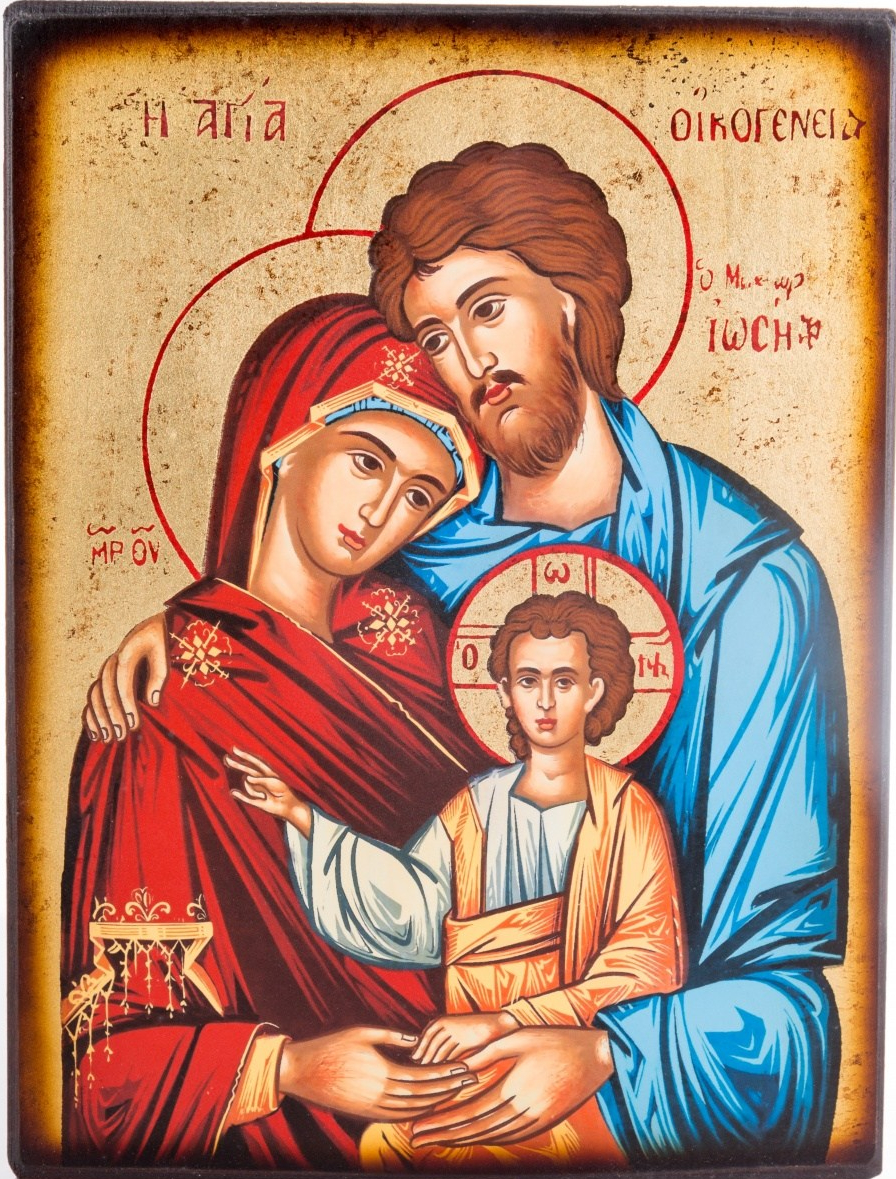
Benedict XVI on the Holy Family of Nazareth

Image result for holy family


"Today’s meeting is taking place in the atmosphere of Christmas, imbued with deep joy at the Birth of the Saviour. We have just celebrated this Mystery whose echo ripples through the Liturgy of all these days. It is a Mystery of Light that all people in every era can relive with faith and prayer. It is through prayer itself that we become capable of drawing close to God with intimacy and depth.
 
Therefore, bearing in mind the theme of prayer that I am developing in the Catecheses in this period, I would therefore like to invite you to reflect today on the way that prayer was part of the life of the Holy Family of Nazareth. Indeed, the house of Nazareth is a school of prayer where one learns to listen, meditate on and penetrate the profound meaning of the manifestation of the Son of God, following the example of Mary, Joseph and Jesus.
 
The Discourse of the Servant of God Paul VI during his Visit to Nazareth is memorable. The Pope said that at the school of the Holy Family we “understand why we must maintain a spiritual discipline, if we wish to follow the teaching of the Gospel and become disciples of Christ”. He added: “In the first place it teaches us silence. Oh! If only esteem for silence, a wonderful and indispensable spiritual atmosphere, could be reborn within us! Whereas we are deafened by the din, the noise and discordant voices in the frenetic, turbulent life of our time. O silence of Nazareth! Teach us to be steadfast in good thoughts, attentive to our inner life, ready to hear God’s hidden inspiration clearly and the exhortations of true teachers” (Discourse in Nazareth, 5 January 1964).
 
We can draw various ideas for prayer and for the relationship with God and with the Holy Family from the Gospel narratives of the infancy of Jesus. We can begin with the episode of the Presentation of Jesus in the Temple. St Luke tells how “when the time came for their purification according to the law of Moses”, Mary and Joseph “brought him up to Jerusalem to present him to the Lord” (2:22). Like every Jewish family that observed the law, Jesus’ parents went to the Temple to consecrate their first-born son to God and to make the sacrificial offering. Motivated by their fidelity to the precepts of the Law, they set out from Bethlehem and went to Jerusalem with Jesus who was only 40 days old. Instead of a year-old lamb they presented the offering of simple families, namely, two turtle doves. The Holy Family’s pilgrimage was one of faith, of the offering of gifts — a symbol of prayer — and of the encounter with the Lord whom Mary and Joseph already perceived in their Son Jesus.
 
Mary was a peerless model of contemplation of Christ. The face of the Son belonged to her in a special way because he had been knit together in her womb and had taken a human likeness from her. No one has contemplated Jesus as diligently as Mary. The gaze of her heart was already focused on him at the moment of the Annunciation, when she conceived him through the action of the Holy Spirit; in the following months she gradually became aware of his presence, until, on the day of his birth, her eyes could look with motherly tenderness upon the face of her son as she wrapped him in swaddling clothes and laid him in the manger.
 
Memories of Jesus, imprinted on her mind and on her heart, marked every instant of Mary’s existence. She lived with her eyes fixed on Christ and cherished his every word. St Luke says: “Mary kept all these things, pondering them in her heart” (2:19) and thus describes Mary’s approach to the Mystery of the Incarnation which was to extend throughout her life: keeping these things, pondering on them in her heart. Luke is the Evangelist who acquaints us with Mary’s heart, with her faith (cf. 1:45), her hope and her obedience (cf. 1:38) and, especially, with her interiority and prayer (cf. 1:46-56), her free adherence to Christ (cf. 1:55).
 
And all this proceeded from the gift of the Holy Spirit who overshadowed her (cf. 1:35), as he was to come down on the Apostles in accordance with Christ’s promise (cf. Acts 1:8). This image of Mary which St Luke gives us presents Our Lady as a model for every believer who cherishes and compares Jesus’ words with his actions, a comparison which is always progress in the knowledge of Jesus. After Bl. Pope John Paul II’s example (cf. Apostolic Letter Rosarium Virginis Mariae) we can say that the prayer of the Rosary is modelled precisely on Mary, because it consists in contemplating the mysteries of Christ in spiritual union with the Mother of the Lord.
 
Mary’s ability to live by God’s gaze, is so to speak, contagious. The first to experience this was St Joseph. His humble and sincere love for his betrothed and his decision to join his life to Mary’s attracted and introduced him, “a just man”, (Mt 1:19), to a special intimacy with God. Indeed, with Mary and later, especially, with Jesus, he began a new way of relating to God, accepting him in his life, entering his project of salvation and doing his will. After trustfully complying with the Angel’s instructions “Do not fear to take Mary your wife” (Mt 1:20) — he took Mary to him and shared his life with her; he truly gave the whole of himself to Mary and to Jesus and this led him to perfect his response to the vocation he had received.
 
As we know, the Gospel has not recorded any of Joseph’s words: his is a silent and faithful, patient and hard-working presence. We may imagine that he too, like his wife and in close harmony with her, lived the years of Jesus’ childhood and adolescence savouring, as it were, his presence in their family.
 
Joseph fulfilled every aspect of his paternal role. He must certainly have taught Jesus to pray, together with Mary. In particular Joseph himself must have taken Jesus to the Synagogue for the rites of the Sabbath, as well as to Jerusalem for the great feasts of the people of Israel. Joseph, in accordance with the Jewish tradition, would have led the prayers at home both every day — in the morning, in the evening, at meals — and on the principal religious feasts. In the rhythm of the days he spent at Nazareth, in the simple home and in Joseph’s workshop, Jesus learned to alternate prayer and work, as well as to offer God his labour in earning the bread the family needed.
 
And lastly, there is another episode that sees the Holy Family of Nazareth gathered together in an event of prayer. When Jesus was 12 years old, as we have heard, he went with his parents to the Temple of Jerusalem. This episode fits into the context of pilgrimage, as St Luke stresses: “His parents went to Jerusalem every year at the feast of the Passover. And when he was twelve years old, they went up according to custom” (2:41-42).
 
Pilgrimage is an expression of religious devotion that is nourished by and at the same time nourishes prayer. Here, it is the Passover pilgrimage, and the Evangelist points out to us that the family of Jesus made this pilgrimage every year in order to take part in the rites in the Holy City. Jewish families, like Christian families, pray in the intimacy of the home but they also pray together with the community, recognizing that they belong to the People of God, journeying on; and the pilgrimage expresses exactly this state of the People of God on the move. Easter is the centre and culmination of all this and involves both the family dimension and that of liturgical and public worship.
 
In the episode of the 12-year-old Jesus, the first words of Jesus are also recorded: “How is it that you sought me? Did you not know that I must be in my Father’s house?” (2:49). After three days spent looking for him his parents found him in the temple, sitting among the teachers, listening to them and asking them questions (cf. 2:46). His answer to the question of why he had done this to his father and mother was that he had only done what the Son should do, that is, to be with his Father.
 
Thus he showed who is the true Father, what is the true home, and that he had done nothing unusual or disobedient. He had stayed where the Son ought to be, that is, with the Father, and he stressed who his Father was.
 
The term “Father” therefore dominates the tone of this answer and the Christological mystery appears in its entirety. Hence, this word unlocks the mystery, it is the key to the Mystery of Christ, who is the Son, and also the key to our mystery as Christians who are sons and daughters in the Son. At the same time Jesus teaches us to be children by being with the Father in prayer. The Christological mystery, the mystery of Christian existence, is closely linked to, founded on, prayer. Jesus was one day to teach his disciples to pray, telling them: when you pray say “Father”. And, naturally, do not just say the word say it with your life, learn to say it meaningfully with your life. “Father”; and in this way you will be true sons in the Son, true Christians.
 
It is important at this point, when Jesus was still fully integrated in the life of the Family of Nazareth, to note the resonance that hearing this word “Father” on Jesus’ lips must have had in the hearts of Mary and Joseph. It is also important to reveal, to emphasize, who the Father is, and, with his awareness, to hear this word on the lips of the Only-Begotten Son who, for this very reason, chose to stay on for three days in the Temple, which is the “Father’s house”.
 
We may imagine that from this time the life of the Holy Family must have been even fuller of prayer since from the heart of Jesus the boy — then an adolescent and a young man — this deep meaning of the relationship with God the Father would not cease to spread and to be echoed in the hearts of Mary and Joseph.
 
This episode shows us the real situation, the atmosphere of being with the Father. So it was that the Family of Nazareth became the first model of the Church in which, around the presence of Jesus and through his mediation, everyone experiences the filial relationship with God the Father which also transforms interpersonal, human relationships.
 
Dear friends, because of these different aspects that I have outlined briefly in the light of the Gospel, the Holy Family is the icon of the domestic Church, called to pray together. The family is the domestic Church and must be the first school of prayer. It is in the family that children, from the tenderest age, can learn to perceive the meaning of God, also thanks to the teaching and example of their parents: to live in an atmosphere marked by God’s presence. An authentically Christian education cannot dispense with the experience of prayer. If one does not learn how to pray in the family it will later be difficult to bridge this gap. And so I would like to address to you the invitation to pray together as a family at the school of the Holy Family of Nazareth and thereby really to become of one heart and soul, a true family. Many thanks."
 
Benedict XVI, General Audience (Paul VI Audience Hall), 28 December 2011


Wednesday, September 18, 2019

Benedict XVI on Saint Ambrose of Milan

Image result for saint ambrose


"Holy Bishop Ambrose - about whom I shall speak to you today - died in Milan in the night between 3 and 4 April 397. It was dawn on Holy Saturday. The day before, at about five o'clock in the afternoon, he had settled down to pray, lying on his bed with his arms wide open in the form of a cross. Thus, he took part in the solemn Easter Triduum, in the death and Resurrection of the Lord. "We saw his lips moving", said Paulinus, the faithful deacon who wrote his Life at St Augustine's suggestion, "but we could not hear his voice". The situation suddenly became dramatic. Honoratus, Bishop of Vercelli, who was assisting Ambrose and was sleeping on the upper floor, was awoken by a voice saying again and again, "Get up quickly! Ambrose is dying...". "Honoratus hurried downstairs", Paulinus continues, "and offered the Saint the Body of the Lord. As soon as he had received and swallowed it, Ambrose gave up his spirit, taking the good Viaticum with him. His soul, thus refreshed by the virtue of that food, now enjoys the company of Angels" (Life, 47). On that Holy Friday 397, the wide open arms of the dying Ambrose expressed his mystical participation in the death and Resurrection of the Lord. This was his last catechesis: in the silence of the words, he continued to speak with the witness of his life.
 
Ambrose was not old when he died. He had not even reached the age of 60, since he was born in about 340 A.D. in Treves, where his father was Prefect of the Gauls. His family was Christian.
 
Upon his father's death while he was still a boy, his mother took him to Rome and educated him for a civil career, assuring him a sound instruction in rhetoric and jurisprudence. In about 370 he was sent to govern the Provinces of Emilia and Liguria, with headquarters in Milan. It was precisely there that the struggle between orthodox and Arians was raging and became particularly heated after the death of the Arian Bishop Auxentius. Ambrose intervened to pacify the members of the two opposing factions; his authority was such that although he was merely a catechumen, the people acclaimed him Bishop of Milan.
 
Until that moment, Ambrose had been the most senior magistrate of the Empire in northern Italy. Culturally well-educated but at the same time ignorant of the Scriptures, the new Bishop briskly began to study them. From the works of Origen, the indisputable master of the "Alexandrian School", he learned to know and to comment on the Bible. Thus, Ambrose transferred to the Latin environment the meditation on the Scriptures which Origen had begun, introducing in the West the practice of lectio divina. The method of lectio served to guide all of Ambrose's preaching and writings, which stemmed precisely from prayerful listening to the Word of God. The famous introduction of an Ambrosian catechesis shows clearly how the holy Bishop applied the Old Testament to Christian life: "Every day, when we were reading about the lives of the Patriarchs and the maxims of the Proverbs, we addressed morality", the Bishop of Milan said to his catechumens and neophytes, "so that formed and instructed by them you may become accustomed to taking the path of the Fathers and to following the route of obedience to the divine precepts" (On the Mysteries 1, 1). In other words, the neophytes and catechumens, in accordance with the Bishop's decision, after having learned the art of a well-ordered life, could henceforth consider themselves prepared for Christ's great mysteries. Thus, Ambrose's preaching - which constitutes the structural nucleus of his immense literary opus - starts with the reading of the Sacred Books ("the Patriarchs" or the historical Books and "Proverbs", or in other words, the Wisdom Books) in order to live in conformity with divine Revelation.
 
It is obvious that the preacher's personal testimony and the level of exemplarity of the Christian community condition the effectiveness of the preaching. In this perspective, a passage from St Augustine's Confessions is relevant. He had come to Milan as a teacher of rhetoric; he was a sceptic and not Christian. He was seeking the Christian truth but was not capable of truly finding it.
 
What moved the heart of the young African rhetorician, sceptic and downhearted, and what impelled him to definitive conversion was not above all Ambrose's splendid homilies (although he deeply appreciated them). It was rather the testimony of the Bishop and his Milanese Church that prayed and sang as one intact body. It was a Church that could resist the tyrannical ploys of the Emperor and his mother, who in early 386 again demanded a church building for the Arians' celebrations. In the building that was to be requisitioned, Augustine relates, "the devout people watched, ready to die with their Bishop". This testimony of the Confessions is precious because it points out that something was moving in Augustine, who continues: "We too, although spiritually tepid, shared in the excitement of the whole people" (Confessions 9, 7).
 
Augustine learned from the life and example of Bishop Ambrose to believe and to preach. We can refer to a famous sermon of the African, which centuries later merited citation in the conciliar Constitution on Divine Revelation, Dei Verbum: "Therefore, all clerics, particularly priests of Christ and others who, as deacons or catechists, are officially engaged in the ministry of the Word", Dei Verbum recommends, "should immerse themselves in the Scriptures by constant sacred reading and diligent study. For it must not happen that anyone becomes" - and this is Augustine's citation - ""an empty preacher of the Word of God to others, not being a hearer of the Word in his own heart'" (n. 25). Augustine had learned precisely from Ambrose how to "hear in his own heart" this perseverance in reading Sacred Scripture with a prayerful approach, so as truly to absorb and assimilate the Word of God in one's heart.
 
Dear brothers and sisters, I would like further to propose to you a sort of "patristic icon", which, interpreted in the light of what we have said, effectively represents "the heart" of Ambrosian doctrine. In the sixth book of the Confessions, Augustine tells of his meeting with Ambrose, an encounter that was indisputably of great importance in the history of the Church. He writes in his text that whenever he went to see the Bishop of Milan, he would regularly find him taken up with catervae of people full of problems for whose needs he did his utmost. There was always a long queue waiting to talk to Ambrose, seeking in him consolation and hope. When Ambrose was not with them, with the people (and this happened for the space of the briefest of moments), he was either restoring his body with the necessary food or nourishing his spirit with reading. Here Augustine marvels because Ambrose read the Scriptures with his mouth shut, only with his eyes (cf. Confessions, 6, 3). Indeed, in the early Christian centuries reading was conceived of strictly for proclamation, and reading aloud also facilitated the reader's understanding. That Ambrose could scan the pages with his eyes alone suggested to the admiring Augustine a rare ability for reading and familiarity with the Scriptures. Well, in that "reading under one's breath", where the heart is committed to achieving knowledge of the Word of God - this is the "icon" to which we are referring -, one can glimpse the method of Ambrosian catechesis; it is Scripture itself, intimately assimilated, which suggests the content to proclaim that will lead to the conversion of hearts.
 
Thus, with regard to the magisterium of Ambrose and of Augustine, catechesis is inseparable from witness of life. What I wrote on the theologian in the Introduction to Christianity might also be useful to the catechist. An educator in the faith cannot risk appearing like a sort of clown who recites a part "by profession". Rather - to use an image dear to Origen, a writer who was particularly appreciated by Ambrose -, he must be like the beloved disciple who rested his head against his Master's heart and there learned the way to think, speak and act. The true disciple is ultimately the one whose proclamation of the Gospel is the most credible and effective.
 
Like the Apostle John, Bishop Ambrose - who never tired of saying: "Omnia Christus est nobis! To us Christ is all!" - continues to be a genuine witness of the Lord. Let us thus conclude our Catechesis with his same words, full of love for Jesus: "Omnia Christus est nobis! If you have a wound to heal, he is the doctor; if you are parched by fever, he is the spring; if you are oppressed by injustice, he is justice; if you are in need of help, he is strength; if you fear death, he is life; if you desire Heaven, he is the way; if you are in the darkness, he is light.... Taste and see how good is the Lord:  blessed is the man who hopes in him!" (De Virginitate, 16, 99). Let us also hope in Christ. We shall thus be blessed and shall live in peace." - Benedict XVI, General Audience, St. Peter's Square, 24 October 2007

Monday, August 26, 2019

Benedict XVI on Sts. Timothy and Titus


"Having spoken at length on the great Apostle Paul, today let us look at his two closest collaborators: Timothy and Titus. Three Letters traditionally attributed to Paul are addressed to them, two to Timothy and one to Titus.
 
Timothy is a Greek name which means "one who honours God". Whereas Luke mentions him six times in the Acts, Paul in his Letters refers to him at least 17 times (and his name occurs once in the Letter to the Hebrews).
 
One may deduce from this that Paul held him in high esteem, even if Luke did not consider it worth telling us all about him.
 
Indeed, the Apostle entrusted Timothy with important missions and saw him almost as an alter ego, as is evident from his great praise of him in his Letter to the Philippians. "I have no one like him (isópsychon) who will be genuinely anxious for your welfare" (2: 20).
 
Timothy was born at Lystra (about 200 kilometres northwest of Tarsus) of a Jewish mother and a Gentile father (cf. Acts 16: 1).
 
The fact that his mother had contracted a mixed-marriage and did not have her son circumcised suggests that Timothy grew up in a family that was not strictly observant, although it was said that he was acquainted with the Scriptures from childhood (cf. II Tm 3: 15). The name of his mother, Eunice, has been handed down to us, as well as that of his grandmother, Lois (cf. II Tm 1: 5).
 
When Paul was passing through Lystra at the beginning of his second missionary journey, he chose Timothy to be his companion because "he was well spoken of by the brethren at Lystra and Iconium" (Acts 16: 2), but he had him circumcised "because of the Jews that were in those places" (Acts 16: 3).
 
Together with Paul and Silas, Timothy crossed Asia Minor as far as Troy, from where he entered Macedonia. We are informed further that at Philippi, where Paul and Silas were falsely accused of disturbing public order and thrown into prison for having exposed the exploitation of a young girl who was a soothsayer by several unscrupulous individuals (cf. Acts 16: 16-40), Timothy was spared.
 
When Paul was then obliged to proceed to Athens, Timothy joined him in that city and from it was sent out to the young Church of Thessalonica to obtain news about her and to strengthen her in the faith (cf. I Thes 3: 1-2). He then met up with the Apostle in Corinth, bringing him good news about the Thessalonians and working with him to evangelize that city (cf. II Cor 1: 19).
 
We find Timothy at Ephesus during Paul's third missionary journey. It was probably from there that the Apostle wrote to Philemon and to the Philippians; he sent both Letters jointly with Timothy (cf. Phlm 1; Phil 1: 1).
 
From Ephesus, Paul sent Timothy to Macedonia, together with a certain Erastus (cf. Acts 19: 22), and then also to Corinth with the mission of taking a letter to the Corinthians, in which he recommended that they welcome him warmly (cf. I Cor 4: 17; 16: 10-11).
 
We encounter him again as the joint sender of the Second Letter to the Corinthians, and when Paul wrote the Letter to the Romans from Corinth he added Timothy's greetings as well as the greetings of the others (cf. Rom 16: 21).
 
From Corinth, the disciple left for Troy on the Asian coast of the Aegean See and there awaited the Apostle who was bound for Jerusalem at the end of his third missionary journey (cf. Acts 20: 4).
 
From that moment in Timothy's biography, the ancient sources mention nothing further to us, except for a reference in the Letter to the Hebrews which says: "You should understand that our brother Timothy has been released, with whom I shall see you if he comes soon" (13: 23).
 
To conclude, we can say that the figure of Timothy stands out as a very important pastor.
 
According to the later Storia Ecclesiastica by Eusebius, Timothy was the first Bishop of Ephesus (cf. 3, 4). Some of his relics, brought from Constantinople, were found in Italy in 1239 in the Cathedral of Termoli in the Molise.
 
Then, as regards the figure of Titus, whose name is of Latin origin, we know that he was Greek by birth, that is, a pagan (cf. Gal 2: 3). Paul took Titus with him to Jerusalem for the so-called Apostolic Council, where the preaching of the Gospel to the Gentiles that freed them from the constraints of Mosaic Law was solemnly accepted.
 
In the Letter addressed to Titus, the Apostle praised him and described him as his "true child in a common faith" (Ti 1: 4). After Timothy's departure from Corinth, Paul sent Titus there with the task of bringing that unmanageable community to obedience.
 
Titus restored peace between the Church of Corinth and the Apostle, who wrote to this Church in these terms: "But God, who comforts the downcast, comforted us by the coming of Titus, and not only by his coming but also by the comfort with which he was comforted in you, as he told us of your longing, your mourning, your zeal for me.... And besides our own comfort we rejoiced still more at the joy of Titus, because his mind has been set at rest by you all" (II Cor 7: 6-7, 13).
 
From Corinth, Titus was again sent out by Paul - who called him "my partner and fellow worker in your service" (II Cor 8: 23) - to organize the final collections for the Christians of Jerusalem (cf. II Cor 8: 6).
 
Further information from the Pastoral Letters describes him as Bishop of Crete (cf. Ti 1: 5), from which, at Paul's invitation, he joined the Apostle at Nicopolis in Epirus (cf. Ti 3: 12). Later, he also went to Dalmatia (cf. II Tm 4: 10). We lack any further information on the subsequent movements of Titus or on his death.
 
To conclude, if we consider together the two figures of Timothy and Titus, we are aware of certain very significant facts. The most important one is that in carrying out his missions, Paul availed himself of collaborators. He certainly remains the Apostle par excellence, founder and pastor of many Churches.
 
Yet it clearly appears that he did not do everything on his own but relied on trustworthy people who shared in his endeavours and responsibilities.
 
Another observation concerns the willingness of these collaborators. The sources concerning Timothy and Titus highlight their readiness to take on various offices that also often consisted in representing Paul in circumstances far from easy. In a word, they teach us to serve the Gospel with generosity, realizing that this also entails a service to the Church herself.
 
Lastly, let us follow the recommendation that the Apostle Paul makes to Titus in the Letter addressed to him: "I desire you to insist on these things, so that those who have believed in God may be careful to apply themselves to good deeds; these are excellent and profitable to men" (Ti 3: 8).
 
Through our commitment in practice we can and must discover the truth of these words, and precisely in this Season of Advent, we too can be rich in good deeds and thus open the doors of the world to Christ, our Saviour."
 
Benedict XVI, General Audience, Paul VI Audience Hall, 13 December 2006


Monday, August 12, 2019

Benedict XVI on Saint John Bosco


Image result for giovanni bosco


“This morning we celebrate the feast day of St. John Bosco, a priest and educator. I urge the youth to see him as an authentic teacher of life. To my ill brothers and sisters, I urge you to learn from his spirituality, so you many always trust in Christ. And you, dear newlyweds, seek his intercession, so you may fulfill your spousal role, with generosity.” 


Benedict XVI, General Audience, Saint Peter's Square, 31 January 2013 

Tuesday, January 22, 2019

John Paul II on salvation in Jesus Christ - 2

Image result for john paul 2

"For those, however, who have not received the Gospel proclamation, as I wrote in the Encyclical Redemptoris Missio, salvation is accessible in mysterious ways, inasmuch as divine grace is granted to them by virtue of Christ's redeeming sacrifice, without external membership in the Church, but nonetheless always in relation to her (cf. RM 10). It is a mysterious relationship. It is mysterious for those who receive the grace, because they do not know the Church and sometimes even outwardly reject her."

John Paul II, General Audience, 31 May 1995

Thursday, December 24, 2015

Benedict XVI on Christmas


"God becomes so close that it is possible to see and touch him. The Church contemplates this ineffable mystery and the liturgical texts of this Season are steeped in wonder and joy; all Christmas carols express this joy. Christmas is the point at which Heaven and earth converge."


Pope Benedict XVI, 4 January 2012, General Audience in Rome.

Friday, February 21, 2014

Benedict XVI on the Chair of St. Peter

http://www.anglicanphiladelphia.org/stmichael/cathedrapetri.jpgDear Brothers and Sisters! The Latin liturgy celebrates today the feast of the Chair of Peter. It is a very ancient tradition, witnessed in Rome since the end of the fourth century, which renders thanksgiving to God for the mission entrusted to the Apostle Peter and his successors.

"Cathedra" literally means the established seat of the bishop, located in the mother church of a diocese, which for this reason is called "cathedral," and it is the symbol of the authority of the bishop and, in particular, of his "magisterium," that is, of the evangelical teaching that he, insofar as a successor of the apostles, is called to guard and transmit to the Christian community.

When the bishop takes possession of the local Church that is entrusted to him, he, bearing the miter and the shepherd's crosier, sits on the cathedra. From that seat he will guide, as teacher and shepherd, the journey of the faithful in faith, hope and charity.

Which was, then, the "cathedra" if St. Peter? He, chosen by Christ as "rock" on which to build the Church (cf. Matthew 16:18), began his ministry in Jerusalem, after the ascension of the Lord and Pentecost. The first "seat" of the Church was the Cenacle, and in all probability in that room, where Mary, the Mother of Jesus, also prayed with the disciples, a special place was reserved for Simon Peter.

Subsequently, the see of Peter was Antioch, a city situated on the Oronte River in Syria, today Turkey, which at the time was the third metropolis of the Roman Empire after Rome and Alexandria in Egypt. Of that city, evangelized by Barnabas and Paul, where "for the first time the disciples were called Christians" (Acts 11:26), Peter was the first Bishop.

In fact, the Roman Martyrology, before the reform of the calendar, established also a specific celebration of the Chair of Peter at Antioch. From there, Providence led Peter to Rome, where he concluded with martyrdom his course of service to the Gospel. For this reason, the See of Rome, which had received the greatest honor, received also the task entrusted by Christ to Peter of being at the service of all the local Churches for the building and unity of the whole People of God.

In this way the See of Rome came to be known as that of the Successor of Peter, and the "cathedra" of its Bishop represented that of the apostle charged by Christ to feed all his flock. It is attested by the most ancient Fathers of the Church, as for example St. Irenaeus, bishop of Lyon, who in his treatise "Against Heresies" describes the Church of Rome as "greatest and most ancient, known by all; … founded and constituted at Rome by the two glorious Apostles Peter and Paul"; and he adds: "With this Church, because of her outstanding superiority, the universal Church must be in agreement, that is, the faithful everywhere" (III, 3, 2-3).

Tertullian, for his part, affirms: "How blessed this Church of Rome is! The Apostles themselves shed on her, with their blood, the whole of the doctrine" ("La Prescrizione degli Eretici," 36). The Chair of the Bishop of Rome represents, therefore, not only his service to the Roman community, but also his mission of guide of the whole People of God.

To celebrate the "Chair" of Peter, as we do today, means, therefore, to attribute to it a strong spiritual significance and to recognize in it a privileged sign of the love of God, good and eternal Shepherd, who wants to gather the whole of his Church and guide her along the way of salvation.

Among so many testimonies of the Fathers, I would like to refer to that of St. Jerome, taken from a letter of his to the Bishop of Rome, particularly interesting because he makes explicit reference in fact to the "chair" of Peter, presenting it as the safe harbor of truth and peace. Jerome writes thus: "I decided to consult the chair of Peter, where that faith is found exalted by the lips of an Apostle; I now come to ask for nourishment for my soul there, where once you received the garment of Christ. I follow no leader save Christ, so I enter into communion with your beatitude, that is, with the chair of Peter for this I know is the rock upon which the Church is built! ("Le Lettere," I, 15,1-2).

Dear Brothers and Sisters, in the apse of St. Peter's Basilica, as you know, is found the monument to the Chair of the Apostle, a mature work of Bernini, made in the shape of a great bronze throne, supported by the statues of four Doctors of the Church, two from the West, St. Augustine and St. Ambrose, and two from the East, St. John Chrysostom and St. Athanasius.

I invite you to pause before that evocative work, which today it is possible to admire decorated with so many candles, and pray in a particular way for the ministry that God has entrusted to me. Raising one's gaze to the alabaster glass window that opens precisely above the chair, invoke the Holy Spirit, so that he will always sustain with his light and strength my daily service to the whole Church. 

Benedict XVI, General Audience, Rome, 22 February 2006.

Wednesday, November 13, 2013

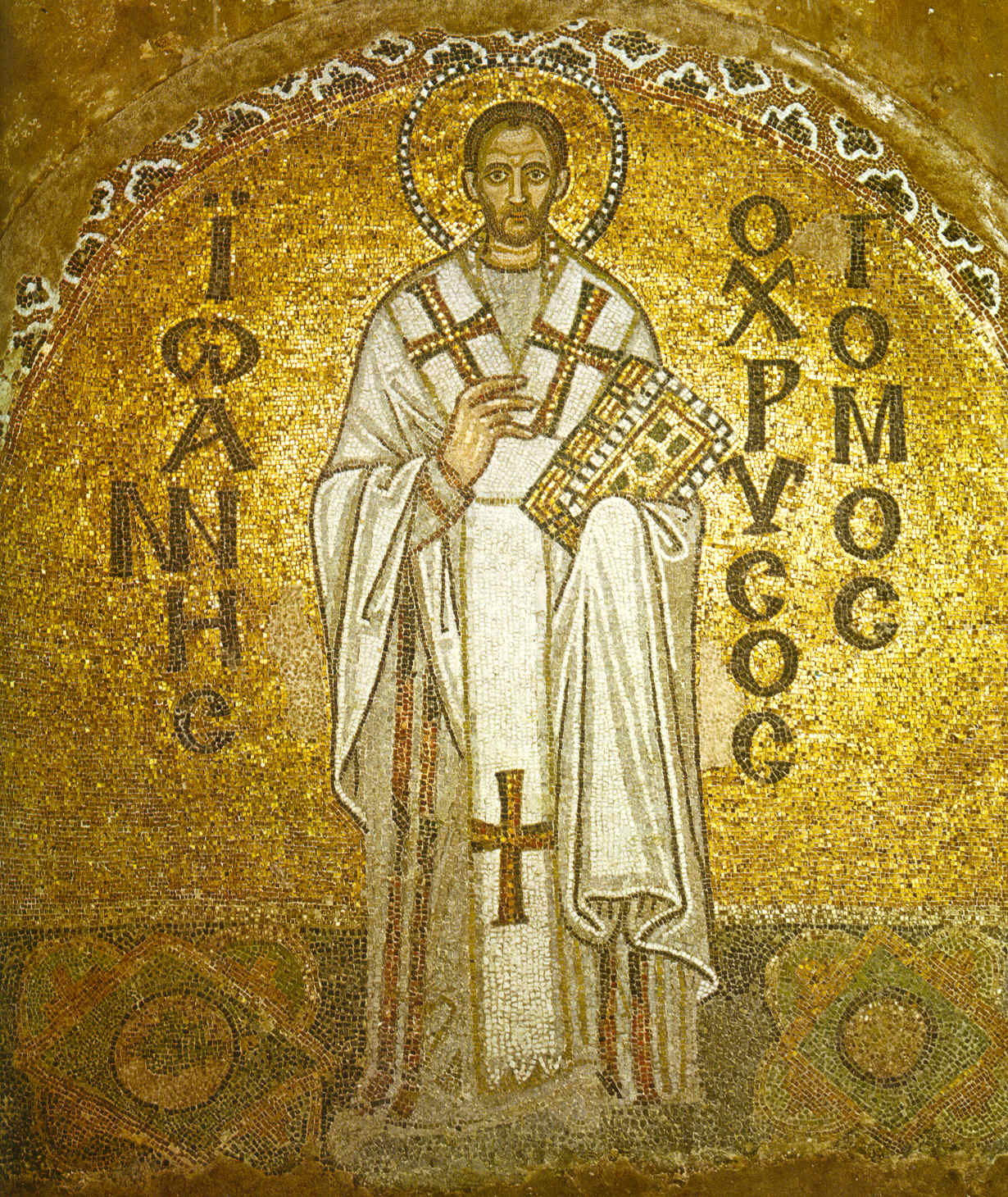
Benedict XVI on St. John Chrysostom


File:Johnchrysostom.jpg
Mosaic of St. John Chrysostom, Hagia Sophia, Istanbul
"It can be said that John of Antioch, nicknamed "Chrysostom", that is, "golden-mouthed", because of his eloquence, is also still alive today because of his works. An anonymous copyist left in writing that "they cross the whole globe like flashes of lightening".

Chrysostom's writings also enable us, as they did the faithful of his time whom his frequent exiles deprived of his presence, to live with his books, despite his absence. This is what he himself suggested in a letter when he was in exile (To Olympias, Letter 8, 45).

He was born in about the year 349 A.D. in Antioch, Syria (today Antakya in Southern Turkey). He carried out his priestly ministry there for about 11 years, until 397, when, appointed Bishop of Constantinople, he exercised his episcopal ministry in the capital of the Empire prior to his two exiles, which succeeded one close upon the other - in 403 and 407.
...
After completing his elementary and advanced studies crowned by courses in philosophy and rhetoric, he had as his teacher, Libanius, a pagan and the most famous rhetorician of that time. At his school John became the greatest orator of late Greek antiquity.

He was baptized in 368 and trained for the ecclesiastical life by Bishop Meletius, who instituted him as lector in 371. This event marked Chrysostom's official entry into the ecclesiastical cursus. From 367 to 372, he attended the Asceterius, a sort of seminary in Antioch, together with a group of young men, some of whom later became Bishops, under the guidance of the exegete Diodore of Tarsus, who initiated John into the literal and grammatical exegesis characteristic of Antiochean tradition.

He then withdrew for four years to the hermits on the neighbouring Mount Silpius. He extended his retreat for a further two years, living alone in a cave under the guidance of an "old hermit". In that period, he dedicated himself unreservedly to meditating on "the laws of Christ", the Gospels and especially the Letters of Paul. Having fallen ill, he found it impossible to care for himself unaided, and therefore had to return to the Christian community in Antioch (cf. Palladius, Dialogue on the Life of St John Chrysostom, 5).

The Lord, his biographer explains, intervened with the illness at the right moment to enable John to follow his true vocation. In fact, he himself was later to write that were he to choose between the troubles of Church government and the tranquillity of monastic life, he would have preferred pastoral service a thousand times (cf. On the Priesthood, 6, 7): it was precisely to this that Chrysostom felt called.
...
Between 378 and 379, he returned to the city. He was ordained a deacon in 381 and a priest in 386, and became a famous preacher in his city's churches. He preached homilies against the Arians, followed by homilies commemorating the Antiochean martyrs and other important liturgical celebrations: this was an important teaching of faith in Christ and also in the light of his Saints.

The year 387 was John's "heroic year", that of the so-called "revolt of the statues". As a sign of protest against levied taxes, the people destroyed the Emperor's statues. It was in those days of Lent and the fear of the Emperor's impending reprisal that Chrysostom gave his 22 vibrant Homilies on the Statues, whose aim was to induce repentance and conversion. This was followed by a period of serene pastoral care (387-397).

Chrysostom is among the most prolific of the Fathers: 17 treatises, more than 700 authentic homilies, commentaries on Matthew and on Paul (Letters to the Romans, Corinthians, Ephesians and Hebrews) and 241 letters are extant. He was not a speculative theologian.

Nevertheless, he passed on the Church's tradition and reliable doctrine in an age of theological controversies, sparked above all by Arianism or, in other words, the denial of Christ's divinity. He is therefore a trustworthy witness of the dogmatic development achieved by the Church from the fourth to the fifth centuries.

His is a perfectly pastoral theology in which there is constant concern for consistency between thought expressed via words and existential experience. It is this in particular that forms the main theme of the splendid catecheses with which he prepared catechumens to receive Baptism.

On approaching death, he wrote that the value of the human being lies in "exact knowledge of true doctrine and in rectitude of life" (Letter from Exile). Both these things, knowledge of truth and rectitude of life, go hand in hand: knowledge has to be expressed in life. All his discourses aimed to develop in the faithful the use of intelligence, of true reason, in order to understand and to put into practice the moral and spiritual requirements of faith.

John Chrysostom was anxious to accompany his writings with the person's integral development in his physical, intellectual and religious dimensions. The various phases of his growth are compared to as many seas in an immense ocean: "The first of these seas is childhood" (Homily, 81, 5 on Matthew's Gospel).

Indeed, "it is precisely at this early age that inclinations to vice or virtue are manifest". Thus, God's law must be impressed upon the soul from the outset "as on a wax tablet" (Homily 3, 1 on John's Gospel): This is indeed the most important age. We must bear in mind how fundamentally important it is that the great orientations which give man a proper outlook on life truly enter him in this first phase of life.

Chrysostom therefore recommended: "From the tenderest age, arm children with spiritual weapons and teach them to make the Sign of the Cross on their forehead with their hand" (Homily, 12, 7 on First Corinthians).

Then come adolescence and youth: "Following childhood is the sea of adolescence, where violent winds blow..., for concupiscence... grows within us" (Homily 81, 5 on Matthew's Gospel).

Lastly comes engagement and marriage: "Youth is succeeded by the age of the mature person who assumes family commitments: this is the time to seek a wife" (ibid.).

He recalls the aims of marriage, enriching them - referring to virtue and temperance - with a rich fabric of personal relationships. Properly prepared spouses therefore bar the way to divorce: everything takes place with joy and children can be educated in virtue. Then when the first child is born, he is "like a bridge; the three become one flesh, because the child joins the two parts" (Homily 12, 5 on the Letter to the Colossians), and the three constitute "a family, a Church in miniature" (Homily 20, 6 on the Letter to the Ephesians).

Chrysostom's preaching usually took place during the liturgy, the "place" where the community is built with the Word and the Eucharist. The assembly gathered here expresses the one Church (Homily 8, 7 on the Letter to the Romans), the same word is addressed everywhere to all (Homily 24, 2 on First Corinthians), and Eucharistic Communion becomes an effective sign of unity (Homily 32, 7 on Matthew's Gospel).

His pastoral project was incorporated into the Church's life, in which the lay faithful assume the priestly, royal and prophetic office with Baptism. To the lay faithful he said: "Baptism will also make you king, priest and prophet" (Homily 3, 5 on Second Corinthians).

From this stems the fundamental duty of the mission, because each one is to some extent responsible for the salvation of others: "This is the principle of our social life... not to be solely concerned with ourselves!" (Homily 9, 2 on Genesis). This all takes place between two poles: the great Church and the "Church in miniature", the family, in a reciprocal relationship."
Benedict XVI, General Audience, 19 September 2007.

Friday, September 27, 2013

Benedict XVI on Saint Benedict


http://hilltopshepherd.files.wordpress.com/2011/07/st-benedict-by-dominican-artist-fra-angelico.jpg"The name Benedict also evokes the extraordinary figure of the great 'patriarch of western monasticism,' St. Benedict of Norcia, co-patron of Europe with Cyril and Methodius. The progressive expansion of the Benedictine Order which he founded exercised an enormous influence on the spread of Christianity throughout the European continent. 

For this reason, St. Benedict is much venerated in Germany, and especially in Bavaria, my own land of origin; he constitutes a fundamental point of reference for the unity of Europe and a powerful call to the irrefutable Christian roots of European culture and civilization." 

Benedict XVI, 1st General Audience, April 2005.


Friday, May 31, 2013

Benedict XVI on St. Therese of Lisieux

“Therese received permission to enter the Carmel of Lisieux at the tender age of fifteen. Her name in religion – Sister Therese of the Child Jesus and the Holy Face – expresses the heart of her spirituality, centered on the contemplation of God’s love revealed in the mysteries of the Incarnation and Redemption.

 In imitation of Christ, Therese sought to be little in all things and to seek the salvation of the world. Taken ill in her twenty-third year, she endured great physical suffering in union with the crucified Lord; she also experienced a painful testing of faith which she offered for the salvation of those who deny God.

By striving to embody God’s love in the smallest things of life, Therese found her vocation to be "love in the heart of the Church". May her example and prayers help us to follow "the little way of trust and love" in spiritual childhood, abandoning ourselves completely to the love of God and the good of souls.”

Benedict XVI, General Audience, 6 April 2011.

Thursday, May 23, 2013

Benedict XVI on St. Francis of Assisi

Fresco of St. Francis at Sacro Speco, Subiaco.
“Continuing our catechesis on the Christian culture of the Middle Ages, we now turn to Saint Francis of Assisi, one of the greatest figures of the Church’s history. The story of Saint Francis’ life and conversion, and his complete devotion to Christ, poor and suffering, is well known. After gathering a small group of companions and followers, including Saint Clare, Francis sought the approval of Pope Innocent III for his movement which was completely committed to the renewal of the Church in holiness and to the preaching of the Gospel.

Near the end of his life, Francis’ configuration to the Crucified Lord culminated in his reception of the stigmata at La Verna. His deep piety found expression in a great devotion to the Eucharist, as the sacrament of Christ’s real presence, and his love for creation as God’s handiwork.

The life and teaching of Saint Francis has inspired countless people to the imitation of Christ through the embrace of inward and outward poverty. May his example teach us ever greater love for the Lord and his Church, and help us to know the immense spiritual joy born of the imitation of Christ and the pursuit of holiness”.

Benedict XVI, General Audience, 27 January 2010.

Sunday, May 19, 2013

Benedict XVI on Divine Mercy


“My next stop, at the Shrine of Divine Mercy in Lagiewniki, gave me the opportunity to stress that Divine Mercy alone illumines the mystery of man. It was here at the neighbouring convent that Sr Faustina Kowalska, contemplating the shining wounds of the Risen Christ, received a message of trust for humanity which John Paul II echoed and interpreted and which really is a central message precisely for our time:  Mercy as God's power, as a divine barrier against the evil of the world.”

Benedict XVI, General Audience, 31 May 2006.

Saturday, May 11, 2013

Benedict XVI on Liturgy (2)

http://www.catholicbible101.com/altar-at-vatican-ii1.gif
A session during the Second Vatican Council (1962-1965).
“Having focused for several weeks now on prayer as taught to us in the sacred Scriptures, we turn to another precious source of prayer, namely the liturgy. The word “liturgy” in Greek means “work done by the people and for the people”.  Here, this “people” is the new People of God, brought into being by Christ, a people which does not exist by itself and which is not bound by blood, territory or country, but is brought into being through the Paschal Mystery.

The liturgy is also the “work of God”. As the Second Vatican Council teaches, it is by means of the liturgy that Christ our Redeemer and High Priest continues the work of our redemption in, with, and through his Church. This is the great marvel of the liturgy: God acts, while we are caught up in his action.

The Council began its work by discussing the liturgy, and rightly so, for the liturgy reminds us of the primacy of God.  The fundamental criterion for it is its orientation towards the Father, whose saving love culminates in the death and resurrection of his Son. It is in the liturgy that we “lift up our hearts”, opening ourselves to the word of God as we gather with our brethren in a prayer which rises within us, and which is directed to the Father, through the Son, in the Spirit."

Benedict XVI, General Audience, 26 September 2012.

Sunday, April 28, 2013

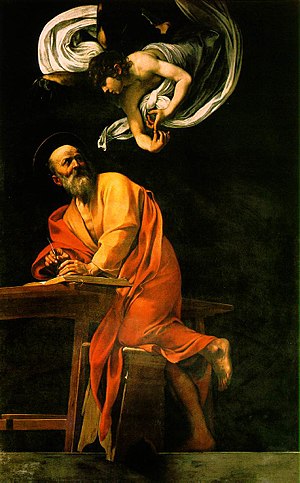
Benedict XVI on Saint Matthew

http://upload.wikimedia.org/wikipedia/commons/thumb/f/f8/The_Inspiration_of_Saint_Matthew_by_Caravaggio.jpg/300px-The_Inspiration_of_Saint_Matthew_by_Caravaggio.jpg
St. Matthew by Caravaggio
“Matthew, the author of the first of the four Gospels, was a publican – a tax-collector – and the story of his call to become an Apostle reminds us that Christ excludes no one from his friendship.

Tax-collectors were considered public sinners, and we can hear an echo of the scandal caused by the Lord’s decision to associate with such men in his declaration that he came "not to call the just but sinners"
(Mt 2:17).

This is the heart of the "good news" which Jesus came to bring: the offer of God’s grace to sinners! The parable of the publican in the Temple makes this same point: by humbly acknowledging their sins and accepting God’s mercy, even those who seem farthest from holiness can become first in the Kingdom of Heaven.”
 
Benedict XVI, General Audience, 20 August 2006.

Sunday, April 7, 2013

Benedict XVI on Prayer

http://iconreader.files.wordpress.com/2011/10/unknown-artist-agnus-dei-lamb-of-god-basilica-dei-santi-cosma-e-damiano-roma-italy-7th-century.jpg
Agnus Dei, Basilica dei Santi Cosma e Damiano, Rome
"Christ, the Lamb, Who was immolated in the sacrifice of the cross but stands in sign of His resurrection. The Lamb, Christ, Who died and rose again, will progressively open the seals so as to reveal the plan of God, the profound meaning of history.
...
Raising our gaze to God's heaven in an unbroken relationship with Christ, ... in individual and community prayer, we learn to see things in a new way and to grasp their most authentic significance. ...

The Lamb then opens the first four seals of the scroll and the Church sees the world of which she is part; a world containing ... the evils accomplished by man, such as violence ... and injustice, ... to which must be added the evils man suffers such as death, hunger, and sickness.

In the face of these often dramatic issues the ecclesial community is invited never to lose hope, but to remain firm in the belief that the apparent omnipotence of the Evil One in fact comes up against true omnipotence, that of God.
...

(T)he power of God has entered man's history, a power capable not only of counterbalancing evil, but also of overcoming it. ... God became so close as to descend into the darkness of death and illuminate it with the splendour of divine life. He took the evil of the world upon Himself to purify it with the fire of His love.
...
How can we progress in this Christian interpretation of reality? The Book of Revelation tells us that prayer nourishes this vision of light and profound hope in each one of us and in our communities. ... The Church lives in history, she is not closed in herself but courageously faces her journey amidst difficulties and sufferings, forcefully affirming that evil does not defeat good, that darkness does not shade God's splendour. This is an important point for us too: as Christians we can never be pessimists. ... Prayer, above all, educates us to see the signs of God, His presence and His action; or rather, it educates us to become lights of goodness, spreading hope and indicating that the victory is God's.
...

At the end of the vision an angel places grains of incense in a censer then throws it upon the earth. Those grains represent our prayers and we can be sure that there is no such thing as a superfluous or useless prayer. No prayer is lost. ... God is not oblivious to our prayers. ... When faced with evil we often have the sensation that we can do nothing, but our prayers are in fact the first and most effective response we can give, they strengthen our daily commitment to goodness. The power of God makes our weakness strong".

Benedict XVI, General Audience, Paul VI Hall, 12 September 2012.

Tuesday, April 2, 2013

Benedict XVI on St. John the Baptist


http://forallsaints.files.wordpress.com/2011/08/saint-john-the-baptists-head.jpeg
“Today, the Church celebrates the Martyrdom of Saint John the Baptist. John, whose birth we celebrate on the twenty-fourth of June, gave himself totally to Christ, by preparing the way for him through the preaching of repentance, by leading others to him once he arrived, and by giving the ultimate sacrifice.
Dear friends, may we follow John’s example by allowing Christ to penetrate every part of our lives so that we may boldly proclaim him to the world. May God bless all of you!

In the Roman Martyrology, reference is made to a second finding of the precious relic, transported, on this occasion, in the church of San Silvestro in Rome. These little historical references help us to understand how how and deeply St. John the Baptist is venerated.”
 
Benedict XVI, General Audience, Castel Gandolfo, 29 August 2012.

Tuesday, March 19, 2013

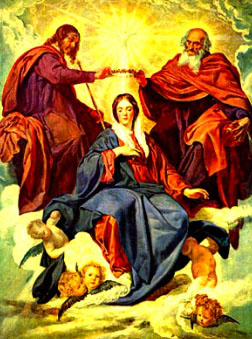
Benedict XVI on the Queenship of Mary

http://www.roman-catholic-saints.com/images/Queenship-of-Mary.jpg
“It (the Feast of the Queenship of Mary) was established eight days after the Assumption, to show the strong bond between the royalty of Mary and her glorification in body and soul with her son Jesus.

...
 
There is the notion that a king or a queen are people of power and riches, but these are not the riches of Jesus and Mary. The Kingdom of Christ is built on humility, service and love.
...  
May the prayers of Our Lady guide us along our pilgrimage of faith, that we may share in her Son’s victory and reign with Him in His eternal Kingdom.”

Benedict XVI, General Audience, Castel Gandolfo, 22 August 2012.

Tuesday, February 19, 2013

Benedict XVI on St. Dominic

"Today we celebrate the feast of Saint Dominic, the founder of the Order of Preachers.  In his life, Saint Dominic was able to combine constant prayer and zealous activity in the service of the Lord and his Church.  By his example and intercession, may all of us rediscover the importance and beauty of daily prayer, and bear joyful witness to our faith in Christ the Saviour!”. 

Benedict XVI, General Audience, Castel Gandolfo, 8 August 2012