Wednesday, September 18, 2019

Benedict XVI on Saint Ambrose of Milan

Image result for saint ambrose


"Holy Bishop Ambrose - about whom I shall speak to you today - died in Milan in the night between 3 and 4 April 397. It was dawn on Holy Saturday. The day before, at about five o'clock in the afternoon, he had settled down to pray, lying on his bed with his arms wide open in the form of a cross. Thus, he took part in the solemn Easter Triduum, in the death and Resurrection of the Lord. "We saw his lips moving", said Paulinus, the faithful deacon who wrote his Life at St Augustine's suggestion, "but we could not hear his voice". The situation suddenly became dramatic. Honoratus, Bishop of Vercelli, who was assisting Ambrose and was sleeping on the upper floor, was awoken by a voice saying again and again, "Get up quickly! Ambrose is dying...". "Honoratus hurried downstairs", Paulinus continues, "and offered the Saint the Body of the Lord. As soon as he had received and swallowed it, Ambrose gave up his spirit, taking the good Viaticum with him. His soul, thus refreshed by the virtue of that food, now enjoys the company of Angels" (Life, 47). On that Holy Friday 397, the wide open arms of the dying Ambrose expressed his mystical participation in the death and Resurrection of the Lord. This was his last catechesis: in the silence of the words, he continued to speak with the witness of his life.
 
Ambrose was not old when he died. He had not even reached the age of 60, since he was born in about 340 A.D. in Treves, where his father was Prefect of the Gauls. His family was Christian.
 
Upon his father's death while he was still a boy, his mother took him to Rome and educated him for a civil career, assuring him a sound instruction in rhetoric and jurisprudence. In about 370 he was sent to govern the Provinces of Emilia and Liguria, with headquarters in Milan. It was precisely there that the struggle between orthodox and Arians was raging and became particularly heated after the death of the Arian Bishop Auxentius. Ambrose intervened to pacify the members of the two opposing factions; his authority was such that although he was merely a catechumen, the people acclaimed him Bishop of Milan.
 
Until that moment, Ambrose had been the most senior magistrate of the Empire in northern Italy. Culturally well-educated but at the same time ignorant of the Scriptures, the new Bishop briskly began to study them. From the works of Origen, the indisputable master of the "Alexandrian School", he learned to know and to comment on the Bible. Thus, Ambrose transferred to the Latin environment the meditation on the Scriptures which Origen had begun, introducing in the West the practice of lectio divina. The method of lectio served to guide all of Ambrose's preaching and writings, which stemmed precisely from prayerful listening to the Word of God. The famous introduction of an Ambrosian catechesis shows clearly how the holy Bishop applied the Old Testament to Christian life: "Every day, when we were reading about the lives of the Patriarchs and the maxims of the Proverbs, we addressed morality", the Bishop of Milan said to his catechumens and neophytes, "so that formed and instructed by them you may become accustomed to taking the path of the Fathers and to following the route of obedience to the divine precepts" (On the Mysteries 1, 1). In other words, the neophytes and catechumens, in accordance with the Bishop's decision, after having learned the art of a well-ordered life, could henceforth consider themselves prepared for Christ's great mysteries. Thus, Ambrose's preaching - which constitutes the structural nucleus of his immense literary opus - starts with the reading of the Sacred Books ("the Patriarchs" or the historical Books and "Proverbs", or in other words, the Wisdom Books) in order to live in conformity with divine Revelation.
 
It is obvious that the preacher's personal testimony and the level of exemplarity of the Christian community condition the effectiveness of the preaching. In this perspective, a passage from St Augustine's Confessions is relevant. He had come to Milan as a teacher of rhetoric; he was a sceptic and not Christian. He was seeking the Christian truth but was not capable of truly finding it.
 
What moved the heart of the young African rhetorician, sceptic and downhearted, and what impelled him to definitive conversion was not above all Ambrose's splendid homilies (although he deeply appreciated them). It was rather the testimony of the Bishop and his Milanese Church that prayed and sang as one intact body. It was a Church that could resist the tyrannical ploys of the Emperor and his mother, who in early 386 again demanded a church building for the Arians' celebrations. In the building that was to be requisitioned, Augustine relates, "the devout people watched, ready to die with their Bishop". This testimony of the Confessions is precious because it points out that something was moving in Augustine, who continues: "We too, although spiritually tepid, shared in the excitement of the whole people" (Confessions 9, 7).
 
Augustine learned from the life and example of Bishop Ambrose to believe and to preach. We can refer to a famous sermon of the African, which centuries later merited citation in the conciliar Constitution on Divine Revelation, Dei Verbum: "Therefore, all clerics, particularly priests of Christ and others who, as deacons or catechists, are officially engaged in the ministry of the Word", Dei Verbum recommends, "should immerse themselves in the Scriptures by constant sacred reading and diligent study. For it must not happen that anyone becomes" - and this is Augustine's citation - ""an empty preacher of the Word of God to others, not being a hearer of the Word in his own heart'" (n. 25). Augustine had learned precisely from Ambrose how to "hear in his own heart" this perseverance in reading Sacred Scripture with a prayerful approach, so as truly to absorb and assimilate the Word of God in one's heart.
 
Dear brothers and sisters, I would like further to propose to you a sort of "patristic icon", which, interpreted in the light of what we have said, effectively represents "the heart" of Ambrosian doctrine. In the sixth book of the Confessions, Augustine tells of his meeting with Ambrose, an encounter that was indisputably of great importance in the history of the Church. He writes in his text that whenever he went to see the Bishop of Milan, he would regularly find him taken up with catervae of people full of problems for whose needs he did his utmost. There was always a long queue waiting to talk to Ambrose, seeking in him consolation and hope. When Ambrose was not with them, with the people (and this happened for the space of the briefest of moments), he was either restoring his body with the necessary food or nourishing his spirit with reading. Here Augustine marvels because Ambrose read the Scriptures with his mouth shut, only with his eyes (cf. Confessions, 6, 3). Indeed, in the early Christian centuries reading was conceived of strictly for proclamation, and reading aloud also facilitated the reader's understanding. That Ambrose could scan the pages with his eyes alone suggested to the admiring Augustine a rare ability for reading and familiarity with the Scriptures. Well, in that "reading under one's breath", where the heart is committed to achieving knowledge of the Word of God - this is the "icon" to which we are referring -, one can glimpse the method of Ambrosian catechesis; it is Scripture itself, intimately assimilated, which suggests the content to proclaim that will lead to the conversion of hearts.
 
Thus, with regard to the magisterium of Ambrose and of Augustine, catechesis is inseparable from witness of life. What I wrote on the theologian in the Introduction to Christianity might also be useful to the catechist. An educator in the faith cannot risk appearing like a sort of clown who recites a part "by profession". Rather - to use an image dear to Origen, a writer who was particularly appreciated by Ambrose -, he must be like the beloved disciple who rested his head against his Master's heart and there learned the way to think, speak and act. The true disciple is ultimately the one whose proclamation of the Gospel is the most credible and effective.
 
Like the Apostle John, Bishop Ambrose - who never tired of saying: "Omnia Christus est nobis! To us Christ is all!" - continues to be a genuine witness of the Lord. Let us thus conclude our Catechesis with his same words, full of love for Jesus: "Omnia Christus est nobis! If you have a wound to heal, he is the doctor; if you are parched by fever, he is the spring; if you are oppressed by injustice, he is justice; if you are in need of help, he is strength; if you fear death, he is life; if you desire Heaven, he is the way; if you are in the darkness, he is light.... Taste and see how good is the Lord:  blessed is the man who hopes in him!" (De Virginitate, 16, 99). Let us also hope in Christ. We shall thus be blessed and shall live in peace." - Benedict XVI, General Audience, St. Peter's Square, 24 October 2007

Monday, August 26, 2019

Benedict XVI on Sts. Timothy and Titus


"Having spoken at length on the great Apostle Paul, today let us look at his two closest collaborators: Timothy and Titus. Three Letters traditionally attributed to Paul are addressed to them, two to Timothy and one to Titus.
 
Timothy is a Greek name which means "one who honours God". Whereas Luke mentions him six times in the Acts, Paul in his Letters refers to him at least 17 times (and his name occurs once in the Letter to the Hebrews).
 
One may deduce from this that Paul held him in high esteem, even if Luke did not consider it worth telling us all about him.
 
Indeed, the Apostle entrusted Timothy with important missions and saw him almost as an alter ego, as is evident from his great praise of him in his Letter to the Philippians. "I have no one like him (isópsychon) who will be genuinely anxious for your welfare" (2: 20).
 
Timothy was born at Lystra (about 200 kilometres northwest of Tarsus) of a Jewish mother and a Gentile father (cf. Acts 16: 1).
 
The fact that his mother had contracted a mixed-marriage and did not have her son circumcised suggests that Timothy grew up in a family that was not strictly observant, although it was said that he was acquainted with the Scriptures from childhood (cf. II Tm 3: 15). The name of his mother, Eunice, has been handed down to us, as well as that of his grandmother, Lois (cf. II Tm 1: 5).
 
When Paul was passing through Lystra at the beginning of his second missionary journey, he chose Timothy to be his companion because "he was well spoken of by the brethren at Lystra and Iconium" (Acts 16: 2), but he had him circumcised "because of the Jews that were in those places" (Acts 16: 3).
 
Together with Paul and Silas, Timothy crossed Asia Minor as far as Troy, from where he entered Macedonia. We are informed further that at Philippi, where Paul and Silas were falsely accused of disturbing public order and thrown into prison for having exposed the exploitation of a young girl who was a soothsayer by several unscrupulous individuals (cf. Acts 16: 16-40), Timothy was spared.
 
When Paul was then obliged to proceed to Athens, Timothy joined him in that city and from it was sent out to the young Church of Thessalonica to obtain news about her and to strengthen her in the faith (cf. I Thes 3: 1-2). He then met up with the Apostle in Corinth, bringing him good news about the Thessalonians and working with him to evangelize that city (cf. II Cor 1: 19).
 
We find Timothy at Ephesus during Paul's third missionary journey. It was probably from there that the Apostle wrote to Philemon and to the Philippians; he sent both Letters jointly with Timothy (cf. Phlm 1; Phil 1: 1).
 
From Ephesus, Paul sent Timothy to Macedonia, together with a certain Erastus (cf. Acts 19: 22), and then also to Corinth with the mission of taking a letter to the Corinthians, in which he recommended that they welcome him warmly (cf. I Cor 4: 17; 16: 10-11).
 
We encounter him again as the joint sender of the Second Letter to the Corinthians, and when Paul wrote the Letter to the Romans from Corinth he added Timothy's greetings as well as the greetings of the others (cf. Rom 16: 21).
 
From Corinth, the disciple left for Troy on the Asian coast of the Aegean See and there awaited the Apostle who was bound for Jerusalem at the end of his third missionary journey (cf. Acts 20: 4).
 
From that moment in Timothy's biography, the ancient sources mention nothing further to us, except for a reference in the Letter to the Hebrews which says: "You should understand that our brother Timothy has been released, with whom I shall see you if he comes soon" (13: 23).
 
To conclude, we can say that the figure of Timothy stands out as a very important pastor.
 
According to the later Storia Ecclesiastica by Eusebius, Timothy was the first Bishop of Ephesus (cf. 3, 4). Some of his relics, brought from Constantinople, were found in Italy in 1239 in the Cathedral of Termoli in the Molise.
 
Then, as regards the figure of Titus, whose name is of Latin origin, we know that he was Greek by birth, that is, a pagan (cf. Gal 2: 3). Paul took Titus with him to Jerusalem for the so-called Apostolic Council, where the preaching of the Gospel to the Gentiles that freed them from the constraints of Mosaic Law was solemnly accepted.
 
In the Letter addressed to Titus, the Apostle praised him and described him as his "true child in a common faith" (Ti 1: 4). After Timothy's departure from Corinth, Paul sent Titus there with the task of bringing that unmanageable community to obedience.
 
Titus restored peace between the Church of Corinth and the Apostle, who wrote to this Church in these terms: "But God, who comforts the downcast, comforted us by the coming of Titus, and not only by his coming but also by the comfort with which he was comforted in you, as he told us of your longing, your mourning, your zeal for me.... And besides our own comfort we rejoiced still more at the joy of Titus, because his mind has been set at rest by you all" (II Cor 7: 6-7, 13).
 
From Corinth, Titus was again sent out by Paul - who called him "my partner and fellow worker in your service" (II Cor 8: 23) - to organize the final collections for the Christians of Jerusalem (cf. II Cor 8: 6).
 
Further information from the Pastoral Letters describes him as Bishop of Crete (cf. Ti 1: 5), from which, at Paul's invitation, he joined the Apostle at Nicopolis in Epirus (cf. Ti 3: 12). Later, he also went to Dalmatia (cf. II Tm 4: 10). We lack any further information on the subsequent movements of Titus or on his death.
 
To conclude, if we consider together the two figures of Timothy and Titus, we are aware of certain very significant facts. The most important one is that in carrying out his missions, Paul availed himself of collaborators. He certainly remains the Apostle par excellence, founder and pastor of many Churches.
 
Yet it clearly appears that he did not do everything on his own but relied on trustworthy people who shared in his endeavours and responsibilities.
 
Another observation concerns the willingness of these collaborators. The sources concerning Timothy and Titus highlight their readiness to take on various offices that also often consisted in representing Paul in circumstances far from easy. In a word, they teach us to serve the Gospel with generosity, realizing that this also entails a service to the Church herself.
 
Lastly, let us follow the recommendation that the Apostle Paul makes to Titus in the Letter addressed to him: "I desire you to insist on these things, so that those who have believed in God may be careful to apply themselves to good deeds; these are excellent and profitable to men" (Ti 3: 8).
 
Through our commitment in practice we can and must discover the truth of these words, and precisely in this Season of Advent, we too can be rich in good deeds and thus open the doors of the world to Christ, our Saviour."
 
Benedict XVI, General Audience, Paul VI Audience Hall, 13 December 2006


Monday, August 12, 2019

Benedict XVI on Saint John Bosco


Image result for giovanni bosco


“This morning we celebrate the feast day of St. John Bosco, a priest and educator. I urge the youth to see him as an authentic teacher of life. To my ill brothers and sisters, I urge you to learn from his spirituality, so you many always trust in Christ. And you, dear newlyweds, seek his intercession, so you may fulfill your spousal role, with generosity.” 


Benedict XVI, General Audience, Saint Peter's Square, 31 January 2013 

Monday, July 15, 2019

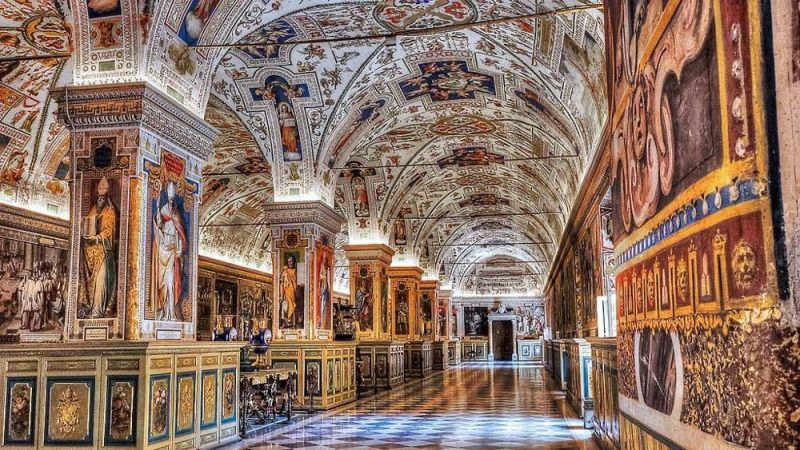
Benedict XVI on the Vatican Museums

Image result for vatican museum

"For many people a visit to the Vatican Museums during their stay in Rome represents their deepest and sometimes only contact with the Holy See. Therefore, is it a good opportunity to learn about the Christian message. We could say that the artistic heritage of Vatican City constitutes a kind of great 'parable' through which the Pope speaks to men and women from all over the world - and therefore from many cultural and religious backgrounds - people who perchance never read a papal address or homily. ... The language of art is a language of parables, possessing a special kind of universal openness. The 'Via Pulchtitudinis' can open people’s minds and hearts to the eternal, raising them to the heights of God.

I greatly appreciated the fact that the film makes repeated reference to the efforts of Roman Pontiffs to conserve and cherish artistic heritage, and to their efforts in modern times to renew the Church’s dialogue with artists. The collection of modern religious art in the Vatican Museums is living proof of the fruitfulness of that dialogue. Indeed, ... the entire great structure of the Vatican Museums ... possesses a dimension which we could define as 'evangelising'."


Benedict XVI, 25 October 2012

Thursday, February 28, 2019

Benedict XVI on the Year of Faith

Pope John XXIII riding in procession to St Peter’s Basilica, at start of the Second Vatican Ecumenical Council. Photograph: Paul Schutzer/Time Life Pictures/Getty Images
Pope John XXIII riding in procession to St Peter’s Basilica, at the start of the Second Vatican Ecumenical Council.
 
"The Year of Faith which we launch today is linked harmoniously with the Church’s whole path over the last fifty years: from the Council, through the Magisterium of the Servant of God Paul VI, who proclaimed a Year of Faith in 1967, up to the Great Jubilee of the year 2000, with which Blessed John Paul II re-proposed to all humanity Jesus Christ as the one Saviour, yesterday, today and forever. Between these two Popes, Paul VI and John Paul II, there was a deep and profound convergence, precisely upon Christ as the centre of the cosmos and of history, and upon the apostolic eagerness to announce Him to the world. Jesus is the centre of the Christian faith. The Christian believes in God Whose face was revealed by Jesus Christ. He is the fulfilment of the Scriptures and their definitive interpreter".
 
"Today’s Gospel tells us that Jesus Christ, consecrated by the Father in the Holy Spirit, is the true and perennial subject of evangelisation. ... This mission of Christ, this movement of His continues in space and time, over centuries and continents. It is a movement which starts with the Father and, in the power of the Spirit, goes forth to bring the good news to the poor, in both a material and a spiritual sense. The Church is the first and necessary instrument of this work of Christ because it is united to Him as a body to its head".
 
"Vatican Council II did not wish to deal with the theme of faith in one specific document. It was, however, animated by a desire, as it were, to immerse itself anew in the Christian mystery so as to re-propose it fruitfully to contemporary man. ... In his opening speech Blessed John XXIII presented the principal purpose of the Council in this way: “What above all concerns the Ecumenical Council is this: that the sacred deposit of Christian doctrine be safeguarded and taught more effectively. … Therefore, the principal purpose of this Council is not the discussion of this or that doctrinal theme, a Council is not required for that, ... [but] this certain and immutable doctrine, which is to be faithfully respected, needs to be explored and presented in a way which responds to the needs of our time”.
 
"In the light of these words, we can understand what I myself felt at the time: during the Council there was an emotional tension as we faced the common task of making the truth and beauty of the faith shine out in our time, without sacrificing it to the demands of the present or leaving it tied to the past: the eternal presence of God resounds in the faith, transcending time, yet it can only be welcomed by us in our own unrepeatable today. Therefore I believe that the most important thing ... is to revive in the whole Church that positive tension, that yearning to announce Christ again to contemporary man. But, so that this interior thrust towards the new evangelisation neither remain just an idea nor be lost in confusion, ... I have often insisted on the need to return, as it were, to the “letter” of the Council - that is to its texts - also to draw from them its authentic spirit, and why I have repeated that the true legacy of Vatican II is to be found in them".
 
"The Council did not formulate anything new in matters of faith, nor did it wish to replace what was ancient. Rather, it concerned itself with seeing that the same faith might continue to be lived in the present day, that it might remain a living faith in a world of change. ... The Council Fathers wished to present the faith in a meaningful way; and if they opened themselves trustingly to dialogue with the modern world it is because they were certain of their faith, of the solid rock on which they stood. In the years following, however, many embraced uncritically the dominant mentality, placing in doubt the very foundations of the deposit of faith, which they sadly no longer felt able to accept as truths."
 
"If today the Church proposes a new Year of Faith and a new evangelisation, it is not to honour an anniversary, but because there is more need of it, even more than there was fifty years ago! ... Even the initiative to create a pontifical council for the promotion of the new evangelisation ... is to be understood in this context. Recent decades have seen the advance of a spiritual “desertification”. In the Council’s time it was already possible from a few tragic pages of history to know what a life or a world without God looked like, but now we see it every day around us. ... But it is in starting from the experience of this desert ... that we can again discover the joy of believing, its vital importance for us".
 
"In the desert we rediscover the value of what is essential for living; thus in today’s world there are innumerable signs, often expressed implicitly or negatively, of the thirst for God, for the ultimate meaning of life. And in the desert people of faith are needed who, with their own lives, point out the way to the Promised Land and keep hope alive. Living faith opens the heart to the grace of God which frees us from pessimism. Today, more than ever, evangelising means witnessing to the new life, transformed by God, and thus showing the path".
 
"The journey is a metaphor for life, and the wise wayfarer is one who has learned the art of living, and can share it with his brethren - as happens to pilgrims along the Way of St. James or similar routes which, not by chance, have again become popular in recent years. How come so many people today feel the need to make these journeys? Is it not because they find there, or at least intuit, the meaning of our existence in the world? This, then, is how we can picture the Year of Faith: a pilgrimage in the deserts of today’s world, taking with us only what is necessary: ... the Gospel and the faith of the Church, of which the Council documents are a luminous expression, as is the Catechism of the Catholic Church, published twenty years ago."
 
"Venerable and dear brothers, 11 October 1962 was the Feast of Mary Most Holy, Mother of God. Let us entrust to her the Year of Faith, as I did last week when I went on pilgrimage to Loreto. May the Virgin Mary always shine out as a star along the way of the new evangelisation".
 
Extracts from a homily by Pope Benedict XVI during the course of a Mass celebrated in St. Peter's Square on 11 October 2012.

Friday, February 22, 2019

Benedict XVI on Pope Pius XII


"Here in this place, how could we not remember the Roman Jews who were snatched from their homes, before these very walls, and who with tremendous brutality were killed at Auschwitz? How could one ever forget their faces, their names, their tears, the desperation faced by these men, women and children? The extermination of the people of the Covenant of Moses, at first announced, then systematically programmed and put into practice in Europe under the Nazi regime, on that day tragically reached as far as Rome. Unfortunately, many remained indifferent, but many, including Italian Catholics, sustained by their faith and by Christian teaching, reacted with courage, often at risk of their lives, opening their arms to assist the Jewish fugitives who were being hunted down, and earning perennial gratitude. The Apostolic See (the Holy See under Pius XII helped the Jews) itself provided assistance, often in a hidden and discreet way".
 
Pope Benedict XVI during his visit to the Roman Synagogue on 17 January 2010.

Tuesday, January 22, 2019

John Paul II on salvation in Jesus Christ - 2

Image result for john paul 2

"For those, however, who have not received the Gospel proclamation, as I wrote in the Encyclical Redemptoris Missio, salvation is accessible in mysterious ways, inasmuch as divine grace is granted to them by virtue of Christ's redeeming sacrifice, without external membership in the Church, but nonetheless always in relation to her (cf. RM 10). It is a mysterious relationship. It is mysterious for those who receive the grace, because they do not know the Church and sometimes even outwardly reject her."

John Paul II, General Audience, 31 May 1995