Friday, September 27, 2013

Benedict XVI on Saint Benedict


http://hilltopshepherd.files.wordpress.com/2011/07/st-benedict-by-dominican-artist-fra-angelico.jpg"The name Benedict also evokes the extraordinary figure of the great 'patriarch of western monasticism,' St. Benedict of Norcia, co-patron of Europe with Cyril and Methodius. The progressive expansion of the Benedictine Order which he founded exercised an enormous influence on the spread of Christianity throughout the European continent. 

For this reason, St. Benedict is much venerated in Germany, and especially in Bavaria, my own land of origin; he constitutes a fundamental point of reference for the unity of Europe and a powerful call to the irrefutable Christian roots of European culture and civilization." 

Benedict XVI, 1st General Audience, April 2005.


Tuesday, September 3, 2013

Cardinal Ratzinger on capital punishment and just war

http://theorderoftheway.org/wp-content/uploads/2013/06/iraq-war.jpg"Not all moral issues have the same moral weight as abortion and euthanasia. For example, if a Catholic were to be at odds with the Holy Father on the application of capital punishment or on the decision to wage war, he would not for that reason be considered unworthy to present himself to receive Holy Communion. While the Church exhorts civil authorities to seek peace, not war, and to exercise discretion and mercy in imposing punishment on criminals, it may still be permissible to take up arms to repel an aggressor or to have recourse to capital punishment. There may be a legitimate diversity of opinion even among Catholics about waging war and applying the death penalty, but not however with regard to abortion and euthanasia."

(Worthiness to Receive Holy Communion, General Principles - sent by Cardinal Ratzinger to Cardinal McCarrick, Archbishop of Washington, D.C., and made public in July, 2004, n. 3)

Wednesday, August 7, 2013

Benedict XVI on Gregorian chant

Certainly as far as the liturgy is concerned, we cannot say that one song is as good as another. Generic improvisation or the introduction of musical genres which fail to respect the meaning of the liturgy should be avoided. … [W]hile respecting various styles and various sufficiently laudable traditions, we desire, as was requested by the Synod Fathers, that Gregorian chant be suitably esteemed and employed as the chant proper to the Roman liturgy. … Speaking more generally, I ask that future priests, from their time in the seminary, receive the preparation needed to understand and to celebrate Mass in Latin, and also to use Latin texts and execute Gregorian chant; nor should we forget that the faithful can be taught to recite the more common prayers in Latin, and also to sing parts of the liturgy to Gregorian chant. (Sacramentum Caritatis 42; 62)

Sunday, June 16, 2013

Ratzinger on bourgeois pelagianism and the pelagianism of the pious

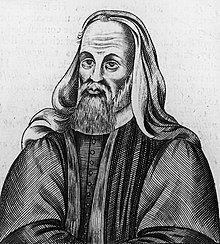
http://upload.wikimedia.org/wikipedia/commons/thumb/0/0c/Pelagius.jpg/220px-Pelagius.jpg"If God really does exist and if He does in fact bother about people He cannot be so fearfully demanding as He is described by the faith of the Church. Moreover, I am no worse than others; I do my duty, and the minor human weaknesses cannot really be as dangerous as all that.' This attitude is a modern version of 'acedia' - a kind of anxious vertigo that overcomes people when they consider the heights to which their divine pedigree has called them. In Nietzchean terms it is the mentality of the herd, the attitude of someone who just cannot be bothered to be great. It is the bourgeois because it is calculating and pragmatic and comfortable with what is common and ordinary, rather than aristocratic and erotic...
 
They [pious pelagians] want security, not hope. By means of a tough and rigorous system of religious practices, by means of prayers and actions, they want to create for themselves a right to blessedness. What they lack is the humility essential to any love - the humility to be able to receive what we are given over and above what we have deserved and achieved. The denial of hope in favour of security that we are faced with here rests on the inability to bear the tension of waiting for what is to come and to abandon oneself to God's goodness."

Quoted in Tracey Rowland, Ratzinger's Faith.
 
NB Pelagianism is the belief that original sin did not taint human nature and that mortal will is still capable of choosing good or evil without special Divine aid.

Friday, May 31, 2013

Benedict XVI on St. Therese of Lisieux

“Therese received permission to enter the Carmel of Lisieux at the tender age of fifteen. Her name in religion – Sister Therese of the Child Jesus and the Holy Face – expresses the heart of her spirituality, centered on the contemplation of God’s love revealed in the mysteries of the Incarnation and Redemption.

 In imitation of Christ, Therese sought to be little in all things and to seek the salvation of the world. Taken ill in her twenty-third year, she endured great physical suffering in union with the crucified Lord; she also experienced a painful testing of faith which she offered for the salvation of those who deny God.

By striving to embody God’s love in the smallest things of life, Therese found her vocation to be "love in the heart of the Church". May her example and prayers help us to follow "the little way of trust and love" in spiritual childhood, abandoning ourselves completely to the love of God and the good of souls.”

Benedict XVI, General Audience, 6 April 2011.

Thursday, May 23, 2013

Benedict XVI on St. Francis of Assisi

Fresco of St. Francis at Sacro Speco, Subiaco.
“Continuing our catechesis on the Christian culture of the Middle Ages, we now turn to Saint Francis of Assisi, one of the greatest figures of the Church’s history. The story of Saint Francis’ life and conversion, and his complete devotion to Christ, poor and suffering, is well known. After gathering a small group of companions and followers, including Saint Clare, Francis sought the approval of Pope Innocent III for his movement which was completely committed to the renewal of the Church in holiness and to the preaching of the Gospel.

Near the end of his life, Francis’ configuration to the Crucified Lord culminated in his reception of the stigmata at La Verna. His deep piety found expression in a great devotion to the Eucharist, as the sacrament of Christ’s real presence, and his love for creation as God’s handiwork.

The life and teaching of Saint Francis has inspired countless people to the imitation of Christ through the embrace of inward and outward poverty. May his example teach us ever greater love for the Lord and his Church, and help us to know the immense spiritual joy born of the imitation of Christ and the pursuit of holiness”.

Benedict XVI, General Audience, 27 January 2010.

Sunday, May 19, 2013

Benedict XVI on Divine Mercy


“My next stop, at the Shrine of Divine Mercy in Lagiewniki, gave me the opportunity to stress that Divine Mercy alone illumines the mystery of man. It was here at the neighbouring convent that Sr Faustina Kowalska, contemplating the shining wounds of the Risen Christ, received a message of trust for humanity which John Paul II echoed and interpreted and which really is a central message precisely for our time:  Mercy as God's power, as a divine barrier against the evil of the world.”

Benedict XVI, General Audience, 31 May 2006.