Saturday, August 27, 2022

Cardinal Ratzinger on Papal primacy


"Although it is not given us to halt the flight of history, to change the course of centuries, we may say, nevertheless, that what was possible for a thousand years is not impossible for Christians today.... In other words, Rome must not require more from the East with respect to the doctrine of primacy than had been formulated and was lived in the first millenniumWhen the Patriarch Athenagoras, on 25 July 1967, on the occasion of the Pope's visit to Phanar, designated him as the successor of St. Peter, as the most esteemed among us, as one also presides in charity, this great Church leader was expressing the essential content of the doctrine of primacy as it was known in the first millennium. Rome need not ask for more.


Reunion could take place in this context if, on the one hand, the East would cease to oppose as heretical the developments that took place in the West in the second millennium and would accept the Catholic Church as legitimate and orthodox in the form she had acquired in the course of that development, while, on the other hand, the West would recognize the Church of the East as orthodox and legitimate in the form she has always had."

Saturday, May 14, 2022

Report: Cardinal Ratzinger Admitted Third Secret Not Fully Revealed


Report: Cardinal Ratzinger Admitted
Third Secret Not Fully Revealed

Secret Warns of "Bad Council and Bad Mass"

by John Vennari

Father Ingo Dollinger is an elderly German priest, professor of theology in Brazil, and a personal friend of former Pope Benedict XVI.

Father Dollinger stated on more than one occasion that Cardinal Ratzinger admitted to him the full Third Secret is not yet revealed, and the Secret warns against a “bad Council and a bad Mass.”

The Fatima Crusader reported this on a number of occasions, most pointedly in 2009. This news regarding the Third Secret was recently re-confirmed by Dr. Maike Hickson on May 15.

Dr. Hickson, who knows Father Dollinger, telephoned the priest on Pentecost Sunday, and he gave her permission to publicly report the following facts:

“Not long after the June 2000 publication of the Third Secret of Fatima by the Congregation for the Doctrine of the Faith, Cardinal Joseph Ratzinger told Father Dollinger during an in-person conversation that there is still part of the Third Secret that they have not published! ‘There is more than what we published,’ Ratzinger said. He also told Dollinger that the published part of the Secret is authentic and that the unpublished part of the Secret speaks about ‘a bad council and a bad Mass’ that was to come in the near future.”

This statement by Father Dollinger was formerly related in the May 2009 issue of The Fatima Crusader by Father Paul Kramer.

According to Father Kramer’s account, Cardinal Ratzinger revealed to Father Dollinger as far back as the early 1990s that the Secret warned against a bad Council and against changes in the Mass.

Yet the text published by the Vatican on June 26, 2000 makes no mention of these specific warnings.

Father Kramer explained: “The elderly German priest, Ratingzer’s long-time personal friend, took note of the fact that when the vision of the Third Secret was published it did not contain those things, those elements of the Third Secret that Cardinal Razinger had revealed to him nearly ten years earlier. The German priest – Father Dollinger – told me that this question was burning in his mind.”

Father Kramer continues, “Father Dollinger said to me, ‘I confronted Cardinal Ratzinger to his face: ‘How can this be the entire Third Secret? Remember what you told me before?''”

Cardinal Ratzinger replied, “Really, there is something more there,” meaning there is more in the Third Secret than what the Vatican revealed.

Father Nicholas Gruner referred to this episode from Father Dollinger on more than one occasion, including a speech published in The Fatima Crusader in Autumn, 2009.

Crisis of Faith

Even if one wants to question whether the Third Secret actually mentions the Mass and the Council, there appears to be no doubt that the missing part of the Secret speaks of "dangers threatening the Faith." For years prior to the Year 2000 release of the vision of the Secret, Father Gruner’s Fatima Center repeatedly published testimony from Fatima experts and witnesses who relate that the Third Secret predicts a great crisis of Faith in the Church. Here are but a few examples:

Father Alonso

Father Joaquim Alonso, who was the official archivist of Fatima and had many conversations with Sister Lucia, said the following prior to his death in 1981:

“It is therefore completely probable that the text makes concrete references to the crisis of faith within the Church and to the negligence of the pastors themselves [and the] internal struggles in the very bosom of the Church and of grave pastoral negligence of the upper hierarchy.”1

And further,

“Does the unpublished text speak of concrete circumstances? It is very possible that it speaks not only of a real crisis of faith in the Church during this in-between period [that is, prior to the Triumph of the Immaculate Heart of Mary], but like the secret of La Salette, for example, there are more concrete references to the internal struggles of the Catholics or to the fall of priests and religious. Perhaps it even refers to the failures of the upper hierarchy of the Church. For that matter, none of this is foreign to communications Sister Lucia has had on this subject.”2

Cardinal Ratzinger

Cardinal Ratzinger, then Prefect of the Congregation for the Doctrine of the Faith, gave an interview in Jesus magazine on November 11, 1984. In this famous exchange, titled “Here is Why the Faith was in Crisis,” Cardinal Ratzinger spoke of the crisis of faith and of the Third Secret. Here he revealed that the Secret refers to “dangers threatening the faith and the life of the Christian and therefore [the life] of the world.”

The Cardinal further noted that “the things contained in this ‘Third Secret’ correspond to what has been announced in Scripture and what has been said again and again in many other Marian apparitions…”

Bishop Amaral

Bishop Amaral – the third Bishop of Fatima – likewise relates that the Secret warns of dangers to the Faith. In a speech in Vienna, Austria, on September 10, 1984, the bishop said,

“Its contents concern only our faith. To identity the [Third] Secret with catastrophic announcements or with a nuclear holocaust is to deform the meaning of the message. The loss of faith of a continent is worse than the annihilation of nations; and it is true that the faith is continually diminishing in Europe.”3 [emphasis added]

Cardinal Oddi

Silvio Cardinal Oddi gave the following testimony to Italian journalist Lucio Brunelli on March 17, 1990, for the journal Il Sabato:

“It [the Third Secret] has nothing to do with Gorbachev. The Blessed Virgin was alerting us against the apostasy in the Church.”

Cardinal Ciappi

Then there is the oft-quoted testimony of Cardinal Mario Luigi Ciappi, who was personal papal theologians to five popes – Pius XII, John XXIII, Paul VI, John Paul I and John Paul II. The Cardinal wrote the following in a personal communication to Professor Baumgartner in Salzburg:

“In the Third Secret it is foretold, among other things, that the great apostasy in the Church will begin at the top.”4

Warnings from Sister Lucia

We close with some quick observations from Sister Lucia, where she warns of the diabolic disorientation of members of the upper hierarchy, and she calls upon Catholics to “stand up against it.”

The full Secret, Sister Lucia had told us, was supposed to be revealed at the time of her death or in 1960, whichever came first.

In 1960, however, the Secret was not released, and Sister Lucy was silenced. She was not allowed to speak about anything not yet published on the Message of Fatima without prior authorization of the Vatican.

Yet, in 1957, and in the late 60s and early 70s, the years “bracketing” 1960 wherein the Secret should have been released, Sister Lucy seemed to indicate what the Secret contained. In these statements, Sister Lucy speaks of the devil gaining power over priests and consecrated souls. She speaks of the diabolic disorientation infecting the upper hierarchy.

In her 1957 conversation with Father Fuentes, her last public interview that was not pre-approved by the Vatican, Sister Lucy said: “The devil is about to wage a decisive battle with the Blessed Virgin, as he knows what it is that offends God the most, and which in a short space of time will gain for him the greatest number of souls. Thus the devil does everything to overcome souls consecrated to God, because in this way he will succeed in leaving the souls of the faithful abandoned by their leaders, thereby the more easily will he seize them.”

More than a decade later, Sister Lucy denounced the progressivist forces in the Church seeking to downplay and suppress the Rosary. “This campaign is diabolical,” she wrote in 1969 to one of her priest-nephews, “do not let yourself be deceived.” This is from the 1973 book, Uma Vida ao Serviço de Fátima, Chapter 6, “Um Pequeno Tratado, da Vidente, sobre a Natureza e Recitação do Terço”, containing excerpts from letters of Sister Lucy written between 1969-1971.

In these letters, she also voiced strong words about the leadership in the Church following Vatican II. She wrote in 1970 to Mother Martins, a former companion in the Dorothean Sisters: “It is painful to see such a great disorientation in so many who occupy places of responsibility ... the devil has succeeded in infiltrating evil under cover of good, and the blind are beginning to guide others, as the Lord tells us in His Gospel, and souls are letting themselves be deceived.”

It is noteworthy that in 1957, Sister Lucy said the devil was about to wage a decisive battle. By 1971, she says the devil has begun to succeed.

“Gladly,” Sister Lucy continued, “I sacrifice myself and offer my life to God for peace in His Church, for priests and for all consecrated souls, especially for those who are so deceived and misled ... he (the devil) has succeeded in leading into error and deceiving souls having a heavy responsibility through the place which they occupy ... They are blind men guiding other blind men.”

“Stand up to it”

It is no mystery why Sister Lucy was silenced. A voice as powerful as hers making such statements, a voice loved and respected as Our Lady’s chosen vessel, would threaten the entire post-Conciliar aggiornamento.

The contemplative Carmelite accepted her imposition of silence. She understood it as Heaven’s chosen path for her. “I must remain in silence, in prayer and in penance,” Sister Lucy said in a 1970 letter to her friend Dona Maria Theresa da Cunha. “In this way, I can and must help you the most ... such is the part the Lord has chosen for me: to pray and sacrifice myself for those who struggle to work in the Lord’s vineyard and for the extension of His Kingdom.”

Those of us outside the Carmel, however, she exhorted to battle: “This is a diabolic disorientation invading the world and misleading souls! It is necessary to stand up to it …”

Sister Lucia’s marching orders reconfirm our duty as Catholics. We keep the true Faith, the true Mass, the daily Rosary, and publicly resist the destructive Conciliar aggiornamento in any legitimate manner we can.

1 The Whole Truth About Fatima, Vol. III, p. 704.

2 Ibid, p. 705.

3 Fatima, Tragedy and Triumph, pp. 243-244.

4 Referenced from The Devil’s Final Battle [Second Edition, 2010], p. 36.

Saturday, April 24, 2021

Ratzinger on Purgatory


"Purgatory is not, as Tertullian thought, some kind of supra-worldly concentration camp where man is forced to undergo punishment in a more or less arbitrary fashion. Rather it is the inwardly necessary process of transformation in which a person becomes capable of Christ, capable of God, and thus capable of unity with the whole communion of saints".

Joseph Ratzinger, Eschatology: Death and Eternal Life, CUA Press, p. 230. 

Sunday, April 18, 2021

Frequency of receiving the Eucharist - earliest reference?


"And on the day which is called the day of the sun there is an assembly of all who live in the towns or in the country; and the memoirs of the Apostles or the writings of the Prophets are read, as long as time permits. Then the reader ceases, and the president [i.e., the bishop or his designate] speaks, admonishing us and exhorting us to imitate these excellent examples. Then we arise all together and offer prayers; and, as we said before, when we have concluded our prayer, bread is brought, and wine and water, and the president in like manner offers up prayers and thanksgivings with all his might; and the people assent with "Amen"; and there is the distribution and partaking by all of the Eucharistic elements; and to them that are not present they are sent by the hand of the deacons."

St. Justin Martyr, First Apology 

Wednesday, April 14, 2021

Orthodox Church and Purgatory


The Orthodox Church does not believe in purgatory (a place of purging), that is, the inter-mediate state after death in which the souls of the saved (those who have not received temporal punishment for their sins) are purified of all taint preparatory to entering into Heaven, where every soul is perfect and fit to see God.

Also, the Orthodox Church does not believe in indulgences as remissions from purgatorial punishment. Both purgatory and indulgences are inter-correlated theories, and according to the Orthodox, unwitnessed in the Bible or in the Ancient Church. However, the below decree does seem to indicate that the Orthodox position - if not the same -  seems similar to Purgatory.

Orthodox Council of Jerusalem 1672
Decree 18
We believe that the souls of those that have fallen asleep are either at rest or in torment, according to what each has done; — for when they are separated from their bodies, they depart immediately either to joy, or to sorrow and lamentation; though confessedly neither their enjoyment nor condemnation are complete. For after the common resurrection, when the soul shall be united with the body, with which it had behaved itself well or ill, each shall receive the completion of either enjoyment or of condemnation.
And the souls of those involved in mortal sins, who have not departed in despair but while still living in the body, though without bringing forth any fruits of repentance, have repented — by pouring forth tears, by kneeling while watching in prayers, by afflicting themselves, by relieving the poor, and finally by showing forth by their works their love towards God and their neighbor, and which the Catholic Church has from the beginning rightly called satisfaction — [their souls] depart into Hades, and there endure the punishment due to the sins they have committed. But they are aware of their future release from there, and are delivered by the Supreme Goodness, through the prayers of the Priests, and the good works which the relatives of each do for their Departed; especially the unbloody Sacrifice benefiting the most; which each offers particularly for his relatives that have fallen asleep, and which the Catholic and Apostolic Church offers daily for all alike. Of course, it is understood that we do not know the time of their release. We know and believe that there is deliverance for such from their direful condition, and that before the common resurrection and judgment, but when we know not.

Thursday, April 8, 2021

Eastern Christianity liturgy according to Saint John Paul II


In Venice, before the representatives of the ecclesiastical world, who held a rather narrow idea of the Church and were opposed to this vision, Saint Cyril defended it with courage. He showed that many peoples had already in the past introduced and now possessed a liturgy written and celebrated in their own language, such as " the Armenians, the Persians, the Abasgians, the Georgians, the Sogdians, the Goths, the Avars, the Tirsians, the Khazars, the Arabs, the Copts, the Syrians and many others".

Reminding them that God causes the sun to rise and the rain to fall on all people without exception, he said: "Do not all breathe the air in the same way? And you are not ashamed to decree only three languages (Hebrew, Greek and Latin), deciding that all other peoples and races should remain blind and deaf! Tell me: do you hold this because you consider God is so weak that he cannot grant it, or so envious that he does not wish it?". To the historical and logical arguments which they brought against him Cyril replied by referring to the inspired basis of Sacred Scripture: "Let every tongue confess that Jesus Christ is Lord, to the glory of God the Father"; "All the earth worships you; they sing praises to you, sing praises to your name"; "Praise the Lord, all nations! Extol him, all peoples!".

...

Furthermore, the translation of the sacred books, carried out by Cyril and Methodius together with their pupils, conferred a capacity and cultural dignity upon the Old Slavonic liturgical language, which became for many hundreds of years not only the ecclesiastical but also the official and literary language, and even the common language of the more educated classes of the greater part of the Slav nations, and in particular of all the Slavs of the Eastern Rite. It was also used in the Church of the Holy Cross in Cracow, where the Slav Benedictines had established themselves. Here were published the first liturgical books printed in this language. Up to the present day this is the language used in the Byzantine liturgy of the Slavonic Eastern Churches of the Rite of Constantinople, both Catholic and Orthodox, in Eastern and South Eastern Europe, as well as in various countries of Western Europe. It is also used in the Roman liturgy of the Catholics of Croatia.

22. In the historical development of the Slavs of Eastern Rite, this language played a role equal to that of the Latin language in the West. It also lasted longer than Latin in part until the nineteenth century-and exercised a much more direct influence on the formation of the local literary languages, thanks to its close kinship with them. These merits vis-à-vis the culture of all the Slav peoples and nations make the work of evangelization carried out by Saints Cyril and Methodius in a certain sense constantly present in the history and in the life of these peoples and nations.

John Paul II, Encyclical Slavorum Apostoli about two saintly brothers, Saints Cyril and Methodius (2 June 1985).


Tuesday, December 10, 2019

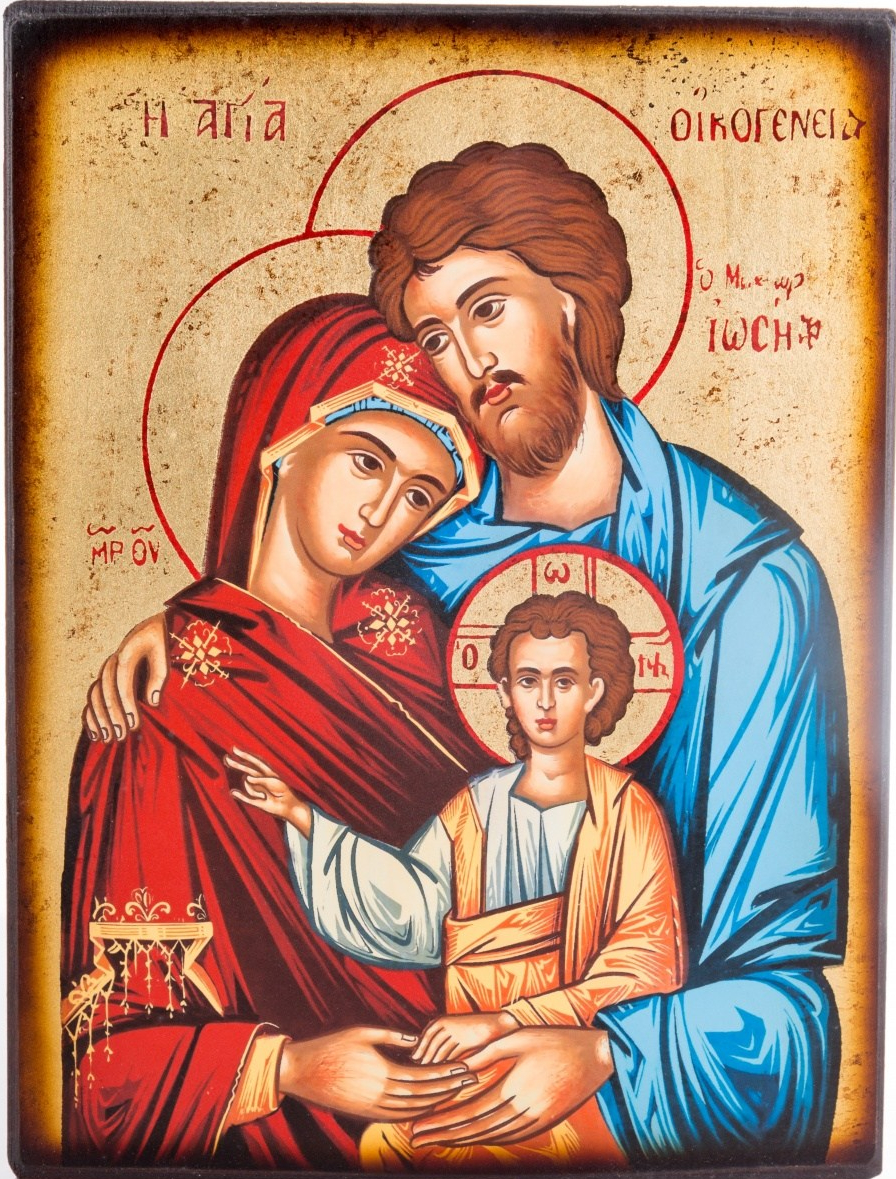
Benedict XVI on the Holy Family of Nazareth

Image result for holy family


"Today’s meeting is taking place in the atmosphere of Christmas, imbued with deep joy at the Birth of the Saviour. We have just celebrated this Mystery whose echo ripples through the Liturgy of all these days. It is a Mystery of Light that all people in every era can relive with faith and prayer. It is through prayer itself that we become capable of drawing close to God with intimacy and depth.
 
Therefore, bearing in mind the theme of prayer that I am developing in the Catecheses in this period, I would therefore like to invite you to reflect today on the way that prayer was part of the life of the Holy Family of Nazareth. Indeed, the house of Nazareth is a school of prayer where one learns to listen, meditate on and penetrate the profound meaning of the manifestation of the Son of God, following the example of Mary, Joseph and Jesus.
 
The Discourse of the Servant of God Paul VI during his Visit to Nazareth is memorable. The Pope said that at the school of the Holy Family we “understand why we must maintain a spiritual discipline, if we wish to follow the teaching of the Gospel and become disciples of Christ”. He added: “In the first place it teaches us silence. Oh! If only esteem for silence, a wonderful and indispensable spiritual atmosphere, could be reborn within us! Whereas we are deafened by the din, the noise and discordant voices in the frenetic, turbulent life of our time. O silence of Nazareth! Teach us to be steadfast in good thoughts, attentive to our inner life, ready to hear God’s hidden inspiration clearly and the exhortations of true teachers” (Discourse in Nazareth, 5 January 1964).
 
We can draw various ideas for prayer and for the relationship with God and with the Holy Family from the Gospel narratives of the infancy of Jesus. We can begin with the episode of the Presentation of Jesus in the Temple. St Luke tells how “when the time came for their purification according to the law of Moses”, Mary and Joseph “brought him up to Jerusalem to present him to the Lord” (2:22). Like every Jewish family that observed the law, Jesus’ parents went to the Temple to consecrate their first-born son to God and to make the sacrificial offering. Motivated by their fidelity to the precepts of the Law, they set out from Bethlehem and went to Jerusalem with Jesus who was only 40 days old. Instead of a year-old lamb they presented the offering of simple families, namely, two turtle doves. The Holy Family’s pilgrimage was one of faith, of the offering of gifts — a symbol of prayer — and of the encounter with the Lord whom Mary and Joseph already perceived in their Son Jesus.
 
Mary was a peerless model of contemplation of Christ. The face of the Son belonged to her in a special way because he had been knit together in her womb and had taken a human likeness from her. No one has contemplated Jesus as diligently as Mary. The gaze of her heart was already focused on him at the moment of the Annunciation, when she conceived him through the action of the Holy Spirit; in the following months she gradually became aware of his presence, until, on the day of his birth, her eyes could look with motherly tenderness upon the face of her son as she wrapped him in swaddling clothes and laid him in the manger.
 
Memories of Jesus, imprinted on her mind and on her heart, marked every instant of Mary’s existence. She lived with her eyes fixed on Christ and cherished his every word. St Luke says: “Mary kept all these things, pondering them in her heart” (2:19) and thus describes Mary’s approach to the Mystery of the Incarnation which was to extend throughout her life: keeping these things, pondering on them in her heart. Luke is the Evangelist who acquaints us with Mary’s heart, with her faith (cf. 1:45), her hope and her obedience (cf. 1:38) and, especially, with her interiority and prayer (cf. 1:46-56), her free adherence to Christ (cf. 1:55).
 
And all this proceeded from the gift of the Holy Spirit who overshadowed her (cf. 1:35), as he was to come down on the Apostles in accordance with Christ’s promise (cf. Acts 1:8). This image of Mary which St Luke gives us presents Our Lady as a model for every believer who cherishes and compares Jesus’ words with his actions, a comparison which is always progress in the knowledge of Jesus. After Bl. Pope John Paul II’s example (cf. Apostolic Letter Rosarium Virginis Mariae) we can say that the prayer of the Rosary is modelled precisely on Mary, because it consists in contemplating the mysteries of Christ in spiritual union with the Mother of the Lord.
 
Mary’s ability to live by God’s gaze, is so to speak, contagious. The first to experience this was St Joseph. His humble and sincere love for his betrothed and his decision to join his life to Mary’s attracted and introduced him, “a just man”, (Mt 1:19), to a special intimacy with God. Indeed, with Mary and later, especially, with Jesus, he began a new way of relating to God, accepting him in his life, entering his project of salvation and doing his will. After trustfully complying with the Angel’s instructions “Do not fear to take Mary your wife” (Mt 1:20) — he took Mary to him and shared his life with her; he truly gave the whole of himself to Mary and to Jesus and this led him to perfect his response to the vocation he had received.
 
As we know, the Gospel has not recorded any of Joseph’s words: his is a silent and faithful, patient and hard-working presence. We may imagine that he too, like his wife and in close harmony with her, lived the years of Jesus’ childhood and adolescence savouring, as it were, his presence in their family.
 
Joseph fulfilled every aspect of his paternal role. He must certainly have taught Jesus to pray, together with Mary. In particular Joseph himself must have taken Jesus to the Synagogue for the rites of the Sabbath, as well as to Jerusalem for the great feasts of the people of Israel. Joseph, in accordance with the Jewish tradition, would have led the prayers at home both every day — in the morning, in the evening, at meals — and on the principal religious feasts. In the rhythm of the days he spent at Nazareth, in the simple home and in Joseph’s workshop, Jesus learned to alternate prayer and work, as well as to offer God his labour in earning the bread the family needed.
 
And lastly, there is another episode that sees the Holy Family of Nazareth gathered together in an event of prayer. When Jesus was 12 years old, as we have heard, he went with his parents to the Temple of Jerusalem. This episode fits into the context of pilgrimage, as St Luke stresses: “His parents went to Jerusalem every year at the feast of the Passover. And when he was twelve years old, they went up according to custom” (2:41-42).
 
Pilgrimage is an expression of religious devotion that is nourished by and at the same time nourishes prayer. Here, it is the Passover pilgrimage, and the Evangelist points out to us that the family of Jesus made this pilgrimage every year in order to take part in the rites in the Holy City. Jewish families, like Christian families, pray in the intimacy of the home but they also pray together with the community, recognizing that they belong to the People of God, journeying on; and the pilgrimage expresses exactly this state of the People of God on the move. Easter is the centre and culmination of all this and involves both the family dimension and that of liturgical and public worship.
 
In the episode of the 12-year-old Jesus, the first words of Jesus are also recorded: “How is it that you sought me? Did you not know that I must be in my Father’s house?” (2:49). After three days spent looking for him his parents found him in the temple, sitting among the teachers, listening to them and asking them questions (cf. 2:46). His answer to the question of why he had done this to his father and mother was that he had only done what the Son should do, that is, to be with his Father.
 
Thus he showed who is the true Father, what is the true home, and that he had done nothing unusual or disobedient. He had stayed where the Son ought to be, that is, with the Father, and he stressed who his Father was.
 
The term “Father” therefore dominates the tone of this answer and the Christological mystery appears in its entirety. Hence, this word unlocks the mystery, it is the key to the Mystery of Christ, who is the Son, and also the key to our mystery as Christians who are sons and daughters in the Son. At the same time Jesus teaches us to be children by being with the Father in prayer. The Christological mystery, the mystery of Christian existence, is closely linked to, founded on, prayer. Jesus was one day to teach his disciples to pray, telling them: when you pray say “Father”. And, naturally, do not just say the word say it with your life, learn to say it meaningfully with your life. “Father”; and in this way you will be true sons in the Son, true Christians.
 
It is important at this point, when Jesus was still fully integrated in the life of the Family of Nazareth, to note the resonance that hearing this word “Father” on Jesus’ lips must have had in the hearts of Mary and Joseph. It is also important to reveal, to emphasize, who the Father is, and, with his awareness, to hear this word on the lips of the Only-Begotten Son who, for this very reason, chose to stay on for three days in the Temple, which is the “Father’s house”.
 
We may imagine that from this time the life of the Holy Family must have been even fuller of prayer since from the heart of Jesus the boy — then an adolescent and a young man — this deep meaning of the relationship with God the Father would not cease to spread and to be echoed in the hearts of Mary and Joseph.
 
This episode shows us the real situation, the atmosphere of being with the Father. So it was that the Family of Nazareth became the first model of the Church in which, around the presence of Jesus and through his mediation, everyone experiences the filial relationship with God the Father which also transforms interpersonal, human relationships.
 
Dear friends, because of these different aspects that I have outlined briefly in the light of the Gospel, the Holy Family is the icon of the domestic Church, called to pray together. The family is the domestic Church and must be the first school of prayer. It is in the family that children, from the tenderest age, can learn to perceive the meaning of God, also thanks to the teaching and example of their parents: to live in an atmosphere marked by God’s presence. An authentically Christian education cannot dispense with the experience of prayer. If one does not learn how to pray in the family it will later be difficult to bridge this gap. And so I would like to address to you the invitation to pray together as a family at the school of the Holy Family of Nazareth and thereby really to become of one heart and soul, a true family. Many thanks."
 
Benedict XVI, General Audience (Paul VI Audience Hall), 28 December 2011